5 Task Prioritization Frameworks for ADHD Brains
Five practical prioritization systems—Eisenhower, 1‑3‑5, Priority Pyramid, Pomodoro, Time Blocking—built to reduce ADHD overwhelm and improve focus.
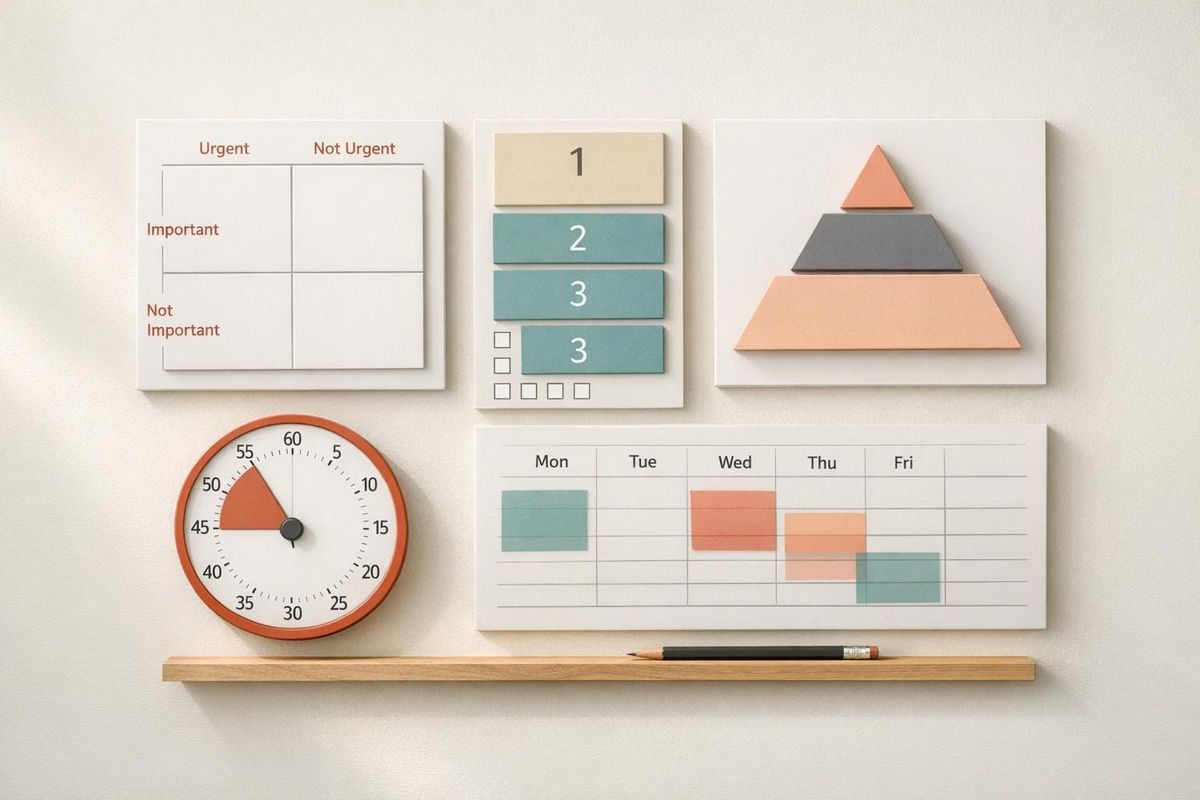
Managing tasks with ADHD can feel overwhelming, but structured systems can help. These five frameworks simplify decision-making, reduce stress, and improve focus. Here's a quick rundown:
- Eisenhower Matrix: Prioritize tasks by urgency and importance, dividing them into four categories for clarity.
- 1-3-5 Rule: Focus on one big task, three medium tasks, and five small tasks daily to stay realistic and productive.
- Priority Pyramid: Organize tasks into five levels of importance, starting with one key priority to build momentum.
- Pomodoro Technique: Use short, timed work sessions to overcome procrastination and maintain focus.
- Time Blocking: Schedule specific time slots for tasks to combat time blindness and stay on track.
Each method addresses common ADHD challenges like task overwhelm, procrastination, and time management struggles. Experiment with these strategies to find what works best for you.
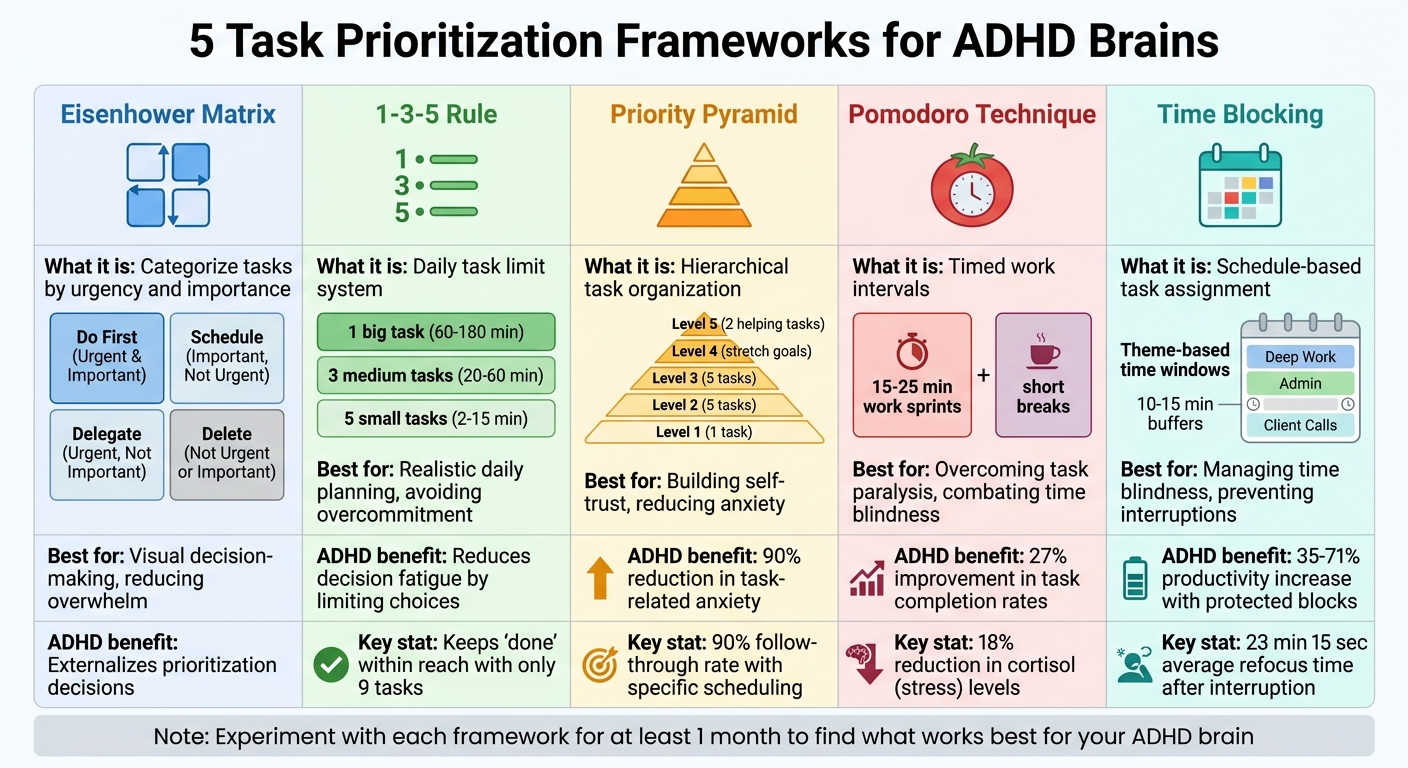
5 ADHD Task Prioritization Frameworks Comparison Chart
How to Prioritize When You Have ADHD: The Matrix
sbb-itb-f879324
1. Eisenhower Matrix
The Eisenhower Matrix is a practical tool for ADHD professionals, offering a clear and visual way to prioritize tasks by sorting them into four categories based on urgency and importance. Named after President Dwight D. Eisenhower, who famously noted, "What is important is seldom urgent, and what is urgent is seldom important", this framework helps you quickly identify what deserves immediate attention and what can wait.
This system externalizes decision-making, which can be particularly helpful for those with ADHD. Here's how the four quadrants break down:
- Quadrant 1 (Do First): These are tasks that are both urgent and important - think of a project due tomorrow or paying an overdue bill.
- Quadrant 2 (Schedule): These are important but not urgent tasks, such as planning a presentation or scheduling a dentist appointment. Adding these to your calendar helps avoid last-minute stress.
- Quadrant 3 (Delegate): These tasks are urgent but less important - routine activities like booking a repair service or data entry. If possible, delegate or automate these.
- Quadrant 4 (Delete): Tasks that are neither urgent nor important, such as unnecessary meetings or perfecting a spreadsheet beyond what's needed, can be eliminated.
Start by doing a "brain dump" to list all your tasks. Then, assign each task to the appropriate quadrant. If you don't have a team to delegate to, automation tools can help handle Quadrant 3 tasks. Pairing the matrix with a calendar and regular planning sessions can make this approach a consistent part of your routine.
One challenge with the traditional matrix is that it doesn't consider how difficult a task feels in the moment, which can be especially relevant for ADHD professionals. For example, if a Quadrant 1 task feels overwhelming, try breaking it down into smaller, manageable steps. This adjustment helps ease analysis paralysis and makes the matrix even more effective as part of a broader set of strategies.
2. 1-3-5 Rule
The 1-3-5 Rule is a productivity method designed to help manage daily tasks by addressing a common issue: overestimating what can realistically be accomplished in a day. This is particularly useful for individuals with ADHD, who often struggle with prioritization and task overwhelm. Instead of juggling an endless to-do list, this approach narrows your focus to nine tasks: one big task (60–180 minutes), three medium tasks (20–60 minutes each), and five small tasks (2–15 minutes each). By breaking tasks into manageable chunks, it transforms vague goals like "Improve website" into actionable steps like "Fix mobile hero spacing (15 minutes)."
This structure reduces decision fatigue by limiting choices, making it easier for ADHD brains to stay on track. Starting your day with the big task - before diving into emails or other distractions - ensures that your most important work gets done.
On days when energy is low, you can scale back to a "Minimum Viable Day", focusing on just one medium task and three small ones. At the end of each day, a quick two-minute review helps you evaluate whether tasks were too ambitious or unclear. This reflection makes planning for the next day more realistic and achievable.
The system works because it keeps "done" within reach. By narrowing options early, it avoids the trap of analysis paralysis and keeps momentum going.
3. Priority Pyramid
The Priority Pyramid is a tool specifically designed for ADHD professionals to organize tasks into five levels of importance. It helps tackle executive function challenges by creating a clear hierarchy, unlike traditional to-do lists where everything feels equally urgent. This structure, similar to methods like the Eisenhower Matrix or the 1-3-5 Rule, helps reduce decision fatigue and keeps you focused.
At the very top is Level 1: The One Thing - a single, non-negotiable task that represents your top priority and builds self-trust. As Learn to Thrive with ADHD explains:
Imagine the confidence from consistently completing that key task.
Focusing on this one critical task can help you avoid the overwhelm of an endless to-do list.
Next, Level 2 includes up to five Main Intentions - important tasks that are high priority but flexible enough to be postponed if necessary. Level 3 is for up to five "It Would Be Nice If" tasks, offering a chance to achieve more without added pressure. Level 4 contains "Would Like To" stretch goals, which you only review after handling higher-priority items. Finally, Level 5, labeled "Helping Others", is limited to two tasks, ensuring that external demands don’t overshadow your personal priorities.
Research highlights that setting specific dates, times, and locations for tasks can boost follow-through rates from 35% to an impressive 90%. By externalizing decisions, this system eases the mental burden of task management. For ADHD professionals, this structured approach can reduce task-related anxiety by up to 90%. The pyramid’s design not only creates clear milestones but also helps declutter your mind.
When choosing your Level 1 task, focus on what will most effectively reduce mental clutter. Break it into subtasks that take 30 minutes or less. Schedule Levels 1 and 2 during your peak energy times, and save Levels 3 and 4 for when your focus naturally dips. Up next, we’ll explore another strategy to streamline your workflow even further.
4. Pomodoro Technique
The Pomodoro Technique is a game-changer for tackling one of the hardest challenges for ADHD brains: getting started. Instead of committing to an entire project, you focus on a short, manageable work block. This approach helps reduce the overwhelming feeling that can make even simple tasks seem impossible to begin. A 2021 study published in the Journal of Clinical Psychology even found that structured time-blocking methods like Pomodoro improved task completion rates by 27% in adults with ADHD compared to unstructured work.
This technique also addresses time blindness. Dr. Russell Barkley describes ADHD brains as perceiving time in terms of "now versus not now", which makes all future tasks feel equally far away. Using a ticking timer creates an external cue to replace your brain's unreliable internal clock, turning the abstract concept of time into something tangible and easy to track.
Start with 15-minute sprints to make the commitment feel less intimidating. A visual timer - like the Time Timer or a circular countdown app - can help by showing time shrinking as a shape instead of just numbers counting down. Keep a notepad handy for the "Parking Lot" method: jot down any distracting thoughts that pop up so you can revisit them later without losing focus on your current task.
If you're stuck in task paralysis, try the "Reverse Pomodoro": work for just 5 minutes, then take a 25-minute break. This small step often builds momentum to keep going. When your timer ends, take a two-minute wrap-up to finish your thought or save your work. This avoids the abrupt stop that can make timers feel disruptive for ADHD brains.
One golden rule: if you hit a state of hyperfocus, skip the break and keep going. Regaining that flow state can take 20 to 30 minutes, so it’s better to ride the wave while it lasts. When it’s time for a break, steer clear of screens. Instead, stand up, stretch, or grab some water. Physical movement resets dopamine levels, while scrolling through social media engages the same neural pathways as work, preventing a true mental reset. Research backs this up - structured work-and-break cycles have been shown to lower stress markers like cortisol by 18% in adults with ADHD.
Up next: discover how Time Blocking builds on these ideas to bring even more structure to your day!
5. Time Blocking
Time blocking takes techniques like the Pomodoro Method a step further by structuring your day to address "time blindness" - a common challenge for ADHD brains that struggle to distinguish between "now" and "not now". A study from the University of California, Irvine revealed that a single interruption can cost an average of 23 minutes and 15 seconds to refocus on the original task. By assigning specific time windows to tasks, time blocking eliminates the "what do I do next?" dilemma, which can sap mental energy.
Instead of assigning rigid tasks, try using theme-based blocks, such as a "Deep Work" session, tailored to your energy levels. To plan effectively, apply the Multiplier Rule: estimate how long a task will take and multiply by 1.5 for routine tasks or by 2–3 for more complex ones.
Build in 10–15 minute buffers between tasks to reset your focus. This is especially helpful since frequent switching between apps or tasks can lead to as much as 4 hours of lost productivity each week. Include one or two 60-minute flex windows in your schedule to account for moments of hyperfocus that may run over.
Match tasks to your energy levels. For instance, reserve peak focus times - often 2–4 hours after waking - for demanding projects, and save lower-energy periods for administrative work. Research even suggests that implementing no-meeting days can increase productivity by 35% to 71%. Protecting at least one 90-minute "sacred" block for deep work each day can make a noticeable difference. This method complements other prioritization strategies, creating a well-rounded approach to managing ADHD-related challenges.
"If you lose the morning, do not write off the afternoon. ADHD brains are prone to 'all or nothing' thinking. Break the day into quarters; a bad Q2 doesn't ruin Q3." - Anchor Brain
Use color-coding to visually separate deep work, meetings, and admin tasks. If you're interrupted mid-task, jot down where you left off to simplify resuming later. And if disruptions throw off your schedule, simply shift the affected blocks to the following day.
Wrapping It Up
Managing tasks with ADHD often means using external tools to handle planning and prioritization effectively. The five strategies we've discussed aim to lighten the mental load of deciding what to tackle first and when to do it.
Each approach addresses specific ADHD-related challenges. The Eisenhower Matrix helps counteract the tendency to focus on urgent but less meaningful tasks, steering you toward your bigger goals instead. The 1-3-5 Rule keeps things manageable by limiting your daily to-do list to nine tasks, respecting your brain's capacity. The Priority Pyramid breaks through the paralysis of starting by zeroing in on one essential task. Meanwhile, the Pomodoro Technique uses short bursts of focus to create urgency, and Time Blocking makes time tangible by turning "later" into something you can see and plan around.
These methods are tools to help you navigate ADHD-specific obstacles. The key is to experiment. Start small - maybe pick one priority each morning before 10:00 AM, when your decision-making energy is at its peak. Stick with it for at least a month to establish new habits for managing executive function. As Ramon from Goals and Progress wisely noted, prioritization frameworks help you decide what to focus on, but they can't magically handle an overwhelming to-do list. The goal is to focus on what truly matters, not to conquer everything at once.
For professionals with ADHD, these systems can reduce decision fatigue and sharpen focus. If you're looking for more guidance on mastering these techniques and tackling challenges like focus, productivity, and organization, check out On/Off Genius. Their blog is packed with resources tailored to high-performing individuals with ADHD navigating demanding careers.
FAQs
Which framework should I start with if I’m overwhelmed?
If you're feeling swamped, try the One-Thing Priority System. This approach narrows your focus to completing just one crucial task each day. It's a simple way to cut through decision fatigue and ease stress.
Another option to consider is the ADHD Priority Matrix. This tool helps you sort and categorize tasks, especially when everything feels like it's screaming for attention. It makes it clearer which tasks need your focus first.
Can I combine these methods without overcomplicating my day?
Yes, you can mix different productivity methods without overcomplicating your routine. Begin with a core strategy, such as prioritizing one major task each day. Then, complement it with tools like visual trackers or scoring systems for managing bigger projects. The key is to keep your approach straightforward, adaptable, and in tune with your energy levels to boost efficiency without piling on extra work.
What should I do when I fall behind my time blocks or Pomodoros?
If you find yourself falling behind on your time blocks or Pomodoros, don't beat yourself up over it. Instead, take a moment to adjust your approach and get back on track. Try resetting your timer or planning shorter, more manageable intervals to ease back into your tasks.
Staying flexible is crucial - reassess your priorities or break tasks into smaller, more approachable steps. Falling behind happens often, especially for those with ADHD, so focus on making small adjustments. Shorter work sessions, regular breaks, and setting realistic goals can help you regain momentum without added stress.