Low GABA Levels vs. ADHD Symptoms
Low GABA links to inattention, impulsivity, and hyperactivity; approaches include GABA-supporting lifestyle changes and stimulant meds.

Low GABA levels in the brain are closely linked to ADHD symptoms like inattention, hyperactivity, and impulsivity. GABA, the brain's primary inhibitory neurotransmitter, acts as a "brake" to calm neural activity. When GABA levels are low, the brain struggles to regulate signals, leading to overstimulation and challenges with focus and impulse control.
Key Points:
- What is GABA? GABA reduces brain activity, balancing excitatory neurotransmitters like glutamate. Low GABA levels can cause anxiety, restlessness, and sensory overload.
- ADHD and GABA Connection: Studies show people with ADHD often have lower GABA levels, especially in regions tied to attention and impulse control.
- Behavioral Impact: Low GABA contributes to poor focus, impulsivity, hyperactivity, and sleep issues, all of which overlap with ADHD symptoms.
- Treatment Differences: ADHD is typically treated with stimulants targeting dopamine and norepinephrine, while low GABA may be addressed through supplements (e.g., magnesium, L-theanine), exercise, and stress management.
Quick Comparison:
| Aspect | Low GABA | ADHD | Overlap | Differences |
|---|---|---|---|---|
| Impulse Control | Reduced ability to inhibit signals | Difficulty controlling impulses | Both struggle with inhibitory control | ADHD impulsivity is diagnostic; low GABA is biochemical |
| Attention | Overstimulation, hard to filter input | Difficulty sustaining focus | Both face attention challenges | ADHD involves multiple neurotransmitter systems |
| Hyperactivity | Overactive nervous system | Physical restlessness, fidgeting | Both show heightened activity | ADHD hyperactivity is developmental |
| Treatment | Supplements, exercise, stress relief | Stimulants, behavioral therapy | Both benefit from lifestyle changes | Treatment targets differ: inhibition vs stimulation |
Understanding the role of GABA in ADHD provides new treatment insights, especially for symptoms that dopamine-focused therapies may not fully address.
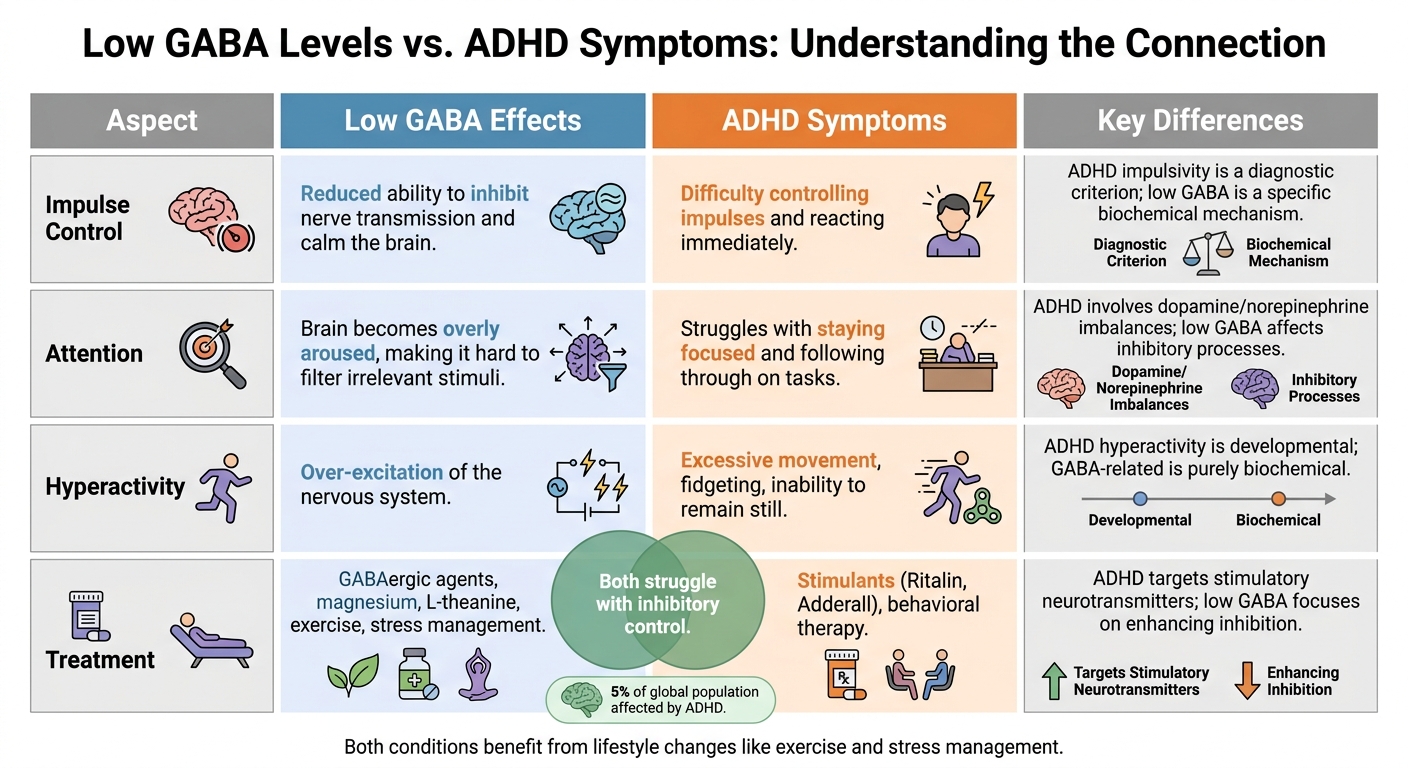
Low GABA vs ADHD Symptoms Comparison Chart
How Low GABA Levels Affect Brain and Behavior
Physical Impact of Low GABA
When GABA levels drop, the brain's ability to regulate neural activity takes a hit. This creates a lopsided system where overstimulation dominates, leading to excessive neuronal firing.
This imbalance isn't just theoretical - it shows up in real, measurable ways. For example, clinical studies have revealed that children with ADHD (average age 10.2 years) have significantly lower GABA concentrations in their somatosensory and motor cortices compared to their peers without ADHD. Think of it like trying to hold a conversation in a crowded, noisy room - without enough GABA, the brain struggles to block out the "background noise."
These physical changes help explain the behavioral patterns often seen in people with low GABA.
Behavioral Changes
Overactive neural firing doesn't just stay in the brain - it spills over into behavior. Anxiety becomes a frequent companion because an over-stimulated nervous system makes it nearly impossible to relax. Impulsivity can also spike, as the brain struggles to pause and weigh the consequences of actions.
Sleep issues are another major problem. Research has shown that individuals with primary insomnia have GABA levels that are about 30% lower than normal. Without enough GABA to quiet the mind, falling into a restful sleep becomes a daunting challenge. And poor sleep? It only makes focusing and managing emotions harder.
Sensory overload is another hurdle. With insufficient GABA, the brain has trouble filtering out unnecessary stimuli.
"GABA functions to calm the nervous system and help your nerves process sensory input in an organized way." - Mental Health America
Connection to ADHD Symptoms
These behavioral effects tie directly into the symptoms of ADHD. Reduced GABA levels mean the brain's natural "brakes" on neural activity aren't working as they should, which is a key factor in ADHD.
GABAergic interneurons, often described as the brain's "traffic controllers", help manage the flow of signals. When these controllers falter, the resulting chaos can look like impulsivity, hyperactivity, and difficulty maintaining attention - all hallmarks of ADHD.
Interestingly, while resting GABA levels in some individuals with ADHD might seem normal, research shows they struggle to increase GABA during tasks requiring focused attention. This inability to boost inhibitory control makes it harder to stay on track and suppress inappropriate responses.
This could also explain why stimulant medications, which primarily target dopamine systems, don't always address every ADHD symptom. On the flip side, activities like vigorous exercise - performed at about 85% of maximum heart rate for 8 to 20 minutes - can naturally boost GABA levels. This gives the brain an extra dose of inhibition, helping to promote calmness and improve focus.
sbb-itb-f879324
ADHD Symptoms and Brain Chemistry
Primary ADHD Symptoms
ADHD is characterized by three main symptoms: inattention, hyperactivity, and impulsivity. These behaviors stem from how the brain handles information and regulates actions.
- Inattention makes it difficult to focus on tasks, especially those lacking immediate rewards.
- Hyperactivity creates a constant drive for movement or mental stimulation.
- Impulsivity leads to acting without considering the consequences.
Together, these symptoms affect about 5% of the global population, making ADHD one of the most prevalent neurodevelopmental conditions.
In addition to these core symptoms, ADHD often disrupts executive functions. This includes challenges like time blindness, task paralysis, and difficulty transitioning between activities. Research shows that the frontal lobe, which is responsible for organization and impulse control, develops more slowly in individuals with ADHD compared to neurotypical individuals. To fully understand these symptoms, it’s important to delve into the brain’s neurochemistry.
GABA's Role in ADHD
GABA, the brain’s primary "off" switch, helps calm neural activity by blocking certain signals. In individuals with ADHD, this system doesn’t function as effectively as it should. Advanced neuroimaging, such as 7T scans, has revealed lower GABA levels in the striatum of unmedicated children with ADHD.
Even though resting GABA levels might seem normal in some cases, individuals with ADHD show weaker increases in GABA during tasks requiring attention control when compared to neurotypical individuals. This means their brains struggle to boost inhibitory control when focusing is necessary.
"GABAergic interneurons, which help regulate brain activity, are now understood to play a part in the underlying causes of ADHD. When these neurons don't work as they should, the balance between brain stimulation and brain calm is disrupted." - Katie Stone, Naturopath
Low GABA activity also affects how the brain filters sensory information. Without enough GABA, people with ADHD may feel overwhelmed by sensory input or find it hard to focus on a conversation in noisy environments. This difficulty managing sensory overload is a common experience for many with ADHD and reflects the connection between brain chemistry and symptoms.
Other Factors That Contribute to ADHD
While GABA plays an important role, other neurotransmitter systems also contribute to ADHD. The condition arises from a complex interaction of brain structure, activity, and neurochemical processes. For example:
- Dopamine dysregulation increases sensitivity to immediate rewards, making it harder to delay gratification.
- Norepinephrine deficits in the prefrontal cortex affect inhibitory control and the ability to retain information, further complicating attention and self-regulation.
Another factor is the Default Mode Network (DMN), a brain system that typically quiets during focused tasks. In ADHD brains, the DMN remains more active, causing internal thoughts to interfere with external demands.
The dopaminergic pathway is essential and can be influenced by environmental factors and other neurotransmitter systems, such as GABA, glutamate, and serotonin. GABA and glutamate work in opposition - while GABA calms the brain, glutamate excites it. When the balance between these two neurotransmitters is disrupted, the brain can become overstimulated. This imbalance highlights the intricate interplay of brain chemistry in ADHD.
Low GABA Levels vs. ADHD Symptoms
Comparison Table:
| Aspect | Low GABA Effects | ADHD Symptoms | Overlaps | Differences |
|---|---|---|---|---|
| Impulse Control | Reduced ability to inhibit nerve transmission and calm the brain. | Difficulty controlling impulses and reacting immediately. | Both lead to poor inhibitory control and "acting before thinking." | ADHD impulsivity is a diagnostic criterion, while low GABA reflects a specific biochemical mechanism. |
| Attention | The brain becomes overly aroused, making it hard to filter irrelevant stimuli. | Struggles with staying focused and following through on tasks. | Both result in significant challenges with sustained attention and focus. | ADHD inattention may involve dopamine and norepinephrine imbalances, whereas low GABA specifically affects inhibitory processes. |
| Hyperactivity | Over-excitation of the nervous system. | Excessive movement, fidgeting, and inability to remain still. | Both manifest as physical restlessness due to heightened neural activity. | ADHD hyperactivity is often developmental, while GABA-related hyperactivity is purely biochemical in origin. |
| Treatment | Targeted with GABAergic agents, magnesium, or L-theanine. | Commonly treated with stimulants (e.g., Ritalin, Adderall) or behavioral therapy. | Both may benefit from lifestyle changes like exercise and stress management. | ADHD treatments typically target stimulatory neurotransmitters, whereas interventions for low GABA focus on enhancing inhibition. |
This table highlights both shared dynamics and key distinctions between low GABA effects and typical ADHD symptoms.
Where They Overlap
The connection between low GABA and ADHD symptoms becomes apparent when you consider inhibitory control. At their core, both conditions struggle with the brain's ability to "put the brakes" on neural activity. Studies using magnetic resonance spectroscopy have even shown reduced GABA concentrations in brain regions tied to attention and impulse control in individuals with ADHD.
When GABA levels are low, the nervous system becomes hyperactive, making it tough to filter distractions or organize sensory input. This is similar to how someone with ADHD might feel overwhelmed in a noisy setting or when juggling multiple tasks.
While the overlap in symptoms is evident, examining the broader biochemical and developmental context reveals key differences.
Where They Differ
The main difference lies in their origins and overall scope. ADHD is a neurodevelopmental disorder with a mix of causes, including genetic factors and imbalances in multiple neurotransmitter systems. On the other hand, low GABA is a specific biochemical state that not only contributes to ADHD symptoms but is also linked to conditions like schizophrenia, PTSD, and major depressive disorder.
Treatment approaches also vary. ADHD is often managed with stimulants that increase dopamine and norepinephrine, while low GABA is treated by calming the nervous system through methods like magnesium supplementation, L-theanine, yoga, or meditation. For instance, a study found that participants practicing yoga three times a week for 12 weeks experienced measurable increases in brain GABA levels.
It's important to note that GABA supplements are not yet well-researched enough to replace prescribed ADHD medications. Abruptly stopping ADHD treatment in favor of GABA supplements can lead to poorly managed symptoms.
Managing ADHD in Gifted Professionals
Specific Challenges for Gifted Professionals with ADHD
Gifted professionals with ADHD face a unique set of hurdles. Their intelligence often masks common ADHD symptoms like impulsivity and struggles with consistent focus. Interestingly, a 2023 study revealed that 8.8% of children with ADHD were also identified as gifted. This overlap creates a complex dynamic.
On one hand, high cognitive abilities can compensate for difficulties in organization and attention, making ADHD symptoms less noticeable. On the other hand, the challenges tied to ADHD - such as poor time management and planning - can overshadow their exceptional talents, leading to underperformance. This paradox often leaves gifted individuals feeling misunderstood or underutilized in their professional lives.
Strategies That Target GABA Levels
For those diagnosed later in life, understanding the role of GABA (gamma-aminobutyric acid) becomes crucial. Research from Johns Hopkins University and the University of Amsterdam in 2017 highlighted differences in GABAergic responses between adults who began stimulant treatment after age 23 and those who started earlier, before age 16. The researchers observed:
"While adult stimulant treatment seems to exert no major effects on GABA+ levels in the mPFC, MPH may induce long-lasting alterations in the adult mPFC GABAergic system when treatment was started at a young age".
Beyond medication, there are other approaches to support GABA function. Some promising strategies include:
- L-theanine: Taking 100–400 mg per day can modulate GABA activity and boost alpha brain waves, promoting focus without causing jitters.
- Taurine: This supplement, at doses of 500–2,000 mg per day, acts as a mild GABA receptor agonist and may help reduce hyperactivity.
- Dietary Adjustments: Consuming foods rich in L-Glutamine (like eggs and pumpkin seeds) and ensuring sufficient intake of Vitamin B6, magnesium, and zinc can aid neurotransmitter synthesis and support overall brain function.
These strategies emphasize the importance of addressing ADHD at a biochemical level, especially for high-achieving individuals.
Resources from On/Off Genius

Managing ADHD as a gifted professional requires tailored tools and insights. On/Off Genius provides resources designed to help gifted individuals overcome ADHD-related challenges, focusing on improving performance, maintaining consistency, and achieving clarity in their work and life.
The Surprising Link Between GABA and ADHD Treatment
Conclusion
Exploring the link between low GABA levels and ADHD symptoms opens up fresh possibilities for managing this complex condition. While ADHD has traditionally been associated with deficiencies in dopamine and norepinephrine, understanding GABA's role as the brain's primary inhibitory neurotransmitter sheds light on issues like heightened excitability, restlessness, and difficulty staying calm and focused.
The distinction is crucial: low GABA reflects a specific biochemical imbalance impacting inhibitory control, whereas ADHD is a broader neurodevelopmental disorder involving multiple neurotransmitter systems and executive function challenges. This differentiation between biochemical factors and developmental symptoms paves the way for more precise and effective treatments.
"ADHD cannot be described by abnormalities of a single neurotransmitter or system. I believe we must care for our entire nervous system - all of our chemical messengers equally - to effectively manage ADHD." – Dr. Niki Smith, Botanical Health Clinic
This perspective is particularly relevant for high-achieving professionals, who often benefit from strategies that balance the "gas pedal" (dopamine and norepinephrine) with the "brakes" (GABA) in their nervous system.
Evidence-based methods to support GABA function include dietary changes, supplements like magnesium and L-theanine, and lifestyle practices such as yoga or high-intensity exercise. These approaches complement traditional medications, creating a well-rounded plan that addresses both neurochemical imbalances and behavioral challenges.
For professionals managing ADHD, understanding the GABA connection not only explains why certain interventions are effective but also helps shape tailored, sustainable strategies. This balanced approach to treatment - addressing multiple neurotransmitter systems - can provide a clearer path to long-term success.
FAQs
How can I tell low GABA from ADHD?
Low GABA levels and ADHD symptoms can share some similarities but have unique characteristics. Low GABA is often linked to heightened anxiety, stress, and difficulty relaxing, stemming from decreased inhibitory neurotransmission in the brain. On the other hand, ADHD symptoms - such as inattention and impulsivity - may also involve low GABA but are more centered around behavioral challenges. A thorough clinical evaluation is essential to determine whether the symptoms are due to ADHD, low GABA, or a combination of both. Accurate diagnosis requires the expertise of a professional.
Can ADHD meds affect GABA levels?
ADHD medications can affect GABA (gamma-aminobutyric acid) levels. GABA, a neurotransmitter, is involved in the brain's regulation of activity and plays a part in ADHD's neurobiology. Certain treatments for ADHD may work to adjust GABA activity to help manage symptoms effectively.
What tests can check brain GABA?
Brain GABA levels can be measured through neurochemical tests like magnetic resonance spectroscopy (MRS). This technique analyzes GABA concentrations in specific brain regions, offering insights into how GABA functions and identifying potential imbalances.