How Gratitude Rewires ADHD Brains for Motivation
Simple gratitude practices boost dopamine and serotonin, improving motivation, focus, and emotional regulation in adults with ADHD.
Struggling to start tasks as a gifted professional with ADHD? It’s not about laziness - it’s how your brain handles dopamine. ADHD brains often lack the dopamine surges needed for motivation, making routine tasks feel overwhelming. Here’s where gratitude comes in: practicing gratitude can naturally boost dopamine and serotonin, helping you feel more motivated and focused.
Key Takeaways:
- ADHD brains clear dopamine too quickly, making motivation harder.
- Gratitude activates the brain’s reward system, releasing dopamine and serotonin.
- Studies show gratitude improves attention, working memory, and decision-making.
Practical Steps:
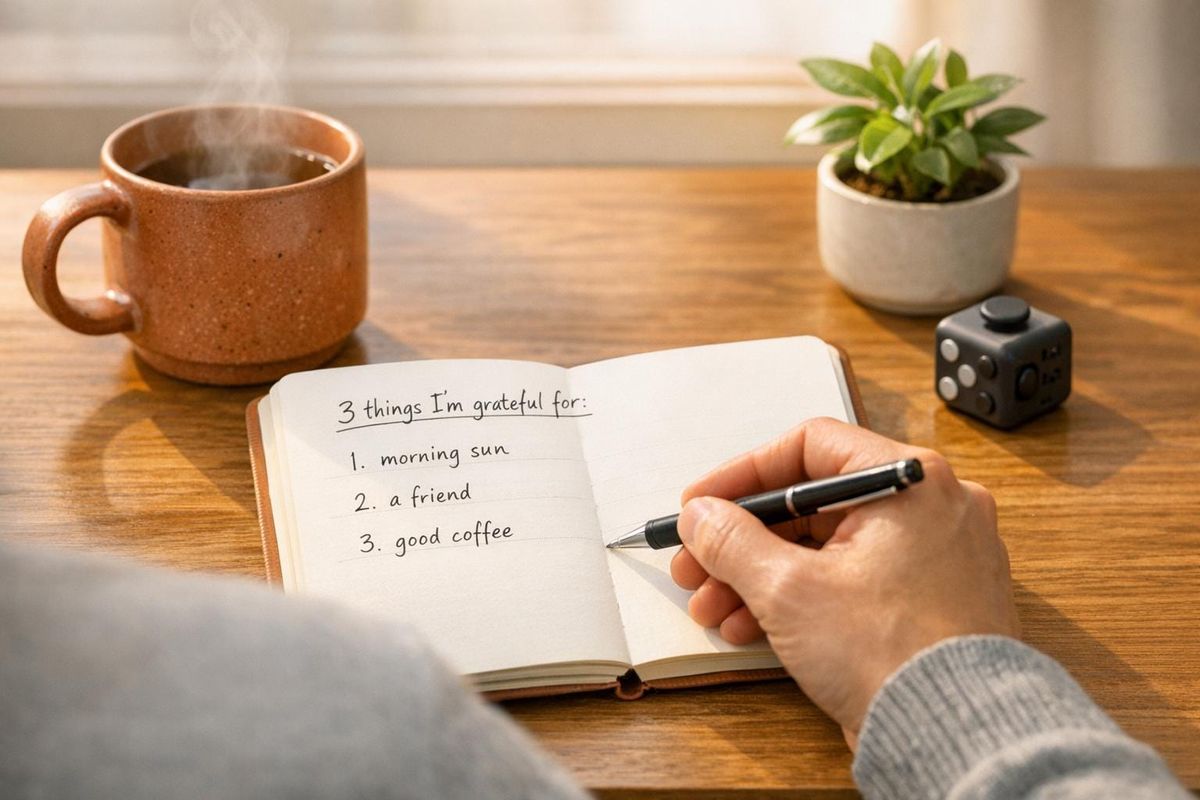
- Three Good Things Exercise: Write down three positive moments daily.
- Gratitude Letters: Write and share a thank-you note to someone who’s helped you.
- Gratitude Jar: Add a note about one good thing each day for a visual reminder.
These simple habits can create lasting changes in your brain, improving focus and reducing emotional stress. Stick with it for four weeks to see results.
Why ADHD Makes Motivation Difficult
How ADHD Affects Dopamine Pathways
When it comes to ADHD, the struggle with motivation isn't about willpower - it's rooted in brain mechanics. Research reveals that people with ADHD have about 70% higher dopamine transporter (DAT) density in the striatum compared to neurotypical brains. Think of these transporters as overzealous cleaners, sweeping away dopamine too quickly for the prefrontal cortex to engage effectively.
This rapid dopamine clearance - often called the "gearbox problem" - creates a disconnect between the prefrontal cortex and the basal ganglia. As a result, tasks that lack immediate novelty or excitement tend to stall. It’s not that you don’t care about the task; it’s that your brain struggles to recognize its value.
Adding to this challenge, ADHD brains show a weaker response to anticipated or delayed rewards. Neurotypical brains derive motivation from the promise of future outcomes, but ADHD brains often fail to generate that same spark. For example, a deadline three weeks away might feel abstract and fail to trigger the "this matters" signal. Instead, ADHD brains thrive on triggers like novelty, urgency, or surprise - explaining why you might dive headfirst into an exciting new hobby but freeze at the thought of starting a routine task.
This difference in brain function means that ADHD brains rely on an interest-based nervous system rather than one driven by priorities or obligations. While neurotypical individuals respond to deadlines, responsibilities, and consequences, ADHD brains require elements like Passion, Interest, Novelty, Challenge, or High Urgency - a framework known as PINCH. Without these sparks, tasks often feel impossible to begin.
These neurological factors explain why motivation can feel like an uphill battle, especially for professionals who are otherwise high achievers.
Motivation Problems in High-Performing ADHD Professionals
If you're a high-performing professional with ADHD, you’ve likely learned to thrive in high-pressure environments. Tight deadlines, urgent projects, and novel challenges can create the perfect storm for productivity. But when it comes to routine, long-term tasks, the motivation often vanishes. Why? These tasks lack the urgency or novelty needed to generate a dopamine boost.
This dynamic creates what experts call the high-performance paradox. You’re capable of extraordinary bursts of productivity, but in between those bursts, tasks that seem simple to others - like a 30-minute report - can feel insurmountable. This isn’t procrastination in the traditional sense; it’s more like a neurological shutdown. Factors like delay and effort discounting make tasks seem far more daunting than they are.
Many high-performing ADHD professionals depend on the "panic monster" - that last-minute surge of urgency - to kickstart action. While this method can work, it relies on stress hormones like norepinephrine and cortisol rather than dopamine. Over time, this boom-and-bust cycle of intense productivity followed by burnout takes a toll.
"ADHD motivation doesn't work the way most advice assumes. You're not lacking motivation because you're lazy or undisciplined. Your brain runs on an interest-based nervous system." - Phuc Doan, ADHD Productivity Expert
Emotions add another layer of complexity. Studies suggest that 34% to 70% of adults with ADHD experience emotional dysregulation. Feelings of shame over unmet expectations or fear of failure can amplify the mental effort required to start tasks. This emotional weight creates a feedback loop where shame further stalls progress, making it even harder to begin.
In the next section, we’ll look at how gratitude exercises can help recalibrate these dopamine pathways and support more consistent motivation.
sbb-itb-f879324
How Dopamine Affects Learning and Motivation in ADHD Brains
The Science Behind Gratitude and ADHD
How Gratitude Affects ADHD Brain Chemistry and Neurochemicals
How Gratitude Triggers Dopamine Release
Gratitude acts as a powerful tool for ADHD brains. When you practice gratitude, the prefrontal cortex stimulates key reward areas like the ventral tegmental area and nucleus accumbens, leading to dopamine release. This "top-down" activation is particularly beneficial for individuals with ADHD, who often experience reduced dopamine levels in the prefrontal cortex. These changes are vital to addressing the chronic motivational challenges that ADHD presents.
This process also creates a self-reinforcing cycle. Dopamine release makes recognizing positive experiences feel rewarding, which motivates the brain to actively seek out more moments of gratitude. As AJ Keller, CEO of Neurosity, puts it:
"The dopamine release makes the experience of gratitude itself rewarding, which makes your brain more likely to notice things to be grateful for, which triggers more dopamine".
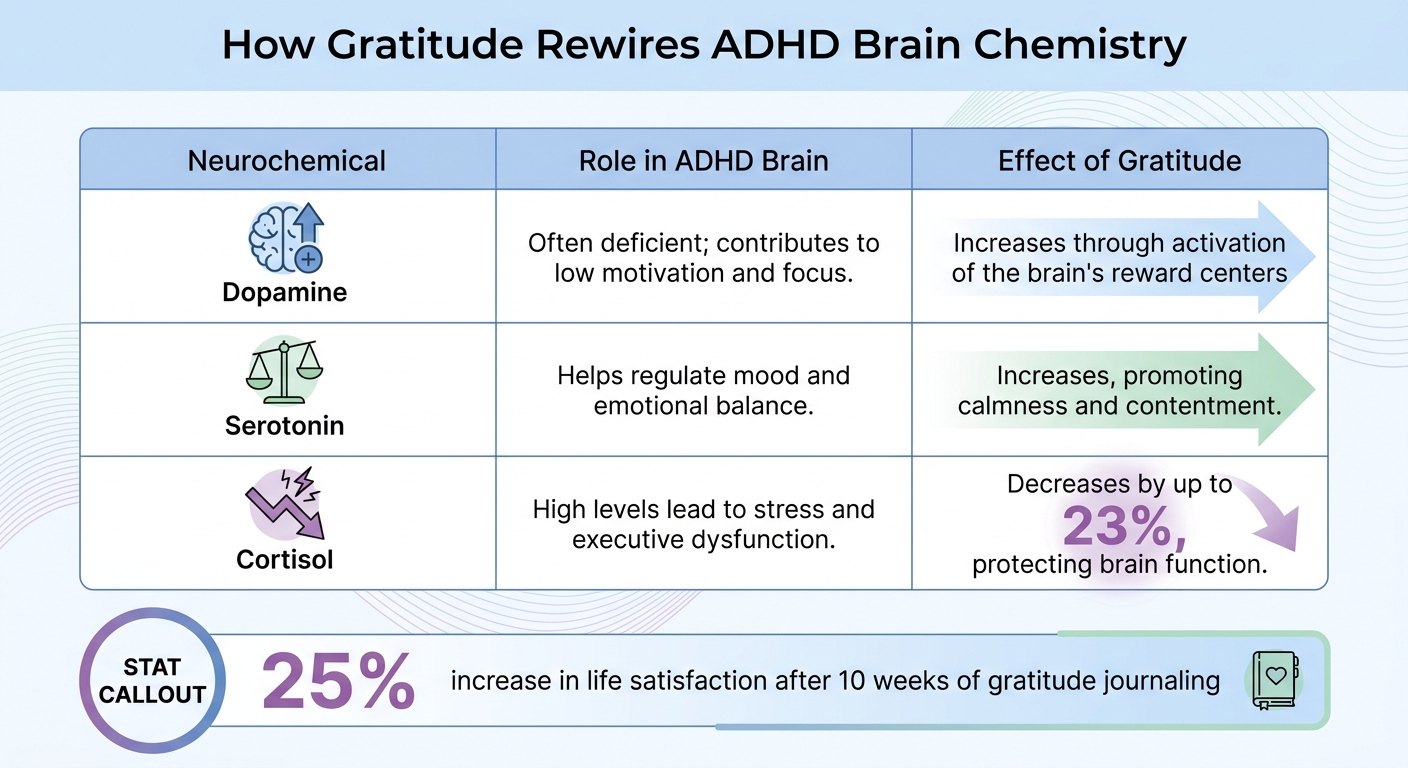
Beyond boosting dopamine, gratitude increases serotonin, fostering calm and focus, and reduces cortisol levels by up to 23%. For ADHD individuals, who often grapple with emotional instability, this shift can provide a steadier neurological foundation.
| Neurochemical | Role in ADHD Brain | Effect of Gratitude |
|---|---|---|
| Dopamine | Often deficient; contributes to low motivation and focus | Increases through activation of the brain's reward centers |
| Serotonin | Helps regulate mood and emotional balance | Increases, promoting calmness and contentment |
| Cortisol | High levels lead to stress and executive dysfunction | Decreases by up to 23%, protecting brain function |
The effects of gratitude are not just emotional but behavioral as well. For example, participants in a 10-week gratitude journal study reported a 25% increase in life satisfaction and exercised an average of 1.5 hours more per week compared to control groups. These measurable changes highlight how gratitude-driven neurochemical shifts can positively shape daily habits.
While these immediate benefits are impactful, the long-term effects on the brain are equally compelling.
Building Better Brain Connections Through Gratitude
Gratitude does more than provide a short-term boost - it also helps reshape the brain over time. While dopamine offers an immediate reward, consistent gratitude practice encourages neuroplasticity, helping to form and strengthen neural pathways. Research suggests that noticeable changes in brain activity can appear after just three weeks of daily practice, while structural changes, such as increased gray matter density, typically emerge after eight to 12 weeks.
For ADHD brains, creating stronger connections between the reward system and executive function centers is critical. Each act of gratitude reinforces pathways that allow dopamine and serotonin to flow more efficiently. This consistency fosters real, measurable changes that enhance executive functioning.
"Gratitude isn't just 'thinking positive thoughts.' It's a targeted intervention against one of the deepest wiring patterns in the nervous system." - AJ Keller, CEO, Neurosity
Gratitude also activates the parasympathetic nervous system, which is responsible for the "rest and digest" response. This activation helps ADHD brains recover from emotional turbulence, including the challenges of Rejection Sensitive Dysphoria (RSD). By focusing on abundance and solutions, gratitude trains the brain to shift away from dwelling on failures or perceived social threats .
One essential practice: to ensure positive experiences are stored in long-term memory, they must be held in working memory for 12 to 20 seconds. Negative experiences, in contrast, are encoded almost instantly. This highlights the importance of intentionally savoring moments of gratitude to make them stick.
Gratitude Exercises That Work for ADHD
Putting gratitude into action is especially important for ADHD brains. The following exercises are tailored to work with ADHD tendencies like distraction, forgetfulness, and the need for external reinforcement. These practices are designed to fit naturally into the way ADHD brains operate, helping to build a sustainable habit of gratitude.
The Three Good Things Exercise
This exercise involves jotting down three positive events from your day. The act of writing is crucial here - just thinking about them isn’t enough for ADHD brains. As psychologist Marcy Caldwell explains:
"The act of writing also helps brains prone to distraction stick through till the end... if we were to just try to think these things without writing them down, we're pretty darn likely to get halfway through and then go off wandering."
You don’t need a long list - three items are enough to reap the benefits. It could be as simple as enjoying a good cup of coffee, taking a short break, or receiving a kind email. To make this exercise more ADHD-friendly, use prompts that focus on your own efforts, like: "What is something my past self did that I’m grateful for today?". This shifts gratitude from being passive to something you’ve actively influenced.
When you do this matters. Practicing gratitude at bedtime has been shown to improve sleep quality better than doing it at other times. To make it easier to remember, pair this habit with an existing nightly routine, like brushing your teeth or setting your alarm.
This simple written exercise can also pave the way for deeper emotional practices, like gratitude letters.
Writing Gratitude Letters
Writing a heartfelt letter to someone who has impacted your life can deepen emotional bonds and boost motivation. Be specific - explain how they helped you and why it mattered. This process makes gratitude feel more tangible.
Take it a step further by scheduling a "gratitude visit", where you read the letter aloud to the person. This creates a strong dopamine boost for both of you and adds accountability, making it more likely you’ll follow through on writing the letter.
You don’t have to do this often - just one letter every few months can significantly improve how you view relationships and motivation. To make it stick, set a specific date, block out 30 minutes on your calendar, and choose your recipient ahead of time. Practices like this naturally build on each other, and adding a gratitude jar can introduce a physical element to reinforce the habit.
Using a Gratitude Jar
A gratitude jar acts as a visual and physical reminder, countering the forgetfulness that often accompanies ADHD. Marcy Caldwell describes it well:
"ADHD brains are like fishbowls, and they often are only aware of the things that are swimming in the fishbowl at any given time... The gratitude jar, because it's a physical thing that takes up space and demands some notice, is the equivalent of putting your pills on the bathroom counter."
To make this work, use a clear jar and place it somewhere you’ll see it often - like the bathroom counter, dining table, or kitchen counter. Keep small slips of paper and a pen nearby. Each day, write down one positive moment or achievement, no matter how small. Examples include: "Made it to work on time" or "Remembered to call Mom back."
Research on similar tools, like gratitude rocks, shows that these physical reminders can help people with ADHD improve focus and reduce emotional stress. The jar serves as both a daily prompt and a "treasure chest" to revisit during tough times. When motivation dips or rejection sensitivity flares, reading through the notes can remind you of positive moments that might otherwise slip away.
For extra support, pair your gratitude jar with a "text buddy." Share three daily gratitudes with a partner at a set time. This adds a layer of social accountability, reduces feelings of shame, and provides structure when internal motivation wanes.
4-Week Plan to Build a Gratitude Practice
Creating a gratitude habit when living with ADHD requires structure and support. ADHD brains thrive on clear plans, visible reminders (like sticky notes or alarms), and external accountability, such as a partner or group check-in. This four-week strategy is designed to work with your brain’s unique needs, offering actionable steps to make gratitude a regular part of your day.
Week 1: Start with Simple Daily Prompts
Pair the "Three Good Things" exercise with something you already do daily, like brushing your teeth or sipping your morning coffee. Keep a small notebook nearby - perhaps on your bathroom counter - and jot down three things that brought you joy before moving on with your routine.
To avoid feeling stuck, use straightforward prompts like, "What are 3 things that delighted me today?" Keep it easy. Your list might include small wins, like getting to a meeting on time or enjoying a delicious lunch. The key is to write them down, not just think about them.
Set alarms or place sticky notes in places you’ll notice. ADHD brains tend to forget what’s out of sight, so these reminders act as helpful nudges.
Week 2: Reflect More Deeply
This week, go beyond listing and explore why certain moments mattered to you. Use prompts like, "Who made me feel seen today and how?" or "What is something my past self did that I appreciate now?". This shift makes gratitude more engaging by connecting it to your emotions.
You can also incorporate prompts tied to your senses, such as, "What sound, smell, or sight brought me peace today?" These variations keep the practice interesting, which is crucial for maintaining focus.
Stick to the same time and place for consistency. Repetition strengthens the brain’s prefrontal cortex, which plays a role in focus and impulse control. If you’ve started using a gratitude jar, revisit some of your Week 1 entries to spot patterns. These reflections can help you tie gratitude to your daily actions.
Week 3: Link Gratitude to Everyday Habits
This week, practice reframing frustrations into moments of gratitude. For instance, if you’re stuck at a red light, think, "At least I have a car to drive, even if I’m running late". This shift helps train your brain to focus on positives, improving emotional regulation over time.
Introduce a gratitude text buddy system. Find a partner and exchange three daily highlights at a set time, like 8:00 PM. This external check-in builds consistency and reduces feelings of guilt if you miss a day. You can also continue your evening writing routine, now enriched with gratitude moments from throughout the day.
Keep your gratitude jar in plain sight to serve as a constant reminder of your practice.
Week 4: Reflect and Reinforce
The final week focuses on reviewing your progress. ADHD brains benefit from clear routines and external cues, so this step ensures the strategies you’ve practiced stick. Look back through your gratitude jar or journal entries from the past three weeks. Identify recurring themes - specific people, places, or wins that stand out. This "pattern audit" can reveal what motivates you and which tools (alarms, sticky notes, text buddies) were most effective.
Compare your lists from Week 1 and Week 4 to notice changes in how you approach challenging tasks. Research shows that consistent gratitude practice boosts dopamine and serotonin, the same chemicals targeted by many ADHD medications. These shifts can make tough tasks feel more manageable. Even small improvements, like tackling a difficult project with less hesitation, are signs of progress.
To keep the momentum going, focus on future goals. Use a strategy from Tony Robbins: identify three outcomes you want to achieve and visualize them as already completed. Writing a thank-you note to someone - a friend, colleague, or family member - can also help you externalize gratitude and reinforce a positive mindset.
| Week | Focus | ADHD-Specific Strategy |
|---|---|---|
| Week 1 | Simple Daily Prompts | Pair "Three Good Things" with a daily routine like brushing teeth or having coffee |
| Week 2 | Deeper Reflection | Use prompts like "Who made me feel seen today?" or sensory-based questions |
| Week 3 | Daily Habit Connection | Start a gratitude text buddy system and reframe frustrations into gratitude moments |
| Week 4 | Review Progress | Look for patterns in your gratitude jar and compare Week 1 vs. Week 4 progress |
Long-Term Effects of Gratitude on ADHD
The benefits of gratitude often take time to fully unfold. Research involving nearly 300 adults revealed that mental health improvements from gratitude writing were much more pronounced at 12 weeks compared to just 4 weeks. This gradual build-up creates what researchers describe as a "positive snowball effect". For individuals with ADHD, this delayed impact is especially meaningful, as it suggests that consistent practice becomes increasingly effective over time.
Neuroimaging studies back this up. Three months after engaging in gratitude letter writing, participants showed increased activity in the medial prefrontal cortex (MPFC) - a brain region central to decision-making, focus, and impulse control. Psychologist Joshua Brown, Ph.D., explains:
"Practicing gratitude may help train the brain to be more sensitive to the experience of gratitude down the line, and this could contribute to improved mental health over time".
The benefits don’t stop at temporary neurochemical boosts. Regular gratitude practice leads to lasting structural changes in the brain. For example, it increases gray matter volume in areas responsible for sensation, perception, and cognitive processing. It also strengthens neural pathways for dopamine and serotonin, enabling the brain to utilize these chemicals more effectively. Given that ADHD brains often struggle with dopamine regulation, these changes provide a more stable foundation for executive functions like planning and focus.
Gratitude also has a calming effect on the amygdala, reducing cortisol levels and decreasing emotional reactivity. This shift plays a key role in managing emotional regulation and mitigating Rejection Sensitive Dysphoria (RSD). By training the brain to focus on abundance rather than perceived failures or social rejection, gratitude practice can help lessen the emotional toll of rejection. Marcy Caldwell, a psychologist who works with ADHD patients, highlights this transformation:
"Gratitude changes the focus of the mind's eye - away from the people and things that may reject us and towards all the good in our world, ultimately making us less sensitive to rejection".
Over time, these brain adaptations create a self-reinforcing cycle of productivity. The short-term improvements in working memory, attention, and decision-making pave the way for what experts call a "success spiral." By focusing on positive outcomes, individuals find it easier to stay motivated, tackle challenges, and maintain momentum. For ADHD brains, this makes gratitude a powerful tool for long-term self-management and personal growth.
Conclusion
Gratitude has the power to reshape the ADHD brain in ways that directly impact motivation and focus. By addressing dopamine deficits and executive function challenges, gratitude strengthens the prefrontal cortex - the part of the brain responsible for planning, focus, and impulse control. Over time, it reinforces neural pathways, making it easier to access motivation when needed.
For professionals with ADHD, these neurological changes can lead to improved focus and better decision-making. The best part? Gratitude doesn’t require grand gestures or time-consuming practices. Simple, daily habits - like naming three good things at dinner or adding a note to a gratitude jar - can lay the groundwork for meaningful change. Studies show that even two weeks of consistent practice can enhance working memory and attention, with noticeable improvements in executive function by week four.
Incorporating gratitude into existing routines, such as meals or bedtime, helps reinforce these changes without relying solely on willpower. As psychologist Marcy Caldwell puts it:
"When you practice gratitude, we put the energy that can fuel the negative loops that ADHD brains have built up so strongly over the years into positive, dopamine-fueled processes instead".
Start with just one gratitude practice and stick with it for the next four weeks. Whether it’s the Three Good Things exercise, a gratitude jar, or reframing frustrating moments in real-time, consistency is the key. This steady practice can help rewire your brain, creating a positive cycle that boosts motivation and focus over time.
FAQs
Will gratitude help even if I’m on ADHD medication?
Practicing gratitude can work well alongside ADHD medication. It helps strengthen neural pathways associated with dopamine production, focus, emotional regulation, and executive functioning. These benefits align with the effects of medication, creating a combined approach that may improve motivation and consistency.
What if I can’t feel grateful or I forget to do it?
If you find it hard to feel grateful or often forget to practice, try setting simple reminders or slowly weaving gratitude into your daily routine. Studies suggest that even if the emotional benefits don’t kick in right away, sticking with the practice over time can positively impact your brain. By taking it one step at a time, you can build a habit that boosts focus and motivation in the long run.
How do I use gratitude to start boring tasks?
Gratitude can be a game-changer when it comes to starting those dull, dreaded tasks. The trick? Focus on the little positives tied to the task. Maybe it’s the sense of accomplishment you’ll feel once it’s done or the extra free time you’ll gain afterward.
When you actively practice gratitude, it helps rewire the ADHD brain by improving motivation and emotional regulation. By taking a moment to appreciate these benefits before diving in, you can shift your mindset. Suddenly, the task feels less like a chore and more like an opportunity, making it easier to take that first step.