Ultimate Guide to ADHD Group Coaching for Professionals
Practical strategies, peer support, and structured accountability to boost focus, time management, and productivity for professionals with ADHD.

Struggling to stay on top of your professional goals with ADHD? ADHD group coaching might be the solution you're looking for. It combines expert guidance with the shared experiences of peers facing similar challenges, helping you tackle procrastination, time management, and focus issues head-on.
Here’s what you’ll gain from ADHD group coaching:
- Practical strategies: Learn actionable steps to manage distractions, prioritize tasks, and build lasting habits.
- Peer support: Connect with others who understand your struggles, reducing isolation and boosting motivation.
- Accountability: Stay on track with clear goals, regular check-ins, and group visibility.
- Affordable option: Costs are typically 30–50% lower than individual coaching.
How it works: Sessions are structured, typically lasting 60–90 minutes, with small groups (3–15 participants) over 8–12 weeks. Coaches guide discussions, celebrate wins, and help set weekly goals, often incorporating tools like co-working sessions and accountability partnerships.
Key benefits: Improved focus, productivity, and emotional regulation, all while building a sense of community with peers who “get it.”
Whether you’re deciding between group or individual coaching, or evaluating programs, the right choice can help you close the gap between your potential and your performance. Ready to take control of your ADHD journey? Let’s dive in.
ADHD Powerhouse Eric Tivers on Community, Coaching & Finding Your Path
sbb-itb-f879324
What Is ADHD Group Coaching?
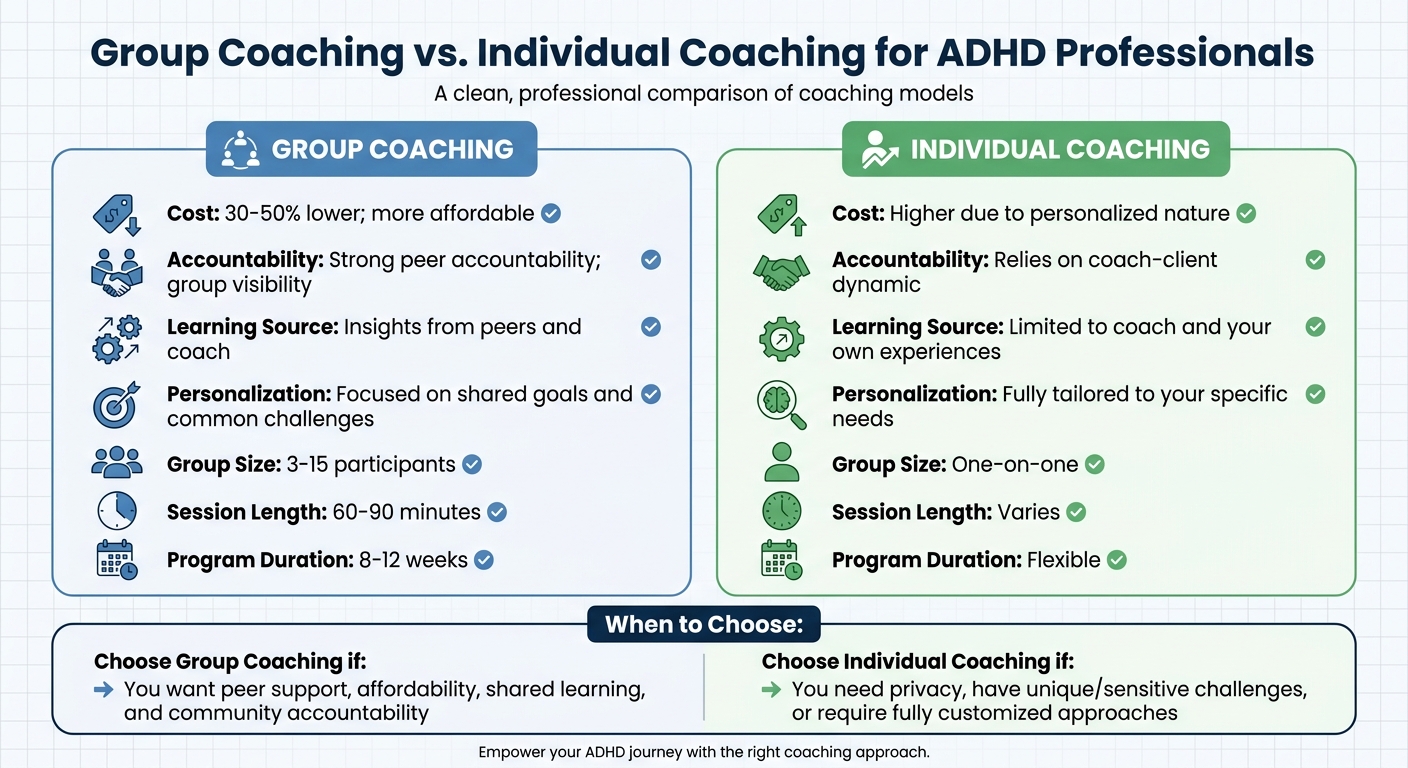
ADHD Group Coaching vs Individual Coaching Comparison
ADHD group coaching is a team-based, action-driven approach designed to help professionals tackle challenges like procrastination, time management, and organization. It focuses on the practical aspects of daily life - the "what, when, and how" - and helps participants create systems that align with how their brains work.
This format fosters a supportive environment where ADHD strengths, such as creativity and big-picture thinking, are embraced. Groups typically consist of 3–15 participants and run for 8–12 weeks, with each session lasting between 60 and 90 minutes. The setup provides enough time to develop new skills while maintaining momentum, and the small group size ensures everyone has a chance to contribute.
How Group Coaching Works
The foundation of group coaching lies in shared experiences - participants learn from each other's struggles, successes, and strategies. One common technique is "Spotlight Coaching", where the coach works with one participant while others observe and apply those lessons to their own situations. This shared learning approach means you're not just gaining insights from the coach but also from the unique perspectives of your peers.
As Dornubari Vizor, Co-founder of GroupApp, explains:
"In a group setting, progress does not rely on the coach alone. Group members support one another, reflect together, and remain visible to the group, which creates momentum that private coaching often struggles to sustain."
Visibility is a key motivator. When your progress is shared with the group, it encourages you to stay committed. Many programs follow a structured session flow: participants share recent wins to build accountability, engage in a short teaching segment, discuss as a group, and conclude with clear goals for the next week. Some programs also pair participants as accountability partners to provide additional support between sessions.
Group Coaching vs. Individual Coaching
Group coaching leverages collective support, but it differs in several ways from one-on-one coaching. The key differences lie in cost, accountability, and learning dynamics. Group coaching is typically 30–50% less expensive than private sessions, making it a more affordable option for professionals. However, as Vizor notes:
"Group coaching isn't simply a cost-effective alternative; it's designed for shared learning, accountability, and tangible results."
| Feature | Group Coaching | Individual Coaching |
|---|---|---|
| Cost | 30–50% lower; more affordable | Higher due to the personalized nature |
| Accountability | Strong peer accountability; group visibility | Relies on the coach–client dynamic |
| Learning Source | Insights from peers and coach | Limited to the coach and your own experiences |
| Personalization | Focused on shared goals and common challenges | Fully tailored to your specific needs |
If you need privacy or have unique, sensitive challenges, individual coaching may be the better fit. On the other hand, group coaching offers the benefits of shared experiences, collective growth, and the energy of knowing you're not navigating these challenges alone. This comparison can help you decide which approach aligns best with your professional goals.
Benefits of ADHD Group Coaching for Professionals
ADHD group coaching offers a blend of practical strategies and shared accountability, delivering clear advantages for professionals navigating their unique challenges.
Better Focus and Productivity
Group coaching helps you design systems that align your tasks with your natural energy rhythms. For example, you can schedule high-focus tasks during peak energy times and save routine work for when you're less sharp. This reduces distractions and encourages consistent follow-through. Plus, the group setting often includes co-working sessions, where simply working alongside others can boost your focus. Research highlights that individuals who receive coaching show improved persistence and retention in demanding environments. As ADHD coach Robyn Greenspan puts it:
"ADHD coaching helps you bridge the gap between innovation and implementation by breaking projects into digestible, do-able parts"
Regular group check-ins further reinforce accountability, keeping you on track and motivated to meet your goals. This structured approach also fosters collaborative learning, which brings its own set of benefits.
Peer Support and Shared Learning
Group coaching creates a sense of community, transforming feelings of isolation into connection. Engaging with peers who face similar struggles reminds you that you're not alone. This sense of understanding and support can be incredibly empowering. As one participant from an iACTcenter cohort shared:
"My cohort wasn't just classmates - they got me. They saw me. They lifted me up. I don't know how I would've done this without them"
These groups also become a space for exchanging ideas and tackling challenges together. This collaborative problem-solving often introduces fresh strategies you may not have considered on your own.
Lower Cost Than Individual Coaching
One of the most practical advantages of group coaching is its affordability. Programs like Ben Tobin Coaching’s 4-week series cost as little as $75 per week, making it a budget-friendly alternative to one-on-one coaching. Beyond the financial savings, group coaching offers ongoing networking opportunities and exposure to diverse perspectives. Laurie Dupar, Founder of iACTcenter, emphasizes:
"The cohort model gives you the structure and gentle pressure needed to stay on track and reach your finish line"
This combination of affordability and peer-driven support makes group coaching a smart investment for professionals looking to grow both personally and professionally.
How ADHD Group Coaching Programs Work
ADHD group coaching programs are designed with a structured approach to align with how ADHD brains function best. Sessions typically run for 60 minutes, with some extending to 90 minutes for more detailed planning. Programs like ADHD reWired offer a high-frequency schedule, meeting up to three times a week, along with peer-led accountability sessions between coach-led meetings.
Each session begins by celebrating "wins" - acknowledging progress and reviewing commitments from the previous week. The main focus is identifying your "One Thing", a single priority for the week to avoid feeling overwhelmed. Participants also engage in mastermind sessions, where they bring up specific ADHD-related challenges, and the group collaborates by asking questions and sharing solutions. Sessions often include dedicated planning time, while some are reserved for "Adult Study Hall", a co-working setup where participants stay on camera to tackle tasks they’ve been avoiding, such as emails or paperwork.
Typical Session Structure
The sessions follow a consistent rhythm, which helps create a dependable framework for ADHD brains. Each meeting concludes with clear action steps, supported by 45–60 minute peer-led accountability meetings. ADHD reWired’s 8-week program, featuring 25 sessions priced at $999, boasts a 99% completion rate among over 1,200 participants. A participant shared their experience:
"Each week, Eric helped me evaluate my skills, clarify my goals, and establish a plan to achieve them." - Happy Little, Participant, ADHD reWired
| Activity Type | Duration | Purpose |
|---|---|---|
| Standard Coaching Session | 60 Minutes | Goal setting, strategy discussion, progress updates |
| Extended Session | 90 Minutes | In-depth planning or mastermind discussions |
| Accountability Team Meeting | 45–60 Minutes | Peer-led check-ins between main sessions |
| Adult Study Hall | Variable | Co-working for tasks like admin work |
Common Tools and Methods
These programs incorporate practical tools to keep participants focused and consistent. Techniques such as body doubling (working alongside others virtually) help participants tackle procrastinated tasks. Brain dump and landing exercises at the start of sessions help clear mental clutter, allowing for better focus. Additionally, energy management strategies align tasks with natural energy levels, reducing reliance on sheer willpower.
Many programs also provide weekly handouts and worksheets, offering external structures to support executive functions. For instance, ADHD reWired alumni gain 24/7 access to a co-working Zoom room and a private Mighty Network platform for daily check-ins and resources. Some programs even recommend reading books like The One Thing by Gary Keller and Jay Papasan to ensure everyone shares a common understanding of strategies and terminology.
What the Coach Does
The coach plays a vital role in maintaining the group’s dynamic and energy. They ensure active participation by encouraging quieter members to share and balancing contributions from more vocal participants. As the Kajabi Blog explains:
"This approach turns a session from a coach-led Q&A into a community conversation where members support, challenge, and motivate each other."
Coaches help participants design systems that minimize obstacles, reducing the need to rely solely on willpower. If plans go off track, they guide participants in making quick adjustments to stay on course. Throughout the session, coaches use targeted questions like: "Who had a win this week?" to start, "Who can offer another perspective?" during discussions, and "What’s one action you’ll commit to?" at the end. They also facilitate mastermind sessions, encouraging participants to record their challenges for later reflection on group feedback.
How to Choose the Right ADHD Group Coaching Program
Finding the right ADHD group coaching program can feel overwhelming, but the right choice can lead to meaningful progress. A program that matches your needs, paired with a coach who has the right expertise, can make all the difference. Since coaching isn’t tightly regulated, it’s crucial to do your homework - check credentials, ask questions, and ensure the program aligns with your goals. This careful selection process can save you time, money, and frustration.
What to Look for in a Program
Start by verifying the coach’s certifications, such as ICF, PAAC, or ADDCA. ADDCA, in particular, is a well-regarded ADHD coach training program accredited by both ICF and PAAC. Keep in mind that coaching services are rarely covered by insurance, so you’ll likely need to budget for out-of-pocket costs.
Consider the coach’s background. Do you prefer someone with personal ADHD experience or a licensed mental health professional? This decision can be especially important if you’re managing coexisting challenges like anxiety or depression. In such cases, a coach with clinical training may be better equipped to help - or you might need to work with a therapist alongside your coach. Also, think about the coach’s familiarity with your specific field, whether it’s business, academia, or leadership. As Dr. Edward Hallowell explains:
"Good coaching definitely helps people to improve their business focus, interpersonal skills and ability to get things done in such a way as to lead a more productive, fulfilling and rewarding life."
Look for a program that emphasizes practical, action-oriented strategies. The focus should be on creating habits and addressing real-life challenges, not just exploring the “why” behind behaviors. Research backs this approach: ADHD coaching has been shown to improve executive functioning skills by 20%, and 80% of clients report better time management and organizational abilities. Programs that prioritize habit-building and accountability tend to deliver the best results.
Before committing, check the program’s confidentiality policies, fee structure, and cancellation terms. These details will help you evaluate whether the program meets your practical needs while supporting your personal growth.
Questions to Ask Before You Join
A trial session is a great way to see if a coach’s style and the group dynamic suit you. Even if there’s a small fee, this step can save you from committing to a program that doesn’t feel right. Use this opportunity to ask targeted questions and ensure the program aligns with your expectations.
Here are some questions to guide your decision-making:
| Category | Specific Questions to Ask |
|---|---|
| Experience | How many professional clients with ADHD have you coached? |
| Training | Have you had specific training in ADHD coaching? |
| Structure | What is the frequency of sessions and the policy for check-ins (text, email, phone)? |
| Specialization | Do you have experience with workplace or relationship challenges? |
| Logistics | What are the fees, and is a trial session available? |
Clarify how the program is structured. Ask about session frequency, what happens between meetings, and the tools or platforms used. It’s also important to understand what the coach expects from you - homework, attendance, or participation - and what you can expect from them, like reminders or follow-ups. If possible, talk to current or former clients to get a clearer picture of the program’s impact.
Coaching works best when you’re ready to actively engage. If you’re in the “preparation” or “action” stage of change, you’re more likely to see meaningful results.
Program Features Comparison
Programs can vary widely in structure and support. Here are some key features to evaluate:
| Feature | Key Comparisons |
|---|---|
| Session Length | Sessions usually last 30 to 60 minutes; some offer extended sessions for deeper planning. |
| Meeting Frequency | Programs differ in how often they meet - weekly, bi-weekly, or monthly. |
| Group Size | Smaller groups may offer more individual attention, while larger groups provide diverse perspectives. |
| Between-Session Support | Check if the program includes check-ins via text or email between sessions. |
| Tools Provided | Look for resources like worksheets, handouts, or access to online tools. |
| Schedule Flexibility | Does the program offer recordings or flexible scheduling for missed sessions? |
| Pricing Structure | Ensure fees and payment policies are clearly outlined upfront. |
Be cautious of programs that promise “quick fixes,” rely on one-size-fits-all strategies, or lack ADHD-specific training. The best programs will focus on building skills and fostering accountability, rather than just exploring emotions or offering vague advice.
Conclusion
ADHD group coaching offers a way for professionals to close the gap between their potential and actual performance. By blending expert advice, peer accountability, and shared experiences, it creates what many coaches refer to as a "catalyst for change." This dynamic often achieves results that individual efforts or traditional one-on-one coaching may struggle to match. Witnessing others tackle similar challenges and succeed can spark the motivation needed to establish lasting habits.
Group coaching also tackles the isolation and feelings of shame that often accompany ADHD in professional environments. It provides practical tools for managing time, regulating emotions, and making decisions more effectively.
"Empathy heals shame, and working through your challenges in a place where it's safe to be vulnerable, safe to be seen, is healing on so many levels" - Kelly Baumgartner, Certified Coach
This sense of psychological safety lays the groundwork for meaningful change, free from the burden of judgment.
When choosing a program, look for small groups of no more than 10 members that prioritize psychological safety, provide a clear structure for each session, and offer dependable support between meetings. Ensuring the coach has proper credentials can make all the difference, helping you move from merely understanding ADHD to actively managing it in a way that sticks.
The benefits of group coaching reach far beyond just managing daily tasks.
"The sense of community that I quickly felt helped me to understand and reduce my feelings of isolation and effectively drove my motivation to learn from the success and struggles of the other group community members" - Mike, ADHD Group Coaching Client
FAQs
Will group coaching work if my ADHD challenges are very specific?
Group coaching can work well for addressing certain ADHD challenges. These programs often center on areas like organization and time management but can also adjust to meet individual needs. In a thoughtfully structured group setting, you gain access to strategies tailored to your situation, shared insights from others facing similar struggles, and a sense of accountability. This combination helps tackle personal hurdles while benefiting from the shared support and encouragement of the group.
What should I do if I miss a session or fall behind on goals?
If you miss a session or fall behind on your goals in ADHD group coaching, make it a priority to watch the session recording before the next meeting. Many programs provide access to these recordings for up to a year, giving you plenty of time to catch up or revisit key points. Staying connected with your coach or group by sharing any challenges you're facing can also help you stay motivated and accountable.
How can I tell if a coach is actually qualified for ADHD group coaching?
To determine if a coach is qualified for ADHD group coaching, verify that they’ve completed an accredited ADHD coach training program. Certifications from organizations such as the International Coach Federation (ICF), ADD Coach Academy (ADDCA), or Professional Association for ADHD Coaches (PAAC) are key indicators. These credentials confirm the coach has undergone specialized training and possesses the skills needed to effectively support individuals with ADHD.