Masking ADHD: When to Stop, When to Adapt
Learn when masking ADHD helps and when it harms — signs of burnout, selective masking strategies, and workplace adjustments.

Masking ADHD means hiding traits like distractibility or impulsivity to fit into social or professional norms. While it can help navigate certain environments, it often leads to fatigue, stress, and a loss of self-identity. High-achieving professionals may rely on over-preparation, scripting conversations, or suppressing behaviors, but this constant effort has hidden costs, including burnout and strained relationships.
Key Points:
- What is ADHD Masking? Concealing ADHD traits to meet societal or workplace expectations.
- Why Masking Happens: Fear of judgment, workplace norms, and rejection sensitivity.
- The Costs: Chronic fatigue, emotional strain, weakened immune system, and reduced authenticity in relationships.
- When Masking is Necessary: Job interviews or environments where openness might hurt opportunities.
- Signs to Stop Masking: Persistent fatigue, emotional disconnect, irritability, or physical symptoms.
- How to Adjust: Use selective masking, communicate needs, and plan recovery time.
Masking should be a choice, not a constant habit. Balancing when to mask and when to ease off can help preserve your mental health while meeting professional goals.
ADHD Masking in the Workplace with Jessica Hicksted
sbb-itb-f879324
The Hidden Costs of Prolonged Masking
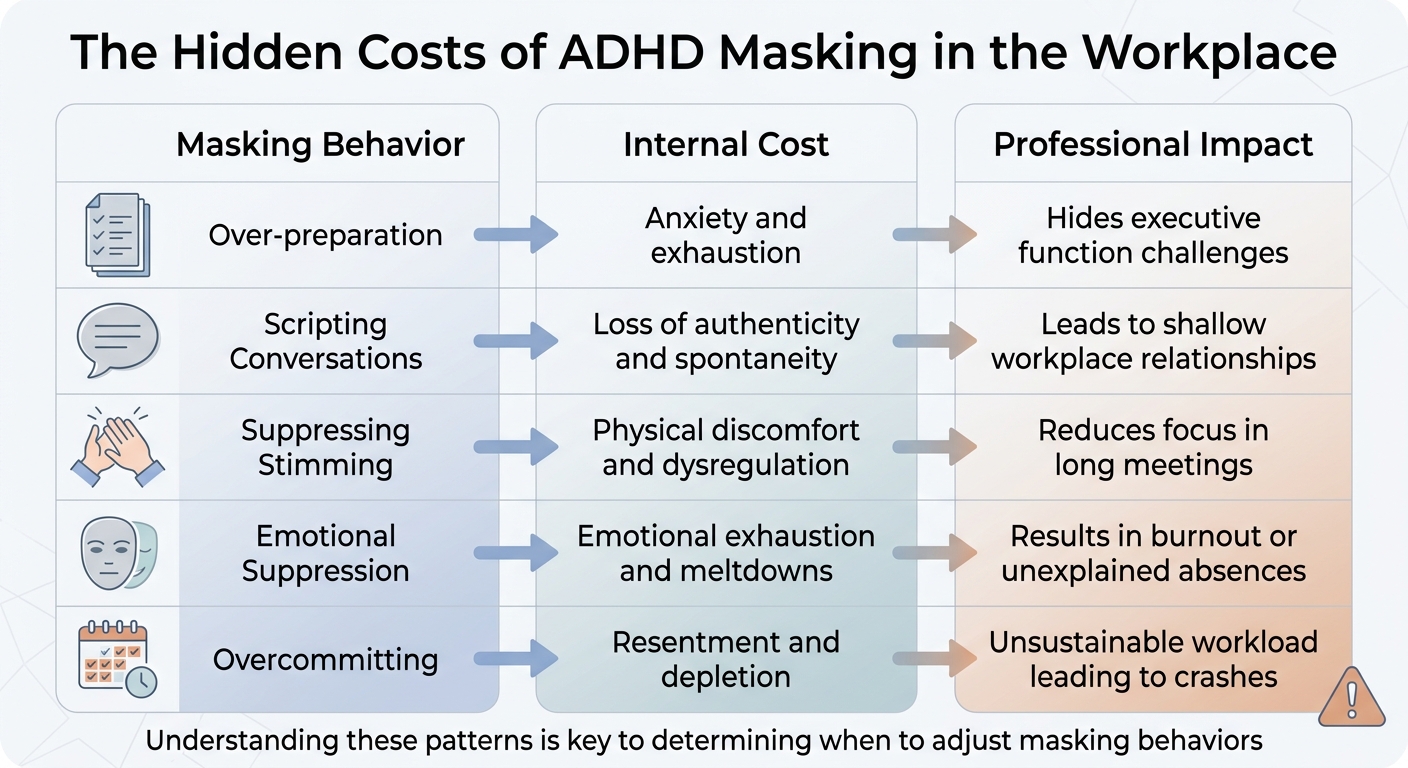
ADHD Masking Behaviors: Internal Costs and Professional Impact
Masking changes more than just how others perceive you - it reshapes your sense of self. The constant vigilance needed to monitor your behavior, suppress natural tendencies, and present a "neurotypical" version of yourself drains mental energy, leaving little room for recovery - even after a good night's sleep. Think of it like a computer running a demanding program non-stop; eventually, everything slows down.
Emotional and Mental Health Risks
The mental strain of prolonged masking becomes evident in predictable ways. Constant self-checking - questions like "Am I sitting still enough?" or "Did I interrupt too much?" - keeps your nervous system in a state of hypervigilance, similar to living with chronic anxiety. Over time, this can erode your sense of identity, leaving you unsure of what you genuinely enjoy versus what you've trained yourself to endure.
The stress isn't just emotional - it takes a physical toll, too. Chronic masking can suppress your immune system, disrupt your sleep, and lead to headaches or digestive issues. These physical symptoms are a direct reflection of the internal strain masking creates. A 2024 systematic review reinforced what many already suspected: social camouflaging is strongly linked to poor mental health, strained relationships, and a fractured sense of self.
Impact on Professional Relationships and Career
The effects of masking don't stop at personal health - they seep into your professional life as well. While masking might help you succeed at work, it often comes at the cost of genuine connection. When colleagues only see your "masked" self, relationships can feel superficial, even in a high-functioning team. This disconnect can leave you feeling isolated, surrounded by people but still lonely because no one truly knows you.
Masking also creates challenges in career progression. Ironically, the better you are at masking, the less visible your struggles become to managers and HR. This leads to a frustrating paradox: you're seen as "high-functioning", but the effort it takes to maintain that image goes unnoticed. Many professionals get promoted for their technical skills, achieved through overcompensation, only to face difficulties in leadership roles that require unscripted social interaction. For those who are highly skilled, masking can also stifle the expression of their intellectual insights, creating a sense of being undervalued. This disconnect is often described as the "Cassandra effect" - you’re ahead of the curve intellectually, but your ideas are overlooked, leading to frustration and discouragement.
Here’s a breakdown of common masking behaviors and their consequences:
| Masking Behavior | Internal Cost | Professional Impact |
|---|---|---|
| Over-preparation | Anxiety and exhaustion | Hides executive function challenges |
| Scripting Conversations | Loss of authenticity and spontaneity | Leads to shallow workplace relationships |
| Suppressing Stimming | Physical discomfort and dysregulation | Reduces focus in long meetings |
| Emotional Suppression | Emotional exhaustion and meltdowns | Results in burnout or unexplained absences |
| Overcommitting | Resentment and depletion | Unsustainable workload leading to crashes |
Understanding these hidden costs is key to determining when to adjust or let go of masking behaviors.
When Masking is Necessary
While masking can come with hidden costs, there are times when it becomes a practical and necessary strategy. Not every workplace offers the safety or understanding needed for full authenticity, and certain professional situations may require a level of self-regulation to safeguard your career and well-being. The challenge lies in recognizing when masking serves as a strategic choice rather than an ongoing burden.
Workplace Scenarios Requiring Masking
There are specific professional settings where heightened self-monitoring is unavoidable. For instance, job interviews often demand a significant degree of masking. In these high-stakes moments, you're not just highlighting your qualifications - you’re also managing first impressions and navigating potential biases. Simple actions like controlling fidgeting, carefully scripting responses, or mirroring conventional social behaviors can influence whether you secure an opportunity or face rejection.
"Masking reduces the immediate social cost of being different, making it a short-term social tool." – Maddison Henley, PA-C, CAQ-PSY
Masking also becomes a protective measure in environments where being open about differences might lead to microaggressions or lost opportunities. It’s less about pretending to be someone else and more about ensuring your safety in spaces that may not yet fully embrace or understand neurodivergence.
The Role of Selective Masking
While some situations call for masking, it's equally important to know when to ease off. Effective masking isn't about doing it constantly - it’s about using it as a tool, selectively and intentionally. Selective masking means deciding when to regulate your behavior based on the situation's demands and your own mental energy. This approach helps preserve your "cognitive budget", allowing you to allocate mental resources only when the professional payoff outweighs the cost.
"The goal isn't to stop masking overnight... The goal is to make it a choice rather than a compulsion. To know when you're doing it. To understand what it costs." – Dr. Becky Spelman, Counselling Psychologist
Another key aspect of selective masking is planning recovery time. For example, if you anticipate a client meeting that requires significant masking, schedule a break afterward - whether that’s a quiet lunch alone or a walk without social demands. These intentional pauses can help prevent the burnout that often follows prolonged masking. When masking is a deliberate, temporary response to high-stakes situations, it becomes a survival tool. However, if it turns into an unconscious, constant habit fueled by shame, it may be time to reevaluate your approach.
Signs It's Time to Stop Masking
Masking can have its benefits, but there comes a point when the energy it demands outweighs the advantages. Many professionals, especially those who have masked for years, may struggle to recognize when they've crossed that line. The challenge? They’ve lost touch with what “normal” fatigue feels like, making it harder to distinguish everyday tiredness from the more severe warning signs of overexertion.
Recognizing Burnout and Emotional Strain
Your body and mind often give clear signals when masking shifts from a protective tool to a harmful habit. One of the first red flags is persistent fatigue that doesn’t go away, even with rest. You might sleep a full eight hours but still feel mentally and physically drained. Some people describe a “crash” as soon as they leave work, where exhaustion - both physical and emotional - hits hard.
On the emotional side, recurring feelings of fraudulence or a disconnect from your true self are key indicators that masking is taking a toll. Studies highlight that burnout symptoms affect up to 93% of adults with ADHD, compared to only 30% of neurotypical adults. Other signs to watch for include:
- Heightened irritability
- Difficulty managing suppressed emotions
- Intense feelings of loneliness
- Physical tension or visible anxiety
- Reliance on alcohol or other substances to relax
"How hard would it be to swim gracefully while holding a beach ball under the water? You might be able to do it for a while, but eventually, that ball will surface. Keeping it underwater will take a lot of energy - and the same goes for hiding your ADHD symptoms." – ADDA Editorial Team
Weighing the Pros and Cons of Masking
If you’re questioning whether masking is still serving you, it’s helpful to weigh the benefits against the downsides. Here’s a breakdown of the trade-offs:
| Pros of Continued Masking | Cons of Continued Masking |
|---|---|
| Temporarily avoids social stigma or professional judgment | Leads to chronic emotional and physical burnout |
| Helps you adapt to non-neurodivergent environments in the short term | Increases risk of anxiety, depression, and suicidal ideation |
| Prevents immediate relational conflicts | Causes loss of self-identity and feelings of being a "fraud" |
| May offer temporary career benefits | Delays proper diagnosis and access to support |
If the “cons” column resonates with your current experience - especially if you’re noticing multiple warning signs - it’s worth considering alternatives to constant masking. These signs suggest it’s time to explore strategies that allow you to embrace your authentic self while managing challenges in a healthier, more sustainable way.
Strategies to Adapt and Balance Authenticity
When dealing with the emotional toll of chronic masking, it's important to strike a balance between being authentic and meeting workplace expectations. This isn't about making a dramatic shift overnight but rather about finding a steady, manageable approach that respects your individuality while fulfilling professional obligations.
Selective Unmasking in the Workplace
Authenticity doesn't have to be an all-or-nothing decision. Start by identifying the situations that feel most draining. Are there specific environments where you feel the pressure to mask heavily, like during high-stakes meetings or presentations? On the flip side, are there spaces where you feel more at ease, such as with a supportive colleague or mentor? Pinpointing these areas helps you understand where masking takes the biggest toll.
Instead of sharing everything about your diagnosis, focus on communicating your needs in a way that feels comfortable. For example, you could say to your manager, "I rely on notes and timers to help me stay organized because my brain processes things a bit differently." This kind of conversation can pave the way for accommodations - like flexible scheduling, adjusted priorities, or tools like noise-canceling headphones - without requiring a full disclosure.
You might also try small steps toward authenticity, like admitting when you're feeling overwhelmed or allowing yourself subtle movement during meetings with understanding coworkers. After particularly demanding interactions, plan for short recovery breaks to recharge.
"Authenticity isn't all-or-nothing; think of it as a dimmer switch, not a light you flip." – ADHD Insight Hub
These small, intentional changes can help you build trust and create a more supportive work environment over time.
Building a Support Network
As you make these adjustments, connecting with others who share similar experiences can be incredibly grounding. Joining ADHD-focused communities allows you to practice authenticity in a safe space while learning practical strategies from peers. Platforms like On/Off Genius provide resources tailored to professionals managing ADHD in the workplace. Additionally, working with an ADHD coach or mentor can help you develop systems that align with how your brain works, making day-to-day tasks more manageable.
Identity-Affirming Practices
Reducing masking often involves reconnecting with the parts of yourself that have been hidden. Simple practices like journaling or mindfulness exercises can help you notice and pause masking habits, such as overly rehearsed conversations or suppressing natural behaviors like stimming. Therapy that focuses on ADHD can also address the inner voice that tells you your authentic self isn't "professional" enough.
These steps aren't quick fixes, but they provide the space to process the energy you've spent on masking and to rebuild a more sustainable relationship with yourself. Over time, these practices can help you embrace your true self while still meeting workplace expectations.
"Masking does not mean your ADHD is mild. It means you are working incredibly hard to appear as though it is." – ADHD Mentor
Conclusion
Masking ADHD often showcases your ability to navigate neurotypical environments, but the real question is whether the toll it takes is worth it. If masking leaves you feeling drained, disconnected from your true self, or emotionally exhausted, it might be time to reevaluate.
Instead of masking all the time, consider a more balanced approach. For example, you could reserve masking for critical moments, like a big presentation, while allowing yourself to be genuine around trusted colleagues. Using tools and accommodations can also ease the effort of "fitting in" while still meeting your professional goals.
Pay attention to warning signs like chronic fatigue, physical stress, or a sense of losing your identity. These could be signals that it's time to adjust your strategy.
"Unmasking is a skill, not a goal. Some days you'll hide, and other days you'll breathe out and be seen. Both are fine." – Sarah Johnson, MD
Your professional ambitions and mental health don’t have to conflict. By reflecting on your masking habits, finding safe opportunities for authenticity, and shifting your mindset from "How do I act normal?" to "What does my ADHD brain need to thrive?" - you can create a more sustainable way forward. Instead of channeling all your energy into constant performance, you can focus on work that aligns with your natural strengths. For more guidance on navigating ADHD in professional spaces, visit On/Off Genius.
FAQs
How do I know if I’m masking or just being professional?
Masking means deliberately or unconsciously concealing ADHD traits to blend in with neurotypical behaviors. This often results in emotional fatigue. On the other hand, professionalism is about displaying appropriate behavior in a way that stays true to who you are. If you find yourself feeling worn out or acting to avoid judgment, you might be masking. Professionalism, however, should feel natural and reflect your values - not like you're putting on an act.
What’s a safe way to unmask at work without oversharing ADHD?
Being open about ADHD at work starts with self-awareness. Take time to understand your own needs and challenges before deciding what to share. When you're ready, focus on gradually sharing relevant details with trusted colleagues or supervisors.
For instance, instead of diving into personal details, you might explain specific strategies that help you stay productive or request accommodations that support your performance. Keep the focus on what helps you succeed rather than disclosing too much about your personal life.
It's also important to set clear boundaries. Share only what feels necessary and comfortable, and increase openness at your own pace. This approach helps maintain both your privacy and a genuine connection with others in the workplace.
How can I recover after high-masking days to avoid burnout?
Recovering from high-masking days begins with acknowledging when your strategies for coping start to feel overwhelming. It's okay to take a step back - give yourself the space to rest and reset. Allow time for breaks from masking, focus on self-care, and think about the specific triggers behind your exhaustion. Slowly ease back into routines that feel comfortable and manageable. Masking can take a toll on both your emotional and physical well-being, so it’s essential to give yourself the time to recharge and adjust your approach when necessary.