How ADHD Professionals Spot Burnout Early
Early physical, emotional, cognitive and workplace signs of ADHD burnout and practical steps to act before executive function collapses.

ADHD burnout is different from regular exhaustion. It’s a cycle of deep mental, physical, and emotional fatigue caused by managing ADHD symptoms, hyperfocus, and neglecting self-care. Unlike typical ADHD symptom fluctuations, burnout brings persistent exhaustion, emotional detachment, and cognitive fog that don’t improve with rest. Here’s how to recognize it early:
- Physical signs: Lingering fatigue, poor sleep, headaches, and muscle tension.
- Sensory changes: Increased sensitivity to noise or light.
- Emotional shifts: Irritability, disconnection, or feelings of inadequacy.
- Cognitive issues: Forgetfulness, mental fog, and perfectionism leading to procrastination.
- Behavioral changes: Withdrawal from work, avoidance, and trouble maintaining routines.
Early intervention is key. Track your energy levels, set boundaries, and prioritize rest. If burnout persists, seek professional support to manage executive dysfunction and protect your well-being.
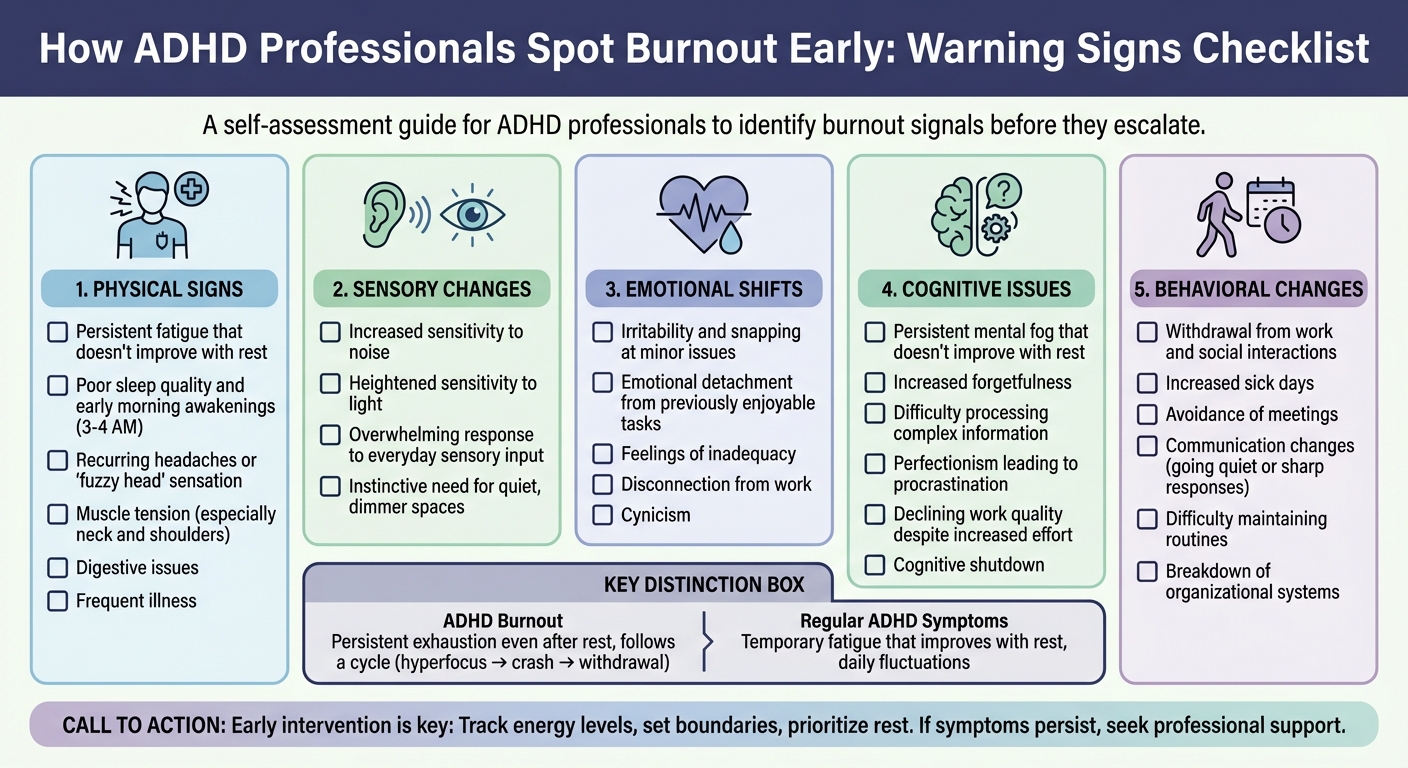
Early Warning Signs of ADHD Burnout: Physical, Emotional, Cognitive and Behavioral Indicators
ADHD Burnout vs. Worsening ADHD Symptoms
How Burnout Differs from ADHD Symptom Changes
When ADHD symptoms worsen, they often show up as increased distraction or temporary fatigue that improves after rest or sleep. Burnout, on the other hand, feels like a deeper, unshakable exhaustion paired with a lack of interest - even after resting. You might wake up feeling drained, with tasks that once excited you now seeming impossible to even begin.
While ADHD symptoms are marked by distraction and rapid shifts in focus, burnout tends to bring emotional detachment, a loss of interest, and even cynicism about work. Dr. Floriana Reinikis, a clinical psychologist who works with neurodivergent individuals, highlights this difference:
"In burnout what we see is different from neurotypicals is that they may still look like quite hyperactive, quite restless. While in neurotypicals we find a burnout tends to slow people down".
Burnout also goes beyond typical ADHD procrastination. It can lead to a cognitive shutdown, where processing complex information becomes almost impossible. This hits executive functions - like planning, organizing, and time management - particularly hard. A 2024 study revealed that deficits in executive function directly link ADHD to job burnout.
To tell the difference, try tracking your energy patterns using a journal or app. ADHD often fluctuates daily, while burnout tends to follow a cycle: intense hyperfocus, a crash, and eventual withdrawal. Recognizing these patterns is important because confusing burnout with ADHD can delay getting the right help.
Why Accurate Identification Matters
Identifying burnout correctly is essential because it affects your well-being and work in ways that go beyond typical ADHD challenges. Mislabeling burnout as ADHD can make things worse - pushing yourself harder only drains your executive functions further. Jason Olin, Ph.D., describes burnout as persistent exhaustion, irritability, self-doubt, and a loss of interest in work.
Recovering from burnout tied to ADHD isn’t just about cutting back on work; it also involves acknowledging your neurodivergence and addressing executive dysfunction. Early recognition can help reduce the mental strain of trying to appear neurotypical, which is often a major source of exhaustion.
Don’t wait too long - over 70% of adults with ADHD also deal with conditions like anxiety or depression, making early intervention critical. Spotting the signs early helps set the stage for managing burnout effectively, which will be covered in more detail later.
Physical and Sensory Warning Signs
Physical Indicators of Burnout
One of the most telling signs of burnout is persistent fatigue - an exhaustion so deep that even extended periods of rest don’t seem to help. This isn’t the usual tiredness from a long day; it’s a lingering, all-encompassing weariness that feels impossible to shake.
Burnout also tends to wreak havoc on sleep. Many people experience sudden awakenings in the early hours, often around 3:00–4:00 AM, accompanied by racing, anxious thoughts. ADHD author David Greenwood captures this experience vividly:
"Our sleep even gets worse… Not only less, but worse… I just would rehearse potential bad things at two in the morning and how I was going to deal with them".
Other physical signs include recurring headaches or a "fuzzy" sensation in the head, which can be a sign that your brain is overwhelmed. Muscle tension, particularly in the neck and shoulders, is common, as are digestive issues or a tendency to fall sick more frequently. These physical symptoms can be compounded by changes in how your body processes sensory information.
Increased Sensory Sensitivities
If everyday sensory input - like office chatter or the glare of fluorescent lights - suddenly feels unbearable, it could be a sign of burnout. This heightened sensitivity happens because the constant mental effort of managing ADHD symptoms drains your brain's ability to filter out unnecessary sensory information. You might find yourself instinctively reaching for noise-canceling headphones or seeking out quieter, dimmer spaces as your nervous system struggles to cope. These subtle shifts in how you experience your environment can be your body’s way of signaling that it’s overwhelmed.
ADHD Burnout Explained: Symptoms, Triggers, and Step-by-Step Recovery Plan
Emotional and Cognitive Red Flags
Burnout doesn't just drain your energy - it also takes a toll on your emotional and mental well-being. Recognizing these shifts early can help you address burnout before it becomes overwhelming.
Emotional Changes to Watch For
Burnout can create a rollercoaster of emotions. You might find yourself snapping at coworkers over minor issues or feeling completely disconnected from tasks that used to excite you. David Greenwood, author of Overcoming Distractions, captures this emotional detachment well:
"You may know that you still love that thing in your mind, but now your feelings are disconnected from it".
This emotional numbness often comes hand-in-hand with feelings of inadequacy, making it harder to engage with work or personal projects that once brought you satisfaction.
Cognitive Warning Signs
Mentally, burnout can feel like a persistent fog. You might forget details you’d typically remember, struggle to think clearly, or notice a dip in the quality of your work - even as you push yourself harder to compensate. This mental haze can lead to an obsessive focus on perfection, such as rewriting emails multiple times before sending them. Jason Olin, Ph.D., highlights the absurdity of this behavior:
"Sometimes the best antidote to perfectionism is laughing at the absurdities, the way your brain insists you can't send an email until you've rewritten the salutation four times".
For those who’ve relied on perfectionism as a coping mechanism - especially individuals managing ADHD - this strategy can eventually backfire, leaving them stuck in a cycle of overthinking and mental paralysis.
Social and Behavioral Changes
Burnout doesn’t just affect how you feel - it reshapes how you act, especially at work. It can lead to withdrawal, avoidance, and even changes in how you communicate. For adults with ADHD, this often means taking more sick days and facing higher risks of work-related mental health challenges compared to those without ADHD.
Avoidance and Withdrawal at Work
When burnout takes hold, social interactions at work may feel like an uphill battle. You might find yourself skipping meetings, calling in sick more often, or mentally checking out even when you're physically present. Communication habits can also shift - maybe you go unusually quiet in discussions or react sharply to minor issues via email. Neurodiversity advocate Adam Carter captures this struggle perfectly:
"You are not weak or overreacting if you cry in the toilets after 'just a bit of feedback' then stare at your inbox completely frozen".
This behavior often follows a period of hyperfocus. During these phases, you might overcommit to tasks, only to crash hard afterward. What looks like procrastination to others is often your brain shutting down to protect itself from further stress. This withdrawal deepens isolation and worsens the mental strain of masking ADHD traits.
The Cost of Masking ADHD Symptoms
Masking ADHD traits at work - like rehearsing conversations, obsessively checking emails, or creating elaborate systems to stay organized - can be exhausting. As Simply Psychology explains:
"The effort of masking ADHD traits to fit in with neurotypical expectations at work can be incredibly tiring, using up valuable cognitive and emotional resources".
This effort takes an even greater toll when Rejection Sensitive Dysphoria (RSD) comes into play. Neutral feedback might feel like a personal failure, pushing you to mask even more and speeding up the burnout cycle. Ironically, the strategies that once helped you succeed can become the very things that lead to your breakdown. Adults with ADHD are particularly vulnerable to this pattern, experiencing burnout at much higher rates than their neurotypical peers. Spotting these changes early is crucial to prevent them from spiraling into severe executive dysfunction.
The Executive Dysfunction Exhaustion Cycle
Burnout can wreak havoc on essential mental systems, particularly for professionals with ADHD. Pushing beyond limits often worsens executive functioning. Dr. Janina Maschke, an ADHD and Executive Functioning Coach, puts it this way:
"ADHD burnout is characterized by a profound level of mental, physical, and emotional exhaustion, driven by the daily demands of managing ADHD symptoms."
This creates a vicious cycle: the strain on executive functions intensifies burnout symptoms, which in turn worsens executive dysfunction. Chronic stress plays a significant role here, as it disrupts dopamine transmission. This disruption affects motivation, impulse control, and cognitive flexibility. Research has shown that challenges in executive function often mediate the link between ADHD and job burnout. One of the most immediate casualties of this stress is working memory.
How Chronic Stress Affects Working Memory
When burnout takes hold, working memory tends to falter quickly. Tasks that were once second nature suddenly feel like monumental efforts. This increased cognitive strain drains executive resources at an alarming rate. The resulting cycle is all too familiar: hyperfocus and overcommitment lead to a major crash, which is then followed by procrastination, guilt, and eventual shutdown.
In an attempt to compensate, many fall into perfectionistic behaviors - double-checking emails, rehearsing conversations repeatedly, or building overly intricate systems. Ironically, these efforts often backfire, fueling procrastination and keeping the brain locked in crisis mode. Psychologist Jason Olin captures this perfectly:
"Sometimes the best antidote to perfectionism is laughing at the absurdities, the way your brain insists you can't send an email until you've rewritten the salutation four times."
This highlights the need to break free from the burnout cycle, as the fear of failure can keep you stuck in a state of perpetual vigilance, relying on crisis mode to get anything done.
When Executive Dysfunction Becomes Unmanageable
As working memory struggles worsen, another red flag is the breakdown of routines. Organizational systems that once helped you stay on track may suddenly feel impossible to maintain. Cognitive fog becomes a constant companion, stubbornly persisting even after rest. Forgetfulness increases, and even the smallest tasks can feel overwhelming. ADHD coach Paula Engebretson captures this perfectly:
"Burnout occurs when work approaches are out of sync with what our brains actually need."
For the ADHD brain, repetitive or unstimulating tasks can be especially draining, accelerating the cycle of burnout. If you're finding it hard to start even the simplest tasks or notice that mental fog persists despite sleep, it may be time to take immediate action to manage your executive dysfunction.
Steps to Address Early Burnout
Spotting burnout early and taking action is crucial for breaking the cycle. These strategies are designed to align with how your ADHD brain works, making it easier to interrupt patterns of exhaustion and frustration. The goal? To work with your brain, not against it.
How to Structure Effective Breaks
Crafting breaks that truly recharge you starts with a plan. Use a Recovery Protocol that includes task triage, decluttering your workspace, and creating a "dopamine inventory" of quick, satisfying tasks. In 2024, ADHD coach Caren Magill introduced the "Capacity Dashboard" system for neurodivergent business owners. This tool tracks four key areas - energy, executive function, environment, and emotions - to signal when it’s time to switch into recovery mode.
Dr. Jason Olin emphasizes the importance of incorporating small rewards throughout tasks to sustain energy and counteract negative self-talk. The takeaway? Don’t wait until you’ve finished a big project to celebrate - sprinkle in rewards along the way.
Another helpful strategy is the "Pause Practice." Before committing to something new, take a moment to assess your energy levels and drop nonessential tasks. As Magill explains:
"Every time you honor your capacity limits, you're building better self-trust and resilience".
From there, focus on fine-tuning your environment and energy to keep the momentum going.
Managing Energy and Adjusting Your Environment
ADHD capacity is influenced by physical, mental, emotional, and environmental factors. Start by setting non-negotiables - your top three must-haves for functioning well. This could mean prioritizing 8 hours of sleep, daily movement, or quiet downtime. Build your routine around these essentials and check in regularly on key metrics like energy levels (high/medium/low), executive function (sharp/foggy/offline), workspace order, and emotional state.
If your workspace feels overwhelming, even a quick cleanup - an "environment reset" - can ease mental clutter. Additionally, set "acceptable" goals for tasks. Prioritizing timely completion over perfection can help you avoid the perfectionism trap that often leads to burnout.
When self-directed strategies fall short, it’s important to recognize when to get outside help.
When to Seek Professional Support
If rest doesn’t ease your exhaustion or if you’re stuck in a cycle of overwhelm and shutdown that disrupts your daily life or career, it’s time to reach out for professional help. Therapy can be especially helpful in addressing the connections between perfectionism, procrastination, and that critical inner voice. ADHD-focused coaching or therapy can also prevent burnout from spiraling into a pattern of quitting jobs or abandoning responsibilities.
Don’t wait until you’re completely drained. Seeking support early - when you first notice persistent mental fog or unmanageable executive dysfunction - can make all the difference in breaking the cycle and protecting your career and wellbeing.
Conclusion
Identifying burnout isn't about waiting until you're completely drained - it's about catching the small signs before they grow into something bigger. If you find yourself constantly tired despite getting enough sleep, snapping over minor issues, or feeling overwhelmed by tasks you used to handle with ease, these could be the early signals of burnout. For adults with ADHD, the risk of job burnout is notably higher compared to their neurotypical counterparts, making early recognition even more critical for maintaining both your career and overall well-being.
The upside? You now have actionable strategies to break the burnout cycle. From monitoring your energy levels to rewarding yourself with small incentives during the day, these approaches align with how your ADHD brain operates. As Dr. Janina Maschke wisely puts it:
"Productivity doesn't define your worth: Taking time to rest is crucial for long-term well-being".
With these tools in hand, focus on adjusting your work habits. ADHD burnout isn't about working too hard - it’s about working in ways that don't suit you. If perfectionism starts morphing into procrastination, that’s your cue to reassess and shift gears. The difference between staying on top of things and hitting a breaking point often lies in how quickly you respond to these early signs.
Choosing to prioritize recovery isn’t a sign of failure - it’s a way to protect your energy, capacity, and future success.
FAQs
How can I tell ADHD burnout from a bad ADHD week?
ADHD burnout goes beyond the occasional rough week - it’s a deeper, more enduring struggle. It’s marked by mental, physical, and emotional exhaustion, making even previously manageable tasks feel impossible. Severe challenges with executive function are a hallmark of burnout, leaving individuals feeling stuck and overwhelmed.
By contrast, a bad ADHD week is temporary. It might involve setbacks like heightened distraction or a dip in motivation, but these typically improve with some rest and time. Burnout, however, doesn’t resolve on its own and often demands specific recovery strategies to address the prolonged stress and internal overload that caused it.
What quick daily check-in can help me catch burnout early?
To spot burnout early, make it a habit to do a quick daily check-in. Pay attention to small shifts in your physical, mental, and emotional well-being. Signs to watch for include feeling more tired than usual, struggling to focus, experiencing mood swings, or a growing sense of being overwhelmed. Noticing these subtle changes can help you address stress early and work toward regaining balance.
When should I get professional help for ADHD burnout?
If you're dealing with ongoing mental, physical, and emotional exhaustion despite trying to manage it on your own, it might be time to seek professional help for ADHD burnout. Some key indicators to watch for include intense executive dysfunction, difficulty regulating emotions, or overwhelming sensory experiences that interfere with your daily routine. Reaching out early can make a big difference in tackling these challenges.