5 Tips to Balance Ambition and Energy with ADHD
Use energy-based ADHD strategies—track rhythms, break goals, take micro-breaks, use visual lists, and reframe 'shoulds'.

Living with ADHD often means juggling bursts of energy and focus with periods of exhaustion. This can lead to a cycle of intense productivity followed by burnout. The key to breaking this pattern? Align your energy with your goals by working with your brain's natural tendencies. Here's how:
- Track your energy patterns: Identify when you're most focused and align tasks accordingly.
- Break big goals into small steps: Simplify tasks and reward yourself for progress.
- Use micro-breaks and movement: Short pauses and physical activity recharge mental focus.
- Create visual to-do lists: Externalize your tasks to reduce mental strain and stay organized.
- Reframe "shoulds" into "wants": Change how you approach tasks to reduce procrastination.
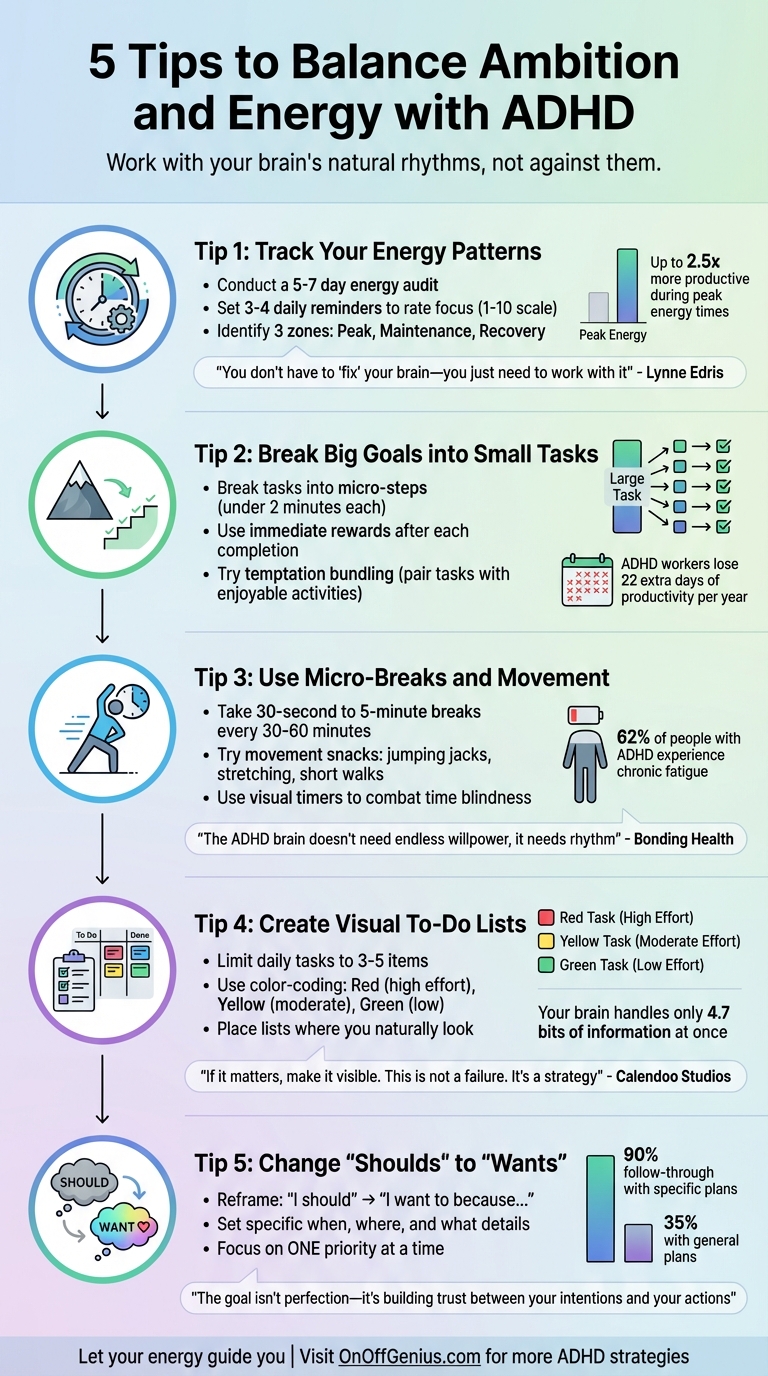
5 Strategies to Balance Ambition and Energy with ADHD
The ADHD Edge is Working With Your Energy, Not Against It
1. Track Your Natural Energy Patterns
For those with ADHD, energy levels can be unpredictable. Advice like "tackle tough tasks first thing in the morning" might not work if your peak energy hits later in the day. Instead, try conducting an energy audit to identify when you're at your best, so you can plan your day accordingly.
Here's how to do it: for 5–7 days, set 3–4 phone reminders throughout the day - morning, midday, afternoon, and evening. When each alert goes off, rate your mental focus, creative flow, and social energy on a scale of 1–10. Use a unique chime to make these check-ins easy to remember.
Pay attention to physical signs, too. Are you making extra coffee runs? Rereading the same paragraph? Fidgeting more than usual? These can all be clues about your energy levels. Studies show that working during your peak energy times can make you up to 2.5 times more productive. Once you've tracked your patterns, divide your day into three zones: peak, maintenance, and recovery.
And don’t feel pressured to be "on" all the time. ADHD coach Lynne Edris puts it perfectly:
You don't have to "fix" your brain - you just need to work with it.
Our brains naturally cycle through 90–120 minute waves, signaling when it’s time for a break.
Use this information to match tasks to your energy zones. Save high-energy periods for creative or strategic work, tackle emails and routine tasks during maintenance times, and reserve recovery zones for low-stakes activities. Recognizing these patterns helps you shift from self-criticism to a more effective strategy.
2. Break Big Goals into Small Tasks with Rewards
Big projects can feel like an insurmountable mountain, especially for ADHD brains. The overwhelming number of tasks can make it tough to even start. The trick isn’t about forcing yourself to work harder - it’s about breaking tasks down into such tiny steps that starting feels almost effortless. For example, instead of setting a daunting goal like "write quarterly report", start with something as simple as "open the document" or "write one paragraph." These bite-sized tasks make it easier to get moving and build momentum. This approach works well with ADHD tendencies, helping you make steady progress without draining your energy.
On top of that, ADHD brains often deal with what researchers call reward deficiency. This means they need stronger and more immediate incentives to stay engaged. Completing a micro-task provides a small dopamine boost, which creates a positive feedback loop, motivating you to tackle the next step. By combining small, actionable steps with instant rewards, you can keep your energy levels up instead of feeling depleted.
Start by doing a brain dump - write down every single task or idea related to your project. This clears the mental clutter and gives you a clear list to work from. Next, break those tasks into steps so tiny they feel almost silly. For example, if something takes less than two minutes, do it right away to prevent those small tasks from piling up.
Pair each completed task with a reward. Try temptation bundling, like responding to emails only while sipping your favorite coffee or folding laundry while watching a show you love. Set up "if-then" triggers, such as, "If I finish this outline, then I can listen to one favorite song". The key here is immediacy - since ADHD brains struggle with distant rewards, frequent and tangible incentives work much better than far-off goals.
Tracking your progress can also help reinforce a sense of accomplishment. Use sticky notes or checkboxes to mark tasks as done, giving yourself that instant dopamine hit. On average, workers with ADHD lose about 22 extra days of productivity per year compared to their neurotypical peers. However, by breaking big goals into smaller, manageable chunks and incorporating rewards, it’s possible to bridge that gap. This method not only makes intimidating projects more approachable but also syncs perfectly with the natural energy rhythms discussed earlier.
3. Use Micro-Breaks and Movement Snacks
Your brain isn't designed to power through long work sessions without a breather. For people with ADHD, micro-breaks are like a quick recharge for your focus, helping you avoid that overwhelming crash that can sneak up on you. These breaks don’t have to be long - just 30 seconds to 5 minutes can do the trick. Taking a short pause every 30 to 60 minutes can help interrupt hyperfocus cycles, which often leave you drained. These little resets create the perfect setup for what’s called movement snacks.
Movement snacks are short bursts of physical activity - think jumping jacks, stretching your arms, or even a 5-minute walk around the block. These simple moves get your blood flowing, boost oxygen to your brain, and release dopamine, much like ADHD medications do. As Bonding Health puts it:
The ADHD brain doesn't need endless willpower, it needs rhythm.
Because ADHD often comes with time blindness, relying on your internal clock isn’t always reliable. Instead, try visual timers - like sand timers or digital countdowns - to make time feel more concrete. When the timer buzzes, do a quick sensory reset: step outside to feel the breeze or try the 3-Breath Reset. For this, close your eyes, take a deep inhale, and let your shoulders drop as you exhale - repeat this three times for a calming effect.
Did you know that about 62% of people with ADHD deal with chronic fatigue from the sheer mental effort it takes to stay focused? Micro-breaks can help fight that exhaustion by giving your nervous system a chance to recover. To make these breaks a regular habit, pair them with something you already do - like taking a breather after sending an email or while waiting for your coffee to brew. This way, breaks feel automatic and less like an extra task. By weaving micro-breaks into your routine, you can manage your energy in a way that feels natural and sustainable.
4. Create Visual To-Do Lists and Add Variety
Your brain can only handle about 4.7 bits of information at once, so trying to juggle multiple tasks mentally is a recipe for overload. Visual to-do lists serve as an extension of your memory, taking the pressure off and keeping your priorities front and center. A sticky note on your desk, for instance, won’t vanish into a sea of browser tabs, making physical lists especially effective. These tools not only help you stay organized but also reduce the mental strain of remembering everything.
Physical systems like simple Kanban boards offer immediate feedback and a tangible sense of progress. Moving a sticky note from "Doing" to "Done" delivers a small but satisfying boost of motivation. To avoid feeling overwhelmed, limit your daily list to three to five key tasks. You can also color-code tasks based on their energy demands - red for high effort, yellow for moderate, and green for low. This way, you can quickly assess your workload and adjust your approach. Adding variety, like changing the colors of your lists or switching up your environment, can make tasks feel less monotonous and more manageable.
Variety is especially important for ADHD brains, which are driven by interest rather than importance. Even the most urgent task can feel impossible if it’s dull. As Calendoo Studios wisely notes:
If it matters, make it visible. This is not a failure. It's a strategy.
To keep your tasks in sight and in mind, place your lists where you naturally look - a habit tracker on your bathroom mirror, a whiteboard in your workspace, or an index card on your keyboard highlighting your top priority. This approach not only simplifies task management but also helps you sync your workload with your natural energy levels.
5. Change 'Shoulds' to 'Wants' and Plan Ahead
For individuals with ADHD, the word "should" often acts as an internal roadblock. Words like "should" or "must" can stir up feelings of anxiety, guilt, resentment, or even panic, creating resistance that leads to procrastination. Mariam Hager, Clinical Director and LCSW, highlights the importance of reframing these thoughts:
The use of reframing can help change a should-statement, filled with guilt and pressure, to a more productive statement.
When you find yourself thinking, "I should", take a moment to question it: Who says I should? or Is this a fact or just an opinion? Then, reframe the thought. For example, instead of saying, "I should finish this report", try, "I want to finish this report because it aligns with my promotion goals." Similarly, "I should organize my desk" becomes, "I’d like to organize my desk so I can focus better tomorrow." This shift in language encourages self-compassion and helps transform vague obligations into actionable steps.
Planning ahead also plays a critical role in managing ADHD. It eliminates the need for spur-of-the-moment decisions, which can be mentally exhausting. Instead of leaving tasks open-ended, define the specifics - when, where, and what needs to be done. Research published in the British Journal of Health Psychology found that individuals who set clear dates, times, and locations for tasks are 90% more likely to follow through, compared to only 35% for those with general plans.
One helpful strategy is adopting a "One-Thing" priority system. Focus on a single important task rather than an overwhelming list of "shoulds." Limit your main priorities to five key intentions, and move less critical tasks into an "It would be nice if" category. As Learn to Thrive with ADHD explains:
The goal isn't perfection - it's building trust between your intentions and your actions.
To make planning feel less daunting, schedule your next day during a low-energy period when tackling strategic work feels too challenging. Use your energy audit to map out tasks: reserve high-energy periods for demanding "wants" and save routine or low-effort "shoulds" for times when your energy dips. This approach turns planning into a tool that supports your brain’s natural rhythms, making it less of a chore and more of an ally in your broader energy management system.
Conclusion
Managing ambition and energy with ADHD isn't about working harder - it's about working in sync with your brain's natural rhythms. As Lynne Edris, a Productivity & ADHD Coach, explains:
You don't have to 'fix' your brain - you just need to work with it.
By tracking your energy patterns and reframing how you approach tasks, you can create a system that supports steady progress without burnout.
Switching to an energy-based management style changes how you think about productivity. Your brain processes only about 4.7 bits of information at a time. Tools like color-coding tasks by energy demand, using visual timers, and adopting routines like a "Landing Pad" help reduce the effort needed to start challenging tasks.
With this foundation, achieving sustainable high performance becomes a deliberate process. Simple adjustments - like scheduling buffer time between meetings, using body doubling for accountability, and viewing rest as essential refueling - help you maintain momentum while avoiding the crash that often follows hyper-focus.
The main takeaway? Let your energy guide you. When you align your ambitions with your energy, you turn it into a strategic advantage, protecting your drive instead of depleting it.
For more tools and insights tailored to professionals with ADHD, visit On/Off Genius.
FAQs
How do I find my peak energy time?
Tracking your daily focus and energy levels is key to figuring out your peak energy time. Take note of when you feel most driven or productive during the day. Once you identify those high-energy periods, schedule your most demanding tasks to match them. This way, you're working in sync with your natural rhythms, which can lead to higher productivity and less burnout. Over time, look for patterns and fine-tune your schedule to make the most of your energy.
What rewards work best for ADHD motivation?
The best rewards for boosting motivation in individuals with ADHD are immediate and concrete. These align perfectly with the brain's dopamine-driven system, making them highly effective. Examples include offering small treats, taking quick breaks, or using visual tools like progress trackers. These strategies help sustain focus and promote steady progress.
How can I avoid burnout after hyperfocus?
To keep burnout at bay after periods of hyperfocus, it's crucial to plan and manage your energy wisely. Build in intentional breaks both before and after intense work sessions. Balance these demanding periods with activities that help you recharge - whether that's engaging in a hobby, taking a walk, or simply moving your body.
Structured systems can also be a game-changer. Try using pre-session checklists or time management strategies to avoid pushing yourself too hard. Pay attention to early signs of fatigue, and make rest a priority to keep your energy levels steady and prevent exhaustion.