ADHD Burnout Recovery: Focus Strategies That Work
Targeted ADHD burnout recovery: prioritize sleep, simplify tasks, use Pomodoro, set boundaries, and build dopamine-supporting routines.

ADHD burnout happens when managing ADHD symptoms becomes overwhelming, leading to mental, physical, and emotional exhaustion. Unlike regular burnout, rest alone doesn’t solve it. It impacts focus, motivation, and confidence, particularly for high achievers who often push themselves too hard.
Key Recovery Steps:
- Recognize Burnout Signs: Persistent fatigue, emotional numbness, increased distractibility, and task paralysis.
- Quick Recovery:
- Prioritize sleep (7–9 hours) and rest.
- Use the Pomodoro Technique (25-minute work sessions with breaks).
- Simplify tasks using the Rule of Three and break them into smaller steps.
- Restore Focus:
- Practice mindfulness (e.g., STOP method, body scanning).
- Establish consistent routines and use tools like focus apps or timers.
- Long-Term Maintenance:
- Break tasks into micro-steps.
- Set boundaries to avoid overcommitting.
- Boost dopamine through exercise, sunlight, and protein-rich meals.
Recovery takes time and requires adjusting your workload, routines, and priorities to align with your energy and needs. By building supportive systems and focusing on what matters most, you can regain balance and prevent future burnout.
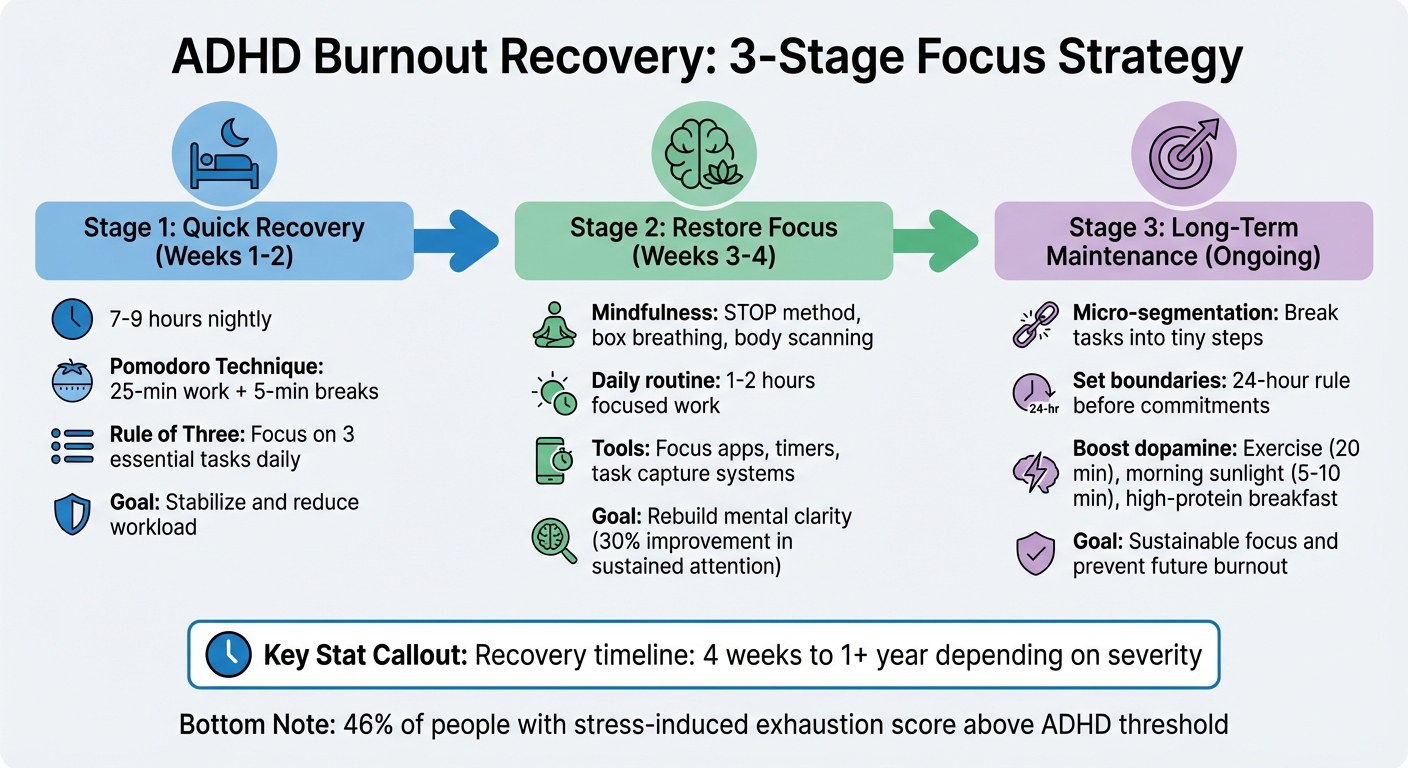
3-Stage ADHD Burnout Recovery Process: From Quick Relief to Long-Term Focus
How to Recognize ADHD Burnout
Physical and Emotional Warning Signs
ADHD burnout often manifests through both physical and emotional distress. Physically, you might feel persistently exhausted, stuck in a "wired but tired" state. Other symptoms could include tension headaches, muscle pain, digestive issues, appetite fluctuations, and even a weakened immune system . On the emotional side, it’s common to experience mental fog, irritability, emotional numbness, or even a growing sense of cynicism. Everyday decisions can suddenly feel daunting and overwhelming .
ADHD burnout is when your mind, body, and emotions all feel like they are running on empty. It happens when you become overwhelmed by the effort required to manage your ADHD symptoms and meet daily demands.
These warning signs often lead to shifts in how you approach daily tasks, which can have ripple effects at work and home.
Changes in Work and Personal Behavior
Burnout doesn’t just affect your body - it reshapes how you function in your daily life. Core ADHD traits, like distractibility, disorganization, and time blindness, can intensify, leaving you stuck in "task paralysis", where even simple responsibilities feel insurmountable . At work, this might look like missed deadlines, an increase in mistakes, or bouncing between periods of intense hyperfocus and complete shutdown . Strategies that once helped you stay on top of things may no longer work.
Socially and professionally, you might find yourself pulling back. You could start avoiding interactions or doing the bare minimum at work, a pattern some refer to as "quiet quitting" - a state where you feel emotionally detached from tasks or roles that once mattered to you .
Why Catching Burnout Early Matters
Spotting burnout early can make a world of difference. Taking action before it spirals into "habitual burnout" - where exhaustion becomes your norm - can save you from a lengthy recovery process. Once burnout becomes deeply entrenched, regaining balance often requires significant lifestyle changes . Ignoring those early warning signs can also wreak havoc on your executive functioning, making basic tasks like replying to emails or even showering feel impossible .
ADHD burnout is seen clinically when patients present complaining not only of physical fatigue but also anxiety and feeling generally exhausted... This can lead to a feeling of burnout or exhaustion due to the energy toll needed for patients to keep up with the demands of life.
Unchecked burnout doesn’t just drain your energy - it can also heighten anxiety, deepen depression, and lead to feelings of hopelessness . In fact, a 2025 study revealed that 46% of participants with stress-induced exhaustion disorder scored above the ADHD threshold, highlighting the increased risk of severe burnout. Recognizing the signs early allows you to intervene before exhaustion takes root, giving you a better chance at recovery.
ADHD Burnout Explained: Symptoms, Triggers, and Step-by-Step Recovery Plan
Stage 1: Quick Recovery Methods
When burnout strikes, these strategies can help you regain control and start feeling like yourself again.
Make Rest and Sleep Your Priority
Sleep is essential when you're dealing with burnout. Your brain needs 7–9 hours of quality sleep each night to recharge, process memories, and regulate neurotransmitters. Interestingly, over half of people with ADHD might have an undiagnosed sleep disorder, which can worsen symptoms like inattentiveness and emotional reactivity.
Instead of just setting a "go to bed" alarm, try a "get ready" alarm an hour earlier. Use that time to dim the lights, which encourages melatonin production, and do a "brain dump" by jotting down your thoughts, worries, or tasks. This can help clear mental clutter and prepare you for restful sleep. ADHD coach Casey Dixon explains:
People who have ADHD burn more cognitive energy to get through the activities of their lives.
Stick to your bedtime, even if you haven’t finished everything on your to-do list - it can wait until tomorrow. If you’re naturally a night owl, exposing yourself to bright light in the morning can help reset your internal clock. Once your sleep schedule stabilizes, you’ll be better equipped to gradually reintroduce focused work sessions.
Use the Pomodoro Technique for Light Work
In the first week or two of recovery, scale back your workload as much as possible. For tasks you can’t avoid, try the Pomodoro Technique: work for 25 minutes, then take a 5-minute break. This method isn’t about maximizing productivity - it’s about easing back into focus without overloading yourself. A visual timer, like a Time Timer, can help with time blindness and make the process feel more manageable.
Keep your work sessions low-pressure by limiting tasks to just one 25-minute block. Research shows that taking regular micro-breaks can improve sustained attention by up to 30% during extended tasks. Remember, your ADHD brain uses more energy for routine activities than a neurotypical brain, so you’ll need extra rest to avoid further exhaustion.
Once you’ve established a rhythm with short work sessions, the next step is to simplify your task management.
Simplify Your To-Do List
A cluttered to-do list can amplify burnout. Simplify things with the Rule of Three: focus on just three essential tasks each day. During this recovery phase, stick to survival-level priorities - everything else can wait. Break tasks into tiny, actionable steps to combat task paralysis. For instance, instead of writing "Clean the kitchen", jot down "Put three dishes in the dishwasher." Or instead of "Write report", start with "Open document." These small actions make it easier to get started without feeling overwhelmed.
Additionally, say "no" to non-essential requests as early as possible. Use a 24-hour rule before committing to new tasks to ensure you have the energy to handle them. Simplifying your to-do list doesn’t mean giving up - it’s about working smarter while allowing your brain the time it needs to recover.
Stage 2: Restore Focus and Mental Clarity
After stabilizing your sleep and reducing workload, the next step is to rebuild your mental sharpness. This phase is all about gradually improving your ability to focus and think clearly, without overexerting yourself. By weeks 3–4, aim for 1–2 hours of focused activity daily, choosing tasks that demand moderate attention rather than diving into high-stress projects.
Add Mindfulness Practices to Your Day
Mindfulness can be a game-changer for calming a busy mind and lowering stress levels. Studies suggest that mindfulness-based techniques are particularly effective for reducing stress and improving emotional control in people with ADHD. These practices help you stay present and make deliberate choices rather than impulsive ones.
One quick method to regain control when overwhelmed is the STOP Method:
- Stop what you’re doing.
- Take a deep breath.
- Observe your thoughts and feelings without judgment.
- Proceed mindfully.
For deeper relaxation, try breathing techniques like box breathing (inhale for 4 counts, hold for 4, exhale for 4, hold for 4) or the 4-7-8 method (inhale for 4 counts, hold for 7, exhale for 8).
Another valuable tool is body scanning meditation. Spend 5–10 minutes lying down, mentally scanning your body from head to toe, and noticing areas of tension - like tight shoulders or a clenched jaw. Practicing this daily can help you stay aware of stress signals and prevent burnout from sneaking back in.
Pairing mindfulness with structured routines can help you stay on track without risking a setback.
Create Simple, Consistent Daily Routines
Having a predictable routine can ease the mental strain that comes from constant decision-making. Set clear boundaries for when your workday starts and ends. Begin with just 1–2 hours of focused work during your peak energy times - often in the morning for many people.
End your workday with a shutdown ritual to signal it’s time to rest. This could include closing your laptop, writing down three accomplishments for the day, or taking a short walk. These habits can help prevent work-related stress from spilling into your personal time.
To maintain progress without feeling overwhelmed, break tasks into micro-steps. For example, instead of writing "Complete project proposal", start with something small like "Open the document" or "Write one sentence". ADHD coach Caren Magill puts it best:
Align your life with your authentic values and passions... doing so will bring clarity to your decisions.
Using a weekly planner can also help you visually organize your priorities. Divide tasks into "high priority" (to tackle early in the week) and "lower priority" (to handle later). Once you feel comfortable, gradually increase your focus time by 30–60 minutes per week by weeks 3–4 to avoid overloading yourself.
With routines in place, supportive tools can make staying organized even easier.
Use Tools and Resources for ADHD Support
The right tools can reduce mental clutter and simplify organization, making it easier to stay on track without adding pressure. Here are some helpful options:
| Tool Category | Examples | How It Helps During Recovery |
|---|---|---|
| Focus Apps | Forest, Brain.fm | Use gamification or calming audio to sustain focus |
| Task Capture | Todoist, TickTick | Voice-to-task features support working memory |
| Time Management | Sunsama, Morgen | Visualizes time to combat time blindness |
| Habit Building | Finch, Habitica | Rewards consistency through gamified routines |
| Sensory Support | Noise-canceling headphones | Reduces distractions in your environment |
Voice-input tools are particularly handy, letting you quickly capture ideas without the hassle of typing or organizing. For example, apps like Forest make focus sessions fun by growing a virtual tree as you work, offering a small reward for staying on task. When choosing tools, prioritize those that emphasize "capture first, organize later", helping you keep your workflow low-stress and manageable.
Stage 3: Maintain Focus Over Time
Once you've regained mental clarity, it's time to shift gears and focus on building strategies that help you stay on track for the long haul. Long-term focus isn't about working harder - it's about working smarter and protecting your energy from the habits that led to burnout in the first place.
Break Work into Smaller Steps
The earlier steps helped you get back on your feet, but now it's all about sustaining that momentum. Breaking tasks into smaller, more manageable steps - known as micro-segmentation - is a proven way to avoid feeling overwhelmed. Even the smallest actions, like jotting down a single note or organizing supplies, can make daunting projects feel approachable.
The Attention Deficit Disorder Association explains:
Breaking tasks into smaller steps is an effective way of dealing with ADHD and overcoming feelings of paralysis.
As you complete each tiny step, check it off your list. This simple act can create a sense of progress and keep you motivated. To avoid interruptions, gather everything you need - like files, tools, or chargers - before starting a task.
For even more impact, use the "absurdly small" rule. For instance, instead of tackling "Clean the kitchen", start with "Put three dishes in the dishwasher". When tasks feel effortless, you're more likely to begin. Gradually extend your focused work time by 30–60 minutes each week to avoid slipping back into burnout. Studies show that without structural changes, the productivity boost from a vacation fades within 2 to 4 weeks.
Set Boundaries to Protect Your Energy
Setting boundaries is non-negotiable if you want to avoid burnout again. Without them, it's easy to fall into old patterns of overworking and exhaustion. Start by defining clear limits on your weekly hours and sticking to fixed start and end times for your workday. This helps protect your sleep and keeps stress hormones like cortisol in check.
To avoid impulsive decisions, apply the 24-hour rule before saying "yes" to new commitments. This pause can help you steer clear of overcommitting, which is a common challenge for people with ADHD. When estimating how long a task will take, double your initial guess to account for time blindness and reduce unnecessary pressure. Practice saying "no" to non-essential requests without feeling the need to explain yourself.
Structure your day around protected deep work blocks during your most productive hours, often in the morning. Group reactive tasks like emails and meetings into separate time slots. Prioritize high-stakes tasks early in the week so you can adjust if unexpected interruptions arise. And think like "Future You": take care of small chores or errands when you're already in action mode, so you can relax later.
| Boundary Type | Practical Application | Benefit |
|---|---|---|
| Temporal | Set weekly hour caps; fixed workday start/end | Protects sleep and reduces stress |
| Environmental | Quiet workspace; noise-canceling headphones | Minimizes distractions and conserves energy |
| Social | Say "no" to non-essential requests | Keeps focus on what truly matters |
| Cognitive | Deep work blocks; 24-hour rule for commitments | Reduces impulsivity and task-switching fatigue |
These boundaries aren't just about discipline - they're about creating the conditions for sustained focus and energy.
Do Activities That Boost Dopamine
Staying focused over time requires healthy dopamine levels, which are often lower in ADHD brains. Fortunately, there are practical ways to naturally boost dopamine and improve attention.
- Move your body: Physical activity, like a 20-minute run, increases dopamine and norepinephrine in the prefrontal cortex, sharpening your focus. Even short breaks - 5 to 10 minutes every hour - can improve attention by up to 30% during long work sessions.
- Get morning sunlight: Spend 5 to 10 minutes outside within an hour of waking. Morning light activates retinal cells that help release dopamine and regulate your sleep-wake cycle.
- Eat a high-protein breakfast: Foods rich in protein provide tyrosine, a key building block for dopamine. Nutrients like iron, magnesium, zinc, and vitamin B6 also support dopamine production.
Adding novelty and learning into your routine can also activate dopamine pathways. Whether it's diving into a new topic or exploring a hobby, curiosity-driven activities boost intrinsic motivation. To make mundane tasks more engaging, try gamifying your work: use timers, play energizing music, or commit to just 10 minutes to get started. Establish a sensory ritual - like lighting a candle or putting on a specific playlist - to signal your brain that it's time to focus.
Don't underestimate the power of social connection. Collaborating with others, even virtually, can stimulate dopamine-related reward systems and help maintain attention. Aim for 7 to 9 hours of quality sleep each night to restore dopamine receptor function during REM cycles. Aligning your activities with your personal values can also create a "flow" state that feels deeply fulfilling.
These strategies, combined with earlier recovery methods, provide a solid foundation for maintaining focus and avoiding future burnout.
Conclusion: Build Balance and Resilience
Main Takeaways from ADHD Burnout Recovery
Recovering from ADHD burnout takes time - ranging from about four weeks to over a year, depending on how severe the burnout is. The key to recovery lies in managing your capacity. Instead of pushing beyond your limits, work within them.
One of the most important steps is learning to rely on external structures. Burnout impacts your prefrontal cortex, the part of the brain responsible for focus, planning, and impulse control. This means you can’t depend solely on willpower or memory. External tools like lists, timers, templates, and reminders can help fill in the gaps. Think of resilience as managing your bandwidth - balancing your time, energy, interest, and attention - and adjusting your workload to match.
In the long run, preventing burnout means creating alignment in your life. This involves "unmasking" your ADHD traits and making sure your daily tasks reflect your core values. Trying to perform like others can lead to chronic stress, so it’s essential to focus on what truly matters to you. To start, identify three to five core values - like creativity, autonomy, or well-being - and assess whether your current responsibilities align with them. If they don’t, it may be time to make changes.
With these strategies, you can begin crafting a focus plan that works for you.
Next Steps: Create Your Focus Plan
Start by identifying three non-negotiable habits that are essential for your daily well-being. These might include things like getting eight hours of sleep, exercising for 20 minutes, or working in a quiet space. Build routines around these priorities, and before taking on new commitments, pause to ask yourself: Do I have the capacity for this? Is it worth the effort? What can I let go of to make room?.
For days when your energy is low, create a recovery checklist. This could include prioritizing tasks (deciding what can wait) and doing a quick environment reset, like a five-minute tidy-up. Break down your stressors into categories, such as "Environmental Distractions" or "Task-Related Demands", and develop specific coping strategies for each. Also, account for time blindness by adding 50% more time to your task estimates. For example, if something should take 20 minutes, plan for 30 minutes instead.
As you refine your plan, having access to ongoing support can make a big difference.
Where to Find More Support
If you’re seeking tools and strategies tailored to ADHD professionals, On/Off Genius offers resources to help you stay focused and build resilience. For more structured support, the Attention Deficit Disorder Association (ADDA) provides expert-led courses, productivity tools, and support groups through their ADDA+ platform. You can also work with neurodivergent-affirming therapists, ADHD coaches, or occupational therapists to get the accountability and customized treatment you need.
ADHD coach Caren Magill offers this reminder:
The world wasn't built for ADHD brains, but that doesn't mean we can't thrive in it. We just need to be strategic about how we use our capacity.
Recovery is achievable, and with the right strategies, you can create a sustainable way forward.
FAQs
How is ADHD burnout different from regular burnout?
ADHD burnout stands apart from regular burnout due to its unique causes and how it manifests. While regular burnout typically arises from external pressures like demanding workloads, ADHD burnout is fueled by internal challenges. These include executive function overload, heightened sensory stress, and struggles with emotional regulation. It often stems from the disconnect between how the ADHD brain operates and the expectations placed on it. Because of this, simply resting isn’t enough to fully recover.
How can I tell if I’m burned out or just procrastinating?
ADHD burnout often shows up as constant fatigue, difficulty concentrating, irritability, emotional depletion, and even physical issues like headaches or muscle tension. On the flip side, procrastination is more situational, usually tied to putting off particular tasks. If these feelings persist and seem overpowering, it’s more likely a sign of burnout rather than simple procrastination.
When should I get professional help for ADHD burnout?
If you're facing intense mental, emotional, or physical exhaustion due to ADHD, and it's interfering with your ability to manage daily life, it might be time to seek professional help. This is particularly crucial if burnout persists even after you've tried self-care or other coping strategies. Getting support early can make a big difference in helping you recover and get back on track.