Habit Stacking vs. Environmental Cues for ADHD
Use habit stacking plus environmental cues to build ADHD-friendly routines that work with your brain.
If you have ADHD, building habits can feel overwhelming due to challenges with memory, motivation, and focus. Two effective strategies - habit stacking and environmental cues - can help.
- Habit stacking connects a new habit to an existing one, creating a chain of actions (e.g., "After I pour coffee, I open my planner"). This reduces mental effort by automating routines.
- Environmental cues use visible or physical reminders (e.g., sticky notes, alarms, or objects placed strategically) to prompt actions when memory falters.
Both methods address ADHD-related struggles with executive function, but they work differently. Habit stacking builds routines, while environmental cues provide external triggers. Combining these strategies can create a supportive system tailored to ADHD needs.
Here’s a quick comparison:
| Feature | Habit Stacking | Environmental Cues |
|---|---|---|
| Mechanism | Links actions sequentially | Uses visual or physical reminders |
| Example | "After coffee, I take my meds." | Sticky note on monitor for a task |
| Strength | Builds momentum with routines | Helps when memory or focus is low |
| Challenge | Relies on anchor habit consistency | Cues can lose effectiveness over time |
Start small - pair a 30-second habit with an existing routine and add a visual reminder. Adjust as needed to find what works best for your brain.
Habit Stacking vs Environmental Cues for ADHD: Complete Comparison Guide
ADHD Habits That ACTUALLY Work
What is Habit Stacking?
Habit stacking is a strategy for creating new habits by connecting them to routines you already do automatically. Instead of relying on willpower or memory, you use an existing habit as a cue to trigger the new behavior. Essentially, one habit becomes the anchor for another.
This approach is especially helpful for people with ADHD, as it tackles common challenges with working memory. By tying a new habit to something you already do, you eliminate the need to actively remember when to start.
"Habit stacking reduces the mental load of trying to remember a new routine by capitalising on an existing habit to create the automated trigger required to initiate the new action." - Tony Coward, Accredited ADHD Business Coach
The Habit Stacking Formula
To put this method into action, use this straightforward formula: "After [Current Habit], I will [New Habit]." The trick is to choose a dependable anchor - something you do every day without fail. For instance:
- "After I pour my first cup of coffee, I will open my daily planner."
- "After I sit down at my desk, I will write my top priority for the day."
The key is to start small. Pick a habit that takes just 30 to 60 seconds to complete. This way, you're not overhauling your routine but gradually building momentum with manageable steps.
How Habit Stacking Helps with ADHD Challenges
Habit stacking is particularly effective for overcoming ADHD-related obstacles. By linking a new action to an established routine, you reduce the mental effort needed to start - it becomes a seamless transition.
This method also combats decision fatigue. When you pre-plan when and where a habit happens, you save mental energy for more important tasks.
Another advantage is how habit stacking compensates for low internal motivation. ADHD brains typically have 3% to 5% fewer dopamine transporters than neurotypical brains, making it harder to begin mundane tasks. Habit stacking provides an external structure, ensuring tasks get done even when motivation dips.
Up next, we’ll look at how environmental cues can further support ADHD management.
What are Environmental Cues?
Environmental cues, much like habit stacking, simplify habit formation by reducing the need to rely solely on memory. These cues are external triggers that prompt actions by making the next step more visible. While habit stacking connects behaviors together, environmental cues serve as a "backup" for your memory, ensuring you stay on track.
For professionals managing ADHD, these cues are especially effective. Maaya Hitomi from the Tiimo App refers to them as "environmental backup systems". They help compensate for challenges with working memory, which can fade quickly without external support. By designing your environment intentionally, you can create reminders tailored to your routines and specific needs.
"Visual cues bypass many of these executive functioning demands by creating direct pathways from seeing something to doing something."
– Maaya Hitomi, Tiimo App
When well-designed, cues - especially those that are colorful or stand out - can even provide small bursts of dopamine, which helps reinforce consistent habits.
Types of Environmental Cues
Environmental cues can take several forms, each designed to grab your attention in unique ways:
Visual Triggers
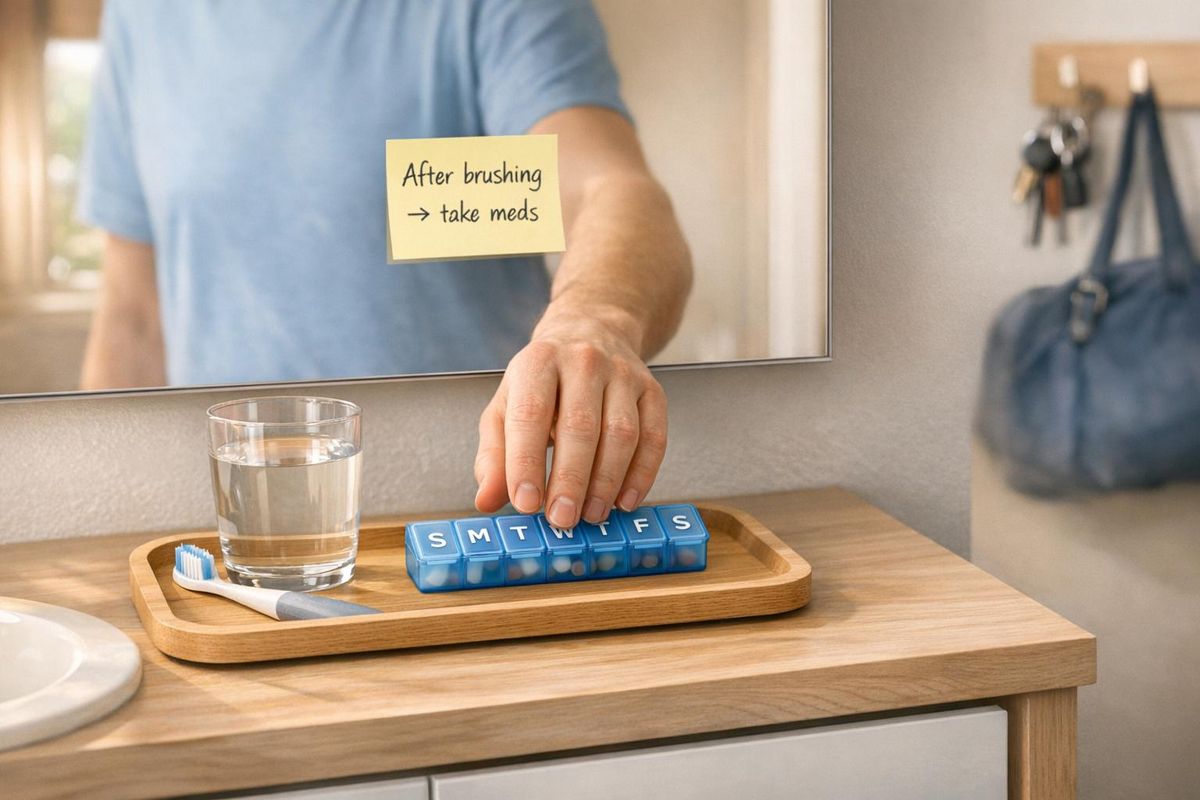
Think sticky notes on a monitor, color-coded folders on your desk, or reminders placed on your bathroom mirror. The trick is to position these cues where you'll naturally notice them, such as during your morning routine.
Location-Based Cues
Physical placement can be a powerful tool. For example, leaving your gym shoes by the door or setting up a charging station in a visible spot helps prompt action.
Sensory Prompts
Alarms, timers, and other auditory or tactile signals are also effective. An alarm clock placed across the room forces you to physically get up to turn it off. Visual timers or changes in lighting, like dimmed lights in the evening, can signal transitions between tasks.
| Cue Type | Examples | Function for ADHD |
|---|---|---|
| Visual Triggers | Sticky notes, color-coded files, mirror reminders | Cuts through mental clutter and grabs attention |
| Location-Based | Gym shoes by the door, charging station | Uses physical placement to encourage action |
| Sensory/Digital | Visual timers, phone widgets, alarms | Keeps time and progress visible |
These cues not only capture your attention but also help strengthen executive function.
How Environmental Cues Support Executive Function
Environmental cues are especially useful for addressing executive function challenges faced by individuals with ADHD. Research shows that those with ADHD often lag 30% to 40% behind their neurotypical peers in developing executive function skills. By offering "point-of-performance" support, these cues appear exactly when and where they're needed, freeing up mental capacity for focus and creativity. As ADHD Coach Maaya Hitomi explains:
"The more your routine lives outside your head, the more mental space you'll have to actually do it."
– Maaya Hitomi, ADHD Coach
These cues also help prevent what Michele Novotni, Ph.D., calls "ADHD gaps." These are the brief moments when forgetfulness, time blindness, or disorganization disrupt your day. By making the next step visible, environmental cues eliminate the need for constant decision-making, conserving your mental energy.
One thing to keep in mind: ADHD brains tend to tune out repetitive stimuli. To keep cues effective, update them regularly by changing their color, message, or placement.
Habit Stacking vs. Environmental Cues: Side-by-Side Comparison
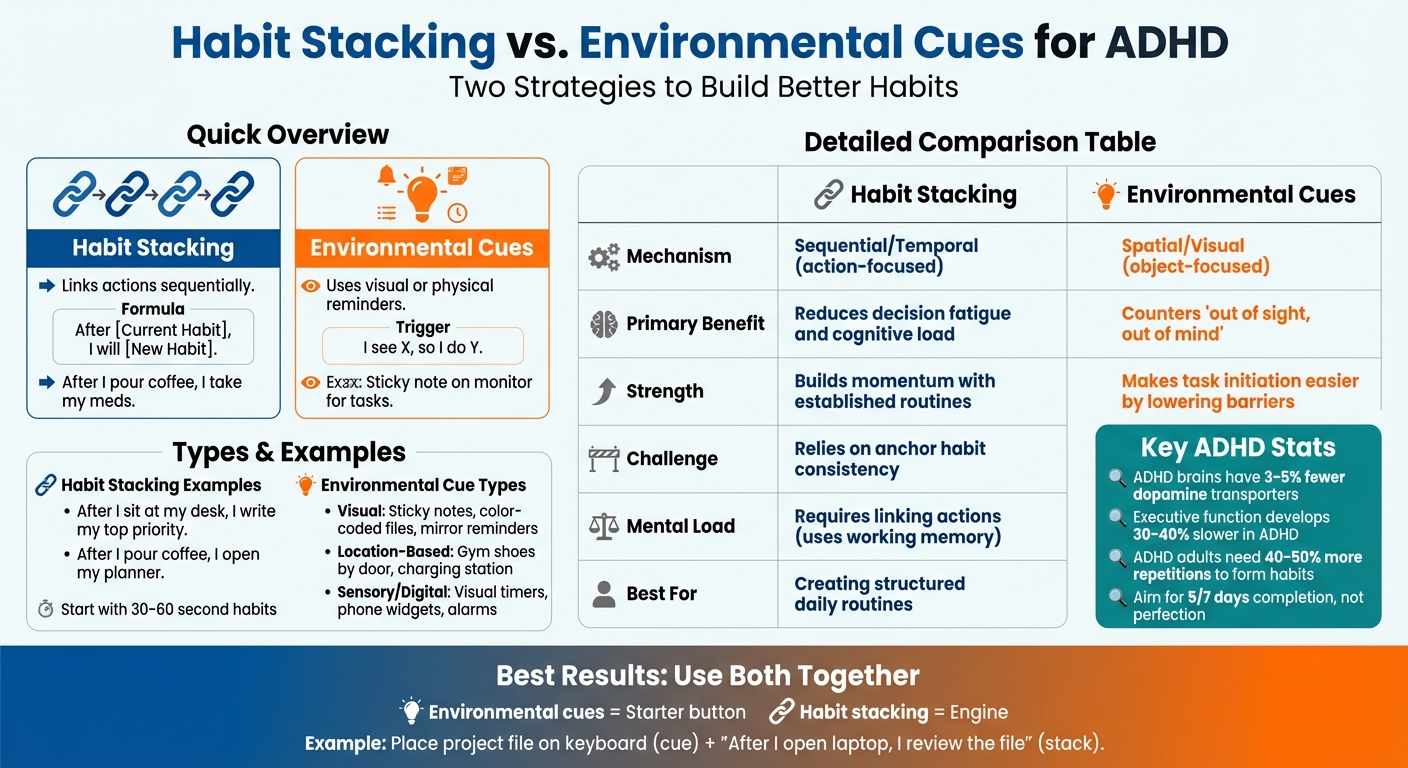
Habit stacking and environmental cues are two strategies designed to make forming habits easier, but they work in distinct ways. Habit stacking ties a new behavior to an existing routine, creating a sequence like, "After X, I do Y". On the other hand, environmental cues rely on visible or physical reminders to trigger an action, such as, "I see X, so I do Y". These cues are especially helpful when mental energy or executive function is running low. Both methods aim to simplify decision-making, but they engage the brain differently.
Think of habit stacking as the framework for building a routine, while environmental cues act as the nudge to get started. For instance, a professional might use habit stacking to streamline their morning routine, such as taking medication right after pouring coffee. Meanwhile, placing a yoga mat in a noticeable spot, like the bedroom doorway, can serve as a visual prompt to exercise. Each approach addresses the unique challenges of managing ADHD, particularly for professionals juggling multiple responsibilities.
Here’s a side-by-side look at how these strategies compare:
Comparison Table
| Feature | Habit Stacking | Environmental Cues |
|---|---|---|
| Definition | Connecting a new behavior to an existing, automatic habit | Using external reminders to prompt an action |
| Primary Mechanism | Sequential/Temporal (action-focused) | Spatial/Visual (object-focused) |
| ADHD Benefit | Reduces decision fatigue and eases cognitive load | Helps counter "out of sight, out of mind" |
| Professional Example | "After I pour coffee, I take my meds" | Placing a yoga mat in the bedroom doorway |
| Strengths | Builds on established routines for momentum | Makes task initiation easier by lowering barriers |
| Potential Drawback | Relies on consistency of the "anchor" habit | May become ineffective if cues are ignored, leading to clutter |
| Mental Load | Requires linking actions, which uses working memory | Reduces working memory demands |
Both strategies have their strengths and limitations, and the best choice depends on the situation. Habit stacking is great for creating structured routines, while environmental cues are a lifesaver when mental energy is low or when visual reminders are more effective.
Which Strategy Works Best for ADHD Professionals?
Both strategies bring their own strengths to the table for ADHD professionals. With energy levels that can fluctuate throughout the day, some moments might call for the structure of habit stacking, while others rely on the immediacy of environmental cues. Combining these approaches often creates a system that works with your brain, not against it.
Think of it this way: environmental cues act as the starter button, while habit stacking functions as the engine. For instance, placing a project file right on your keyboard serves as a clear prompt to get started. This pairing creates what experts refer to as a "dopamine bridge".
"ADHD isn't a character flaw or lack of willpower. It's a different operating system that needs different strategies."
– HabitsLab
This integrated method naturally leads to evaluating your workspace. Look around - are your cues still effective, or have objects shifted and routines broken down over time? Small disruptions can make cues less reliable. To strengthen your habit stacks, pair dependable daily actions (like checking email, pouring coffee, or shutting your laptop at lunch) with relevant cues. For example, if you place your walking shoes next to your laptop bag the night before, closing your laptop at lunch could trigger a reminder to take a movement break.
To maintain the effectiveness of your reminders, shake things up occasionally. Move sticky notes to new spots or switch the colors of your digital widgets. When it comes to habit stacks, try the "Minimum Delightful Product" approach: instead of committing to a 20-minute meditation, start with just two minutes to ease into the routine. These small, manageable steps can make a big difference. Keep in mind that for ADHD adults, forming an automatic habit may take 40% to 50% more repetitions than it does for neurotypical individuals. Track your progress by aiming for completion rates like 5 out of 7 days rather than striving for perfection - this helps prevent discouragement from occasional setbacks.
Conclusion
Your ADHD brain isn't broken - it just needs strategies that align with how it naturally operates. By combining habit stacking and environmental cues, you can create a system that works with your brain instead of against it. Habit stacking builds momentum by linking new behaviors to routines you already follow, while environmental cues offer the external reminders you need when working memory falters. Together, these strategies can form a productivity system tailored to your unique challenges, energy levels, and daily rhythms.
Start your routine with an environmental cue, then let habit stacking guide you through the rest. Keep in mind that ADHD symptoms can vary daily, so experimenting is key. What works during moments of focus might not hold up under stress, and that’s okay.
To begin, focus on one small habit that takes just 30–60 seconds to complete. Attach it to something you already do consistently - like making coffee, brushing your teeth, or checking your phone. Add a visual reminder in a spot you can’t miss to reinforce the trigger. Instead of aiming for perfection, track your progress by completing your habit on most days, like 5 out of 7. This approach helps avoid the shame that can come with inevitable disruptions.
"Working with a neurodivergent brain isn't about fixing anything - it's about finding strategies that honor how you're wired."
– A G, Sagebrush Counseling
FAQs
How do I pick a reliable anchor habit?
Choose a daily activity that’s already second nature to you - something you do without even thinking, like brushing your teeth, brewing your morning coffee, or glancing at your calendar. By tying your new habit to this established routine, you create a mental shortcut that makes it easier to stick with over time. These reliable anchor habits serve as triggers, helping you seamlessly integrate new behaviors into your day.
What can I do when cues start blending into the background?
When cues fade into the background, they stop being effective. To address this, make them stand out by using bold colors, unusual shapes, or positioning them in places that are hard to miss. Connecting cues to existing routines can also strengthen their influence. If they’re still too easy to overlook, introduce fresh, clear cues that grab attention and keep supporting your habits.
How do I combine both strategies without creating clutter?
To integrate habit stacking with environmental cues while avoiding clutter, link new habits to routines you already follow, such as brushing your teeth or brewing your morning coffee. These reliable, everyday activities serve as solid anchors, making it easier to establish new behaviors without overthinking. Keep your surroundings tidy and purposeful by assigning specific areas for particular tasks. This method helps reinforce habits while preserving a clean and distraction-free environment.