ADHD Self-Acceptance in Workplaces
Self-acceptance at work ends masking and turns ADHD traits into strengths through systems and accommodations.

ADHD impacts work performance in unique ways, often leading to challenges like time blindness, executive dysfunction, and masking behaviors. Many professionals with ADHD struggle with self-blame, burnout, and the pressure to hide their condition. However, self-acceptance can transform these challenges into manageable aspects of daily life, allowing individuals to work in alignment with their natural tendencies.
Key takeaways:
- Common challenges: Time mismanagement, difficulty with organization, and masking ADHD symptoms.
- Impact: 87% of ADHD professionals report negative effects on their careers, and untreated ADHD can cost up to 22 lost workdays annually.
- Solutions: Embrace ADHD traits as strengths, seek professional help (e.g., ADHD coaches), and advocate for workplace accommodations like quiet spaces or flexible hours.
- Workplace role: Employers can support ADHD professionals through clear deadlines, written instructions, and neuroinclusion training.
Self-acceptance isn't about fixing yourself - it's about understanding how your brain works and building systems that support your success.
ADHD Self-Awareness and the Relief of Self-Acceptance - Ep 131 with Tania Gerard
sbb-itb-f879324
Common Workplace Challenges for ADHD Professionals
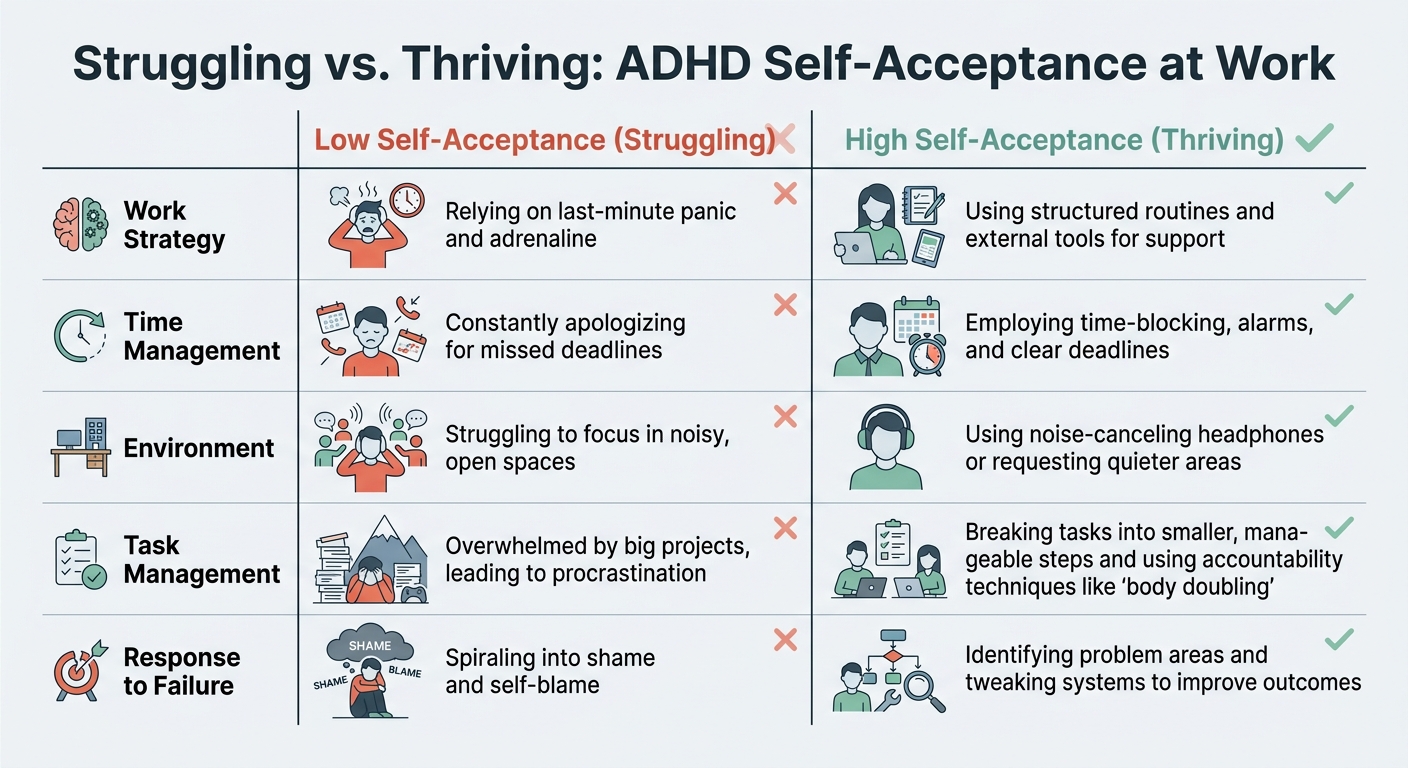
ADHD at Work: Struggling vs Thriving Comparison Chart
For professionals with ADHD, the workplace can feel like a constant mismatch with their natural rhythms. Many experience cycles of intense hyperfocus followed by struggles with even the simplest tasks, making daily work unpredictable.
One of the biggest hurdles is time blindness. This isn't about laziness or bad planning - it's a genuine difficulty in perceiving how time passes. For example, you might think a task will take 30 minutes, only to find it actually requires three hours. Michael Manos, PhD, a Pediatric Behavioral Health Specialist at Cleveland Clinic, highlights the impact:
"An incomplete or late task is a broken agreement... The lives of many adults with ADHD are littered with broken agreements".
This struggle with time often spills over into broader issues with workplace reliability.
Another challenge is executive dysfunction, which can make organizing and managing complex projects feel overwhelming, like juggling multiple crises at once. Pair this with working memory difficulties, and you end up with a pattern of being perceived as unreliable or reactive rather than proactive.
The consequences are serious. Untreated ADHD can lead to losing up to 22 workdays each year, with higher risks of job terminations or impulsive resignations. Collectively, this contributes to an estimated annual economic loss of $87–$138 billion.
Struggling vs. Thriving: A Comparison
The key difference between merely surviving at work and truly thriving often comes down to self-acceptance - whether you fight against your brain's tendencies or find ways to work with them.
| Feature | Low Self-Acceptance (Struggling) | High Self-Acceptance (Thriving) |
|---|---|---|
| Work Strategy | Relying on last-minute panic and adrenaline | Using structured routines and external tools for support |
| Time Management | Constantly apologizing for missed deadlines | Employing time-blocking, alarms, and clear deadlines |
| Environment | Struggling to focus in noisy, open spaces | Using noise-canceling headphones or requesting quieter areas |
| Task Management | Overwhelmed by big projects, leading to procrastination | Breaking tasks into smaller, manageable steps and using accountability techniques like "body doubling" |
| Response to Failure | Spiraling into shame and self-blame | Identifying problem areas and tweaking systems to improve outcomes |
Beyond these operational obstacles, the pressure to hide ADHD symptoms makes the workplace even more challenging.
The Cost of Hiding Your ADHD
Many ADHD professionals spend years masking - carefully monitoring their behavior, tone, and reactions to seem "normal." This constant self-policing drains the mental energy needed to excel at work. Ky, an ADHD advocate and author at The Vibe With Ky, explains the toll:
"For a long time, I wore a mask at work so tight it left bruises on my soul. I tried to be the 'perfect' corporate strategist... It led to burnout, exhaustion, and a lot of shame".
The fear of judgment is pervasive. A staggering 92% of ADHD professionals hesitate to share their diagnosis with coworkers, and 87% feel their condition has negatively impacted their careers. This silence often traps individuals in roles that don't align with their strengths. They work late to cover for time mismanagement or over-prepare to compensate for executive dysfunction, all while their confidence quietly deteriorates.
Dana Dzamic, Founder of ADHD Insight Hub, perfectly captures this reality:
"Undiagnosed ADHD at work often doesn't look like chaos. It looks like competence… powered by panic".
This reliance on "emergency mode" isn't sustainable. Eventually, the nervous system gives out, and burnout follows - not as a dramatic collapse, but as the moment when your body simply refuses to keep masking. Recognizing these challenges is the first step toward embracing self-acceptance, which can turn these struggles into opportunities for growth.
How Low Self-Acceptance Makes ADHD Harder
Seeing ADHD as a personal defect can make everyday challenges feel even more overwhelming. Struggles at work often bleed into how you see yourself, chipping away at your confidence.
Shame and Self-Blame
When self-acceptance is low, every misstep can feel like proof of failure. Dana Dzamic, Founder of ADHD Insight Hub, puts it this way:
"If you don't know ADHD is involved, you tend to blame yourself. You don't think, My executive functioning is overloaded. You think, What is wrong with me?"
This kind of self-blame creates a cycle of shame that saps your energy. The Enterprise ADHD Institute explains:
"Working harder can keep people in a shame-filled rut."
For many adults with ADHD, high intelligence paired with inconsistent work performance leads to a sense of unfulfilled potential. Even though they often excel on intelligence tests, they report lower self-esteem compared to their peers. A big part of this comes from the constant effort to "fit in." This masking tax - the mental toll of keeping every action, word, and reaction in check - drains the energy needed for other tasks. Over time, it leaves you feeling like an imposter, always fearing someone will see through the facade.
These internal struggles not only chip away at self-esteem but also directly impact your ability to perform at work.
Effects on Mental Health and Work Performance
The weight of self-blame doesn’t just hurt confidence - it also takes a toll on mental health and job performance. Many people with ADHD rely on adrenaline and anxiety to power through tasks, but this approach often turns competence into panic. The cycle of intense focus followed by mental crashes erodes self-trust, making you question your abilities. This lack of confidence can lead to settling for jobs far below your skill level. Research also shows that adults with ADHD change jobs more often than neurotypical individuals.
What might look like ambition from the outside is often just survival mode in disguise. But survival mode is exhausting. Over time, it leads to burnout, characterized by emotional numbness and brain fog, as your nervous system reaches its limit. Because ADHD is often internalized as a personal failure, many hesitate to ask for accommodations or support systems that could ease the load. Instead, they keep pushing harder, convinced that effort alone will fix everything, even when a new approach is what’s truly needed.
Understanding ADHD as a neurological difference - not a flaw - can help break this harmful cycle.
Practical Ways to Build Self-Acceptance
Breaking free from the cycle of shame often begins with understanding how your brain operates. As Ky, author and creator of The Vibe With Ky, explains:
"You do not have to fix your brain to succeed. You have to learn how to operate it".
This perspective shifts the focus from self-improvement to self-accommodation, paving the way for meaningful change.
Turn ADHD Traits Into Advantages
Self-acceptance means recognizing that your ADHD traits can be strengths, not weaknesses. Traits like creativity, curiosity, hyperfocus, energy, emotional depth, empathy, and resilience can be powerful assets. Research even suggests that identifying and leveraging these strengths can reduce symptoms of depression and anxiety while improving overall quality of life. The ADDA Editorial Team highlights this idea:
"When you view your ADHD through a balanced lens, you can use your strengths more intentionally to move toward your goals".
Start by asking yourself: What problems do I solve faster than others? What activities keep me deeply engaged? What skills come naturally to me? For example:
- Hyperfocus: Use it for deep work or creative projects by setting clear goals and using timers to manage your time effectively.
- High energy: Thrive in dynamic environments like fast-paced meetings or projects that require quick momentum.
- Emotional depth: Build trust, mentor others, and foster meaningful connections in team settings.
The trick is to stop masking - trying to conform to "neurotypical" expectations often leads to burnout and feelings of inadequacy. Instead, reframe challenges as opportunities to grow, which helps build resilience and confidence, especially when navigating career changes.
Get Help from ADHD Coaches and Therapists
Professional support can make a big difference when managing the challenges ADHD presents. Studies show that workers with ADHD lose an average of 22.1 workdays per year compared to their neurotypical peers. Coaches and therapists can help you shift from "trying harder" - which isn’t effective for neurological challenges - to building tailored strategies and external structures.
A coach, for instance, can help you find the right level of structure for your needs. Too little structure can leave you feeling unsupported, while too much might feel overwhelming or restrictive. They can also teach you how to distinguish between your strengths and moments of dysregulation, so you can use hyperfocus more intentionally rather than relying on it during crises.
Many ADHD coaches offer free discovery calls to help you determine if their approach fits your needs. However, it’s important to remember that ADHD coaching is a specialized tool and doesn’t replace professional mental health or medical care.
Speak Up About Your Needs
Fear of judgment often prevents ADHD professionals from speaking up - 92% worry about disclosing their diagnosis to coworkers. But you don’t need to share your medical diagnosis to advocate for yourself. Instead of saying, "I get easily distracted", you might say, "I produce my best work in a quiet environment". This shifts the focus from personal limitations to productivity.
Framing your needs in terms of output can open up conversations about adjustments that help you succeed. For example:
- Requesting work hours that align with your natural energy cycles, such as starting later in the morning to account for delayed melatonin release in ADHD brains.
- Asking for buffer time between meetings or requesting written follow-ups after verbal instructions.
Once you've made your requests, establish routines that help you stick to these adjustments and maximize their benefits.
Create Daily Routines That Work
Developing habits that address executive function challenges can make a noticeable difference. Consider these strategies:
- Break tasks into tiny, manageable steps (e.g., "Open Word document", "Write the title").
- Use body doubling for accountability.
- Apply the two-minute rule to tackle small tasks immediately.
- Set visual timers to combat time blindness.
Pay attention to your energy patterns. Reserve high-energy periods for demanding tasks while saving routine work for low-energy times. Also, watch for signs of executive function depletion - like an increase in food delivery orders. This "DoorDash Indicator" can act as a signal to rest rather than push yourself harder. Recognizing these signs helps you practice self-compassion instead of falling into self-criticism.
How Workplaces Can Support ADHD Professionals
While personal strategies are essential, workplace adaptations led by employers can make a huge difference in daily performance. Research shows that workers with ADHD lose an average of 22.1 days of role performance per year compared to their neurotypical colleagues. However, according to iterate ADHD, "Most performance losses stem from workplace structure, not ADHD itself". Despite this, 80% of UK adults assessed for ADHD report never receiving workplace support or reasonable adjustments. This highlights a significant gap in how workplaces address the needs of ADHD professionals.
Balance Flexibility with Clear Structure
Striking the right balance between autonomy and structure is key. Instead of enforcing rigid processes, employers can focus on setting clear outcomes and deadlines while allowing employees to decide how they achieve them. As iterate ADHD explains:
"What helps is clarity about outcomes and deadlines, alongside written confirmation of key points from verbal discussions. This removes a barrier to performance. It does not lower the standard".
Simple adjustments can have a measurable impact. For example, breaking projects into smaller tasks with specific deadlines (e.g., "Thursday at 2 P.M.") helps combat time blindness. Allowing 5–10 minute breaks between meetings gives employees time to mentally reset, while providing meeting agendas in advance and accommodating movement during sessions (like standing or fidgeting) supports focus.
These solutions are not only effective but also cost-efficient, averaging just $500 to implement. Additionally, universal practices - like sharing meeting summaries with all attendees - ensure ADHD professionals don’t feel singled out. This combination of structure and flexibility enables employees with ADHD to thrive.
Support Neurodiversity at Work
Creating a workplace that supports ADHD goes beyond formal policies. It requires management practices that promote psychological safety. Yet, only 27% of UK employers provide line managers with neuroinclusion training. Moreover, 31% of neurodivergent employees haven’t disclosed their condition to their managers, often due to fears of stereotyping (37%) or stigma (34%).
Psychological safety starts with open conversations. When managers ask questions like, "What is making this task hard?" or "What adjustments would help you perform at your best?" they create space for honest dialogue rather than relying on assumptions. As iterate ADHD notes:
"Disclosure is always a risk assessment. What changes the calculation is not a policy. It is a pattern of behaviour from the people you work alongside directly".
The benefits of supporting neurodivergent employees extend beyond individual performance. Companies that excel in disability inclusion report 28% higher revenue and double the net income on average. By fostering a culture of support, organizations can improve performance, build clearer expectations, and create an environment where all employees feel valued.
Tools and Insights from On/Off Genius
For those looking to deepen their understanding of ADHD workplace strategies, On/Off Genius (https://onoffgenius.com) offers practical tools and resources. Their blog provides actionable advice on managing focus, building effective routines, and advocating for accommodations - all tailored to professionals with ADHD.
Whether you need help framing accommodation requests, leveraging your strengths, or finding reassurance that others share your challenges, On/Off Genius offers tools designed to align with how your brain works. Instead of forcing you into neurotypical systems, their insights help you create approaches that truly suit your needs.
Conclusion
Self-acceptance isn't about giving up on growth or lowering your expectations. It's about letting go of the exhausting effort of masking and redirecting that energy into strategies that truly work for you. When you embrace your ADHD, you stop fighting against your brain and start building systems that align with how it naturally functions.
This perspective ties back to the earlier discussion on creating sustainable, brain-friendly approaches. Shifting the mindset from "I need to fix myself" to "I need to reduce friction" changes everything. Instead of depending on sheer willpower or adrenaline-fueled bursts of productivity, focus on creating systems like focus blocks, activation steps, and self-accommodations. These structures can drive productivity and well-being without requiring formal disclosure. As Dana Dzamic, Founder of ADHD Insight Hub, wisely notes:
"You don't need to work harder. You need to work differently. And you need to stop treating exhaustion as a moral failure".
Your ADHD traits - like hyper-focus, creativity, and emotional sensitivity - are not weaknesses; they're strengths waiting to be channeled. The key lies in designing a work environment that complements your brain's unique wiring. When you do, you'll find yourself noticing opportunities others overlook, solving problems in ways others can't, and delivering focused, impactful results.
Ultimately, the strategies discussed here begin with you. Whether it's through strategic disclosure, building a network of allies, or reframing how you see yourself - from "disorganized" to "strategically creative" - self-acceptance forms the foundation for meaningful change.
The world thrives on diverse ways of thinking. Your ADHD isn't a flaw to hide - it's a distinctive operating system that, with the right support, can become your most powerful professional advantage.
FAQs
How do I stop relying on last-minute panic to get work done?
To avoid the stress of last-minute scrambling, try building external structures that keep you on track. Set firm deadlines, break large tasks into smaller, manageable steps, and establish routines that work with your energy levels throughout the day. It’s also important to tackle perfectionism and self-criticism - two common culprits behind procrastination. By creating systems that work with your brain’s natural flow, you’ll find it easier to start tasks earlier and sidestep the chaos of rushing to finish.
What ADHD-friendly accommodations can I ask for without disclosing ADHD?
You can ask for adjustments such as flexible work hours, noise-canceling headphones, or task management tools without needing to disclose an ADHD diagnosis. These are everyday tools and strategies that many professionals use, so there's no need to share personal medical details.
How do I tell if I’m burning out from masking at work?
Burnout from masking at work can drain your energy and leave you feeling completely spent. It often shows up as irritability, declining performance, or a deep sense of emotional and physical fatigue. These are clear signs that your mental and emotional reserves are running low. Recognizing these signals is crucial - it’s your mind and body’s way of telling you it’s time to pause and prioritize self-care.