Ultimate Guide to ADHD Habit Tracking
Practical ADHD habit tracking strategies: visible cues, micro-habits, forgiving systems, and rewards for lasting progress.
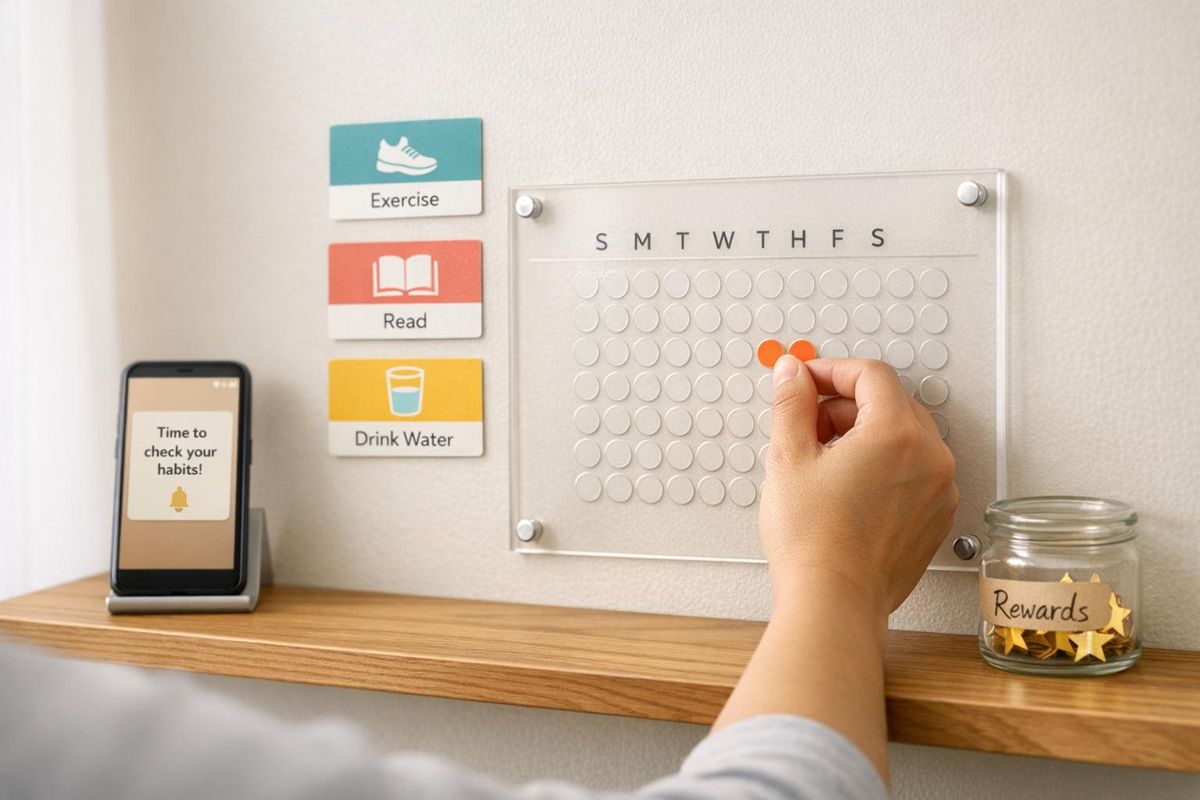
ADHD brains face unique challenges in forming habits, like time blindness, working memory issues, and a need for immediate rewards. Traditional habit systems often fail because they demand perfect consistency, which can lead to frustration. This guide focuses on practical strategies that align with how ADHD brains work - using visual cues, simple systems, and forgiving approaches to make habit tracking more effective.
Key Takeaways:
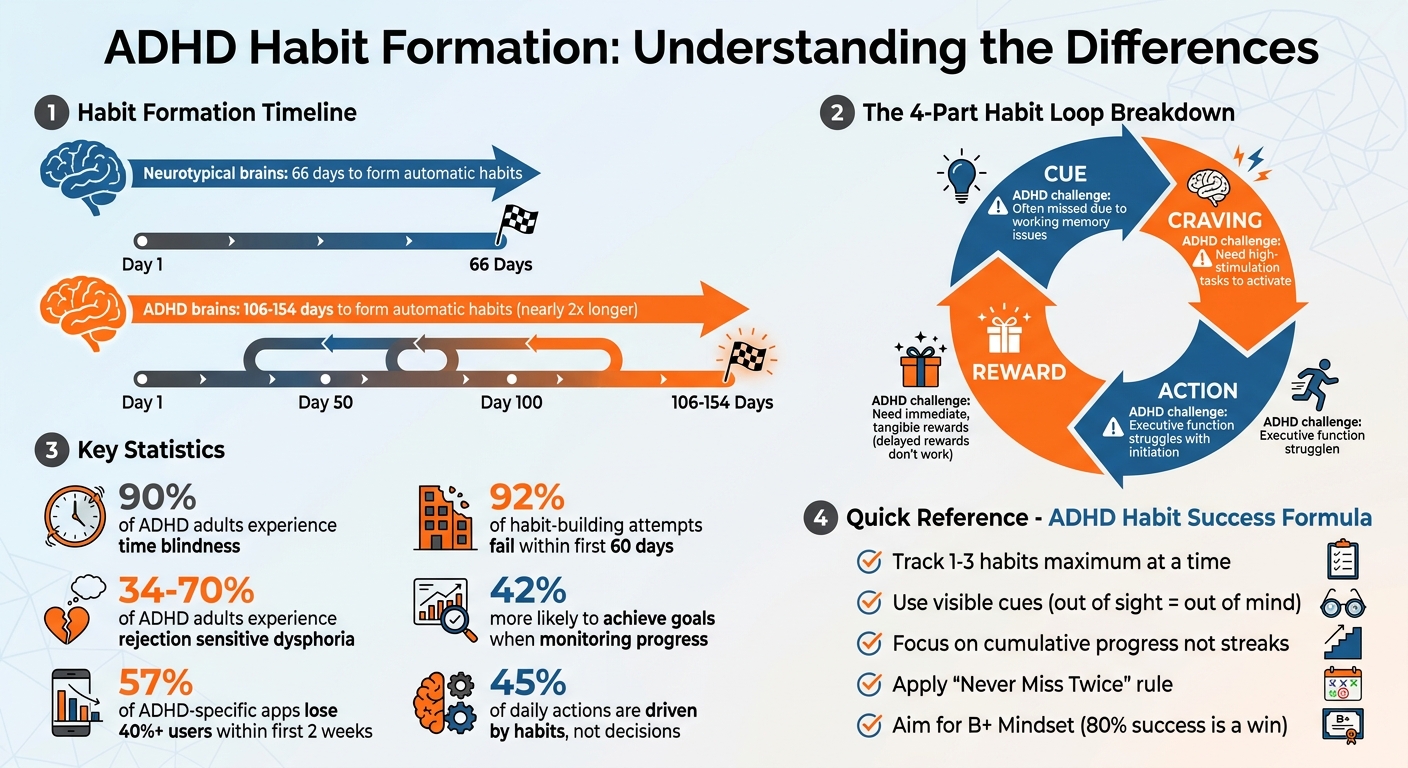
- ADHD brains take 106–154 days to form habits, nearly twice the time of neurotypical brains.
- Dopamine differences make immediate rewards and engaging systems essential.
- Tracking 1–3 habits at a time prevents overwhelm.
- Visible cues and habit stacking (linking new habits to existing ones) improve follow-through.
- Systems should focus on cumulative progress rather than punishing missed days.
By understanding how ADHD affects habit formation, you can build systems that work with your brain, not against it. The goal is progress, not perfection.
ADHD vs Neurotypical Habit Formation: Key Differences and Timeline
How to Build Habits with ADHD
sbb-itb-f879324
How Habits Form in the ADHD Brain
To create systems that work for an ADHD brain, it's crucial to understand how it processes habits differently. Unlike neurotypical brains, which naturally reinforce routines through steady dopamine feedback, ADHD brains operate on a different wavelength. They have fewer dopamine transporters, which disrupts the typical cue-action-reward cycle.
This isn't about lacking discipline - it's a neurological difference. ADHD brains are driven by the pursuit of optimal stimulation rather than conventional ideas of "importance". That’s why you might dive into an exciting project with laser focus but struggle to tackle mundane tasks like paying bills. The brain prioritizes immediate, stimulating activities over repetitive, routine ones.
Traditional habit-forming strategies often miss the mark for ADHD professionals. While neurotypical brains might achieve habit automaticity in about 66 days, ADHD brains usually need much longer. Add challenges like working memory issues, time blindness (affecting 90% of ADHD adults), and the emotional toll of Rejection Sensitive Dysphoria, and the process feels even harder. A streak-based habit tracker that resets to zero after a missed day can feel devastating. As Phuc Doan from Make10000Hours explains:
"A broken streak doesn't just feel like a minor reset. It feels like proof that the system does not work for you".
The 4 Parts of a Habit Loop
Every habit operates through a four-part loop: Cue, Craving, Action, and Reward. Neurotypical brains naturally reinforce this cycle, but ADHD brains encounter potential breakdowns at every stage.
- Cue: ADHD brains often miss cues entirely due to working memory challenges. If the cue isn’t physically present or obvious, it may not register at all.
- Craving: ADHD brains need high-stimulation tasks to spark interest. Without this, the craving phase may never fully activate.
- Action: Even when interest is there, initiating the habit can be difficult due to executive function struggles.
- Reward: Immediate and tangible rewards are essential for ADHD brains. Delayed rewards don’t trigger the dopamine release needed to reinforce the behavior.
This explains why simply checking off a box on a habit tracker often feels hollow - it doesn’t deliver the dopamine payoff your brain craves. As Allen from AFFiNE puts it:
"ADHD brains don't lack the desire to build habits - they lack the neurological reward system that makes habit formation feel worthwhile".
To counter this, consider using amplified rewards. Gamified elements like progress bars, sound effects, or visual animations can provide the instant feedback your brain needs. Immediate rewards also highlight the importance of having visible and compelling cues in your environment.
Why ADHD Brains Need Visible, Immediate Cues
For ADHD brains, visible and immediate cues are absolutely critical. The phrase "out of sight, out of mind" is more than just a saying - it’s a neurological reality. If a cue isn’t physically present, working memory challenges can cause the brain to completely forget about the intended habit. For example, dismissing a reminder notification at 9:00 a.m. might mean forgetting about it entirely by 9:05 a.m.
Time blindness compounds the issue. ADHD brains often perceive time as "now" or "not now", so without a tangible cue, tasks can easily fall into the "not now" category. That’s why placing a pill bottle directly on your coffee maker is often more effective than relying on a phone alarm - the physical object serves as an unavoidable and timely reminder.
Cues also need to be engaging enough to capture attention. A plain sticky note might blend into the background after a few days, but a brightly colored tracker placed at eye level on your bathroom mirror can remain noticeable. The key is to create cues that are impossible to ignore and stimulating enough to kickstart action, without relying solely on willpower.
How to Design Habit Tracking Systems for ADHD
Creating a habit tracking system for an ADHD brain isn’t about chasing the “perfect” app or template. Instead, it’s about building something that aligns with how your brain works. The key is to make it visible, simple, and forgiving enough to handle the ups and downs that come with ADHD. Let’s dive into the key design elements that can help you create a system tailored to your needs.
The golden rule? Track no more than one to three habits at a time. ADHD brains can only handle so much executive function at once, and trying to juggle too many habits leads to mental overload. Focus on habits that have the most impact on your day-to-day life - whether it’s a morning routine, taking medication on time, or planning your day.
Another crucial element is forgiveness. Streak-based trackers that reset to zero after a missed day can be a recipe for shame spirals, especially for the 34% to 70% of ADHD adults who experience rejection sensitive dysphoria. Instead, try systems that track cumulative progress or reward “most days” rather than perfection. As explained by the team at Sprout:
"Streaks are ADHD kryptonite. A streak system punishes the inconsistency that is a fundamental part of ADHD, creating shame spirals."
Finally, your system should be quick and easy to use. If it takes more than 10 seconds to log a habit, chances are you’ll stop using it. Aim for one-tap actions, a simple checkmark, or even a quick voice note to keep things effortless.
Using Visual Cues and Environmental Triggers
For ADHD brains, out of sight often means out of mind. That’s why your habit tracker needs to stay in plain view. Think about placing it somewhere you’ll see it constantly - on your bathroom mirror, refrigerator, or computer monitor.
Color coding can also help. Assign colors to different categories (like blue for health, red for work, green for personal growth) to make your system easier to process at a glance. To keep things fresh, move your trackers to new locations every couple of weeks to avoid becoming blind to them.
Environmental triggers are another effective tool. Instead of relying only on phone reminders, place important items where you can’t miss them. For example, keep your pill bottle on top of the coffee maker so it naturally becomes part of your morning routine.
For digital systems, consider enabling “nag mode” reminders. These are persistent alerts that won’t stop until you mark the task as complete. The goal is to create prompts that grab your attention and keep it until the task is done.
Choosing the Right System for Your ADHD Brain
When it comes to choosing a habit tracking system, there’s no one-size-fits-all solution. The best choice is the one that fits your personal needs and preferences, whether that’s digital, paper-based, or a mix of both.
Digital systems are great for automated reminders and gamification, which can provide the dopamine boost that ADHD brains often crave. Apps like Habitica turn habit tracking into a game with avatars and quests, while Forest uses a focus timer that grows virtual trees (available for a one-time cost of $3.99). But keep in mind that digital tools can also be distracting since they’re on the same device that offers endless entertainment.
Paper-based systems, like whiteboards or bullet journals, offer tactile engagement and avoid digital distractions. They’re perfect for keeping your habits visible without needing to unlock a device. However, they lack the automatic reminders that can help when working memory fails.
A hybrid approach often combines the best of both worlds. For example, you might use a physical tracker in a prominent spot for daily check-ins while setting digital reminders to prompt you into action. Imagine a phone alarm reminding you to meditate, followed by marking your progress on a wall-mounted tracker. This strategy blends the visual presence of paper tools with the nudging power of digital ones.
Instead of just marking habits as “done,” consider tracking their outcomes. For example, note how completing a habit impacted your focus or productivity. This can help you see the bigger picture and stay motivated over time.
| Tool Name | Key ADHD-Friendly Features | Best For | Cost |
|---|---|---|---|
| Habitica | RPG-style gamification with avatars and quests | Users motivated by rewards and social accountability | Free; optional $4.99/month |
| Forest | Gamified focus timer that grows virtual trees | Managing phone distractions during work | $3.99 one-time purchase |
| Tiimo | Icon-driven visual timeline with color cues | Visual thinkers with time blindness | Free tier available |
| Sprout | "Nag Mode" persistent reminders with a virtual pet | Users needing frequent prompts | Free |
Here’s an important takeaway: 57% of ADHD-specific apps lose more than 40% of their users within the first two weeks due to poor design. If a system feels frustrating or overwhelming, it’s not your fault - it just means it’s not the right fit. Don’t hesitate to switch systems until you find one that truly works for you.
Habit Stacking: Attaching New Habits to Existing Routines
Habit stacking builds on your existing routines by tying new actions to habits you already perform effortlessly. Instead of depending on motivation or memory, you use a simple formula: "After I [Current Habit], I will [New Micro-Habit]." This strategy works well because nearly half of our daily actions - about 45% - are driven by habits, not deliberate decisions. It’s a natural fit with the habit tracking techniques mentioned earlier.
The key to success lies in selecting dependable "anchor" habits and keeping the new behavior small and manageable. Michele Novotni, Ph.D., highlights why this is particularly helpful for people with ADHD:
"When a behavior becomes automatic, the ADHD gaps in your day close up - not allowing symptoms like forgetfulness, time blindness, and disorganization to seep through and use up spoons."
Finding Your Anchor Habits
Anchor habits are those reliable, automatic actions you already perform daily without much thought. These could include brushing your teeth, brewing your morning coffee, logging into your computer, or finishing a meeting. The best anchors are tasks you do consistently - if something only happens once or twice a week, it’s not a strong trigger. Experts often call these "unstoppable triggers" because they’re so ingrained in your routine, like shutting your laptop for lunch or setting your toothbrush back in its holder.
Transitions in your day, such as starting work or wrapping up a meeting, can also serve as excellent anchors. To strengthen the connection, consider adding a physical cue near your anchor. For instance, place your vitamins next to the coffee maker, or keep a yoga mat beside your bed. Tailoring these anchors to fit your energy levels can make them even more effective.
Matching Habits to Your Energy Levels
Since ADHD often comes with fluctuating energy levels, it’s important to align new habits with your natural rhythms. Start with something so small it feels almost too easy. For example, instead of committing to a 10-minute workout, begin with a 30-second stretch. If meditation feels daunting, try taking three deep breaths after closing your laptop.
This "micro-step" approach lowers the mental barrier to starting a task, making it easier to follow through. Once the habit feels automatic, you can gradually expand it - adding more time or complexity as you go. Some people find it helpful to place the new habit before an existing one, using the reward of the established habit (like enjoying your coffee) as motivation. Others prefer to tackle higher-effort habits during peak energy times and save simpler tasks, like deep breathing, for when energy dips. The goal is to work with your energy patterns, not against them.
Adjusting Your System for Long-Term Success
Over time, even the best systems can lose their appeal - not because they stop working, but because they no longer provide the same dopamine boost. As UpOrbit explains:
"The system didn't fail. It expired. Like a subscription running out".
For individuals with ADHD, novelty is crucial. When a system becomes too routine, it can lose its effectiveness. To keep things fresh, try rotating between 2–3 tracking methods every few weeks or months. For example, you might switch from using a paper planner to a digital app, or even sticky notes. This rotation helps ensure the system stays relevant and continues to meet your needs.
When setbacks happen, resist the urge to abandon your system altogether. The "Never Miss Twice" rule can act as a safety net: missing one day won't derail your progress, but two consecutive misses can start to form a habit of skipping. If getting back on track feels daunting, shrink the habit. For instance, read one page instead of committing to 30 minutes, or do a quick 30-second stretch instead of a full workout. These smaller steps help maintain momentum and keep the habit alive.
Tracking Progress and Celebrating Small Wins
Since traditional rewards might not be as motivating, celebrating every bit of progress becomes essential. Use trackers that focus on cumulative achievements rather than fragile streaks. Every success matters. Research shows that people who monitor their progress are 42% more likely to achieve their goals. Shifting your focus to behavioral outcomes - like noticing if a morning walk improves your focus - can be more rewarding than just checking off tasks.
Between 34% and 70% of adults with ADHD face challenges with emotional regulation, particularly when dealing with perceived failure. A broken streak can lead to feelings of shame and derail weeks of effort. To counter this, adopt a "B+ Mindset" - recognize that if your system works 80% of the time, that's still a big win. Partial progress is still progress, and being kind to yourself can prevent the "what the hell" effect after a slip-up. If celebrating small wins starts to lose its impact, revisit your system using the troubleshooting tips below.
How to Troubleshoot When Habits Break Down
If a habit starts to fall apart, don't rush to scrap your entire system. Pause and evaluate: has the system become overly complicated? Is there a specific friction point? Adjust one element at a time - like the time of day, the visual cue, or the number of categories - to find what works best in your current situation. If your system triggers feelings of guilt or anxiety, it may be time to try a fresh approach. But if it simply feels stale, a reset - like transferring tasks to a new planner or app - can reintroduce the dopamine boost without requiring a complete overhaul.
Design your system to handle bad weeks by keeping re-entry as simple as possible. Focus on what you can do today, and avoid punitive measures like resetting streaks. ADHD brains typically take 106–154 days to form automatic habits - almost double the 66-day average for neurotypical individuals. With 92% of habit-building attempts failing within the first 60 days, sticking with your system for that long already puts you ahead. The goal isn't perfection; it's about creating a system that can adapt and evolve over time. Small, consistent adjustments lead to lasting habits.
Conclusion: Building Habits That Stick
Creating habits when you have ADHD isn't about squeezing into systems meant for neurotypical minds. Instead, it's about designing strategies that align with how your brain operates. Successful habit tracking leans on visual cues, immediate rewards, and keeping things simple.
Research shows that forming automatic habits for those with ADHD can take anywhere from 106 to 154 days - almost twice as long as the neurotypical average of 66 days. This isn't a flaw; it's just how your brain works. Progress adds up over time, so celebrate every step forward - big or small - and don’t let a missed day make you feel like you’re starting over.
The idea behind the "B+ Mindset" is putting consistency above perfection. If something isn’t working, tweak one part of your system - maybe move your tracker, switch its format, or make the habit smaller and more manageable.
Your habit-tracking system should feel like a supportive partner, not a reminder of failure. As AFFiNE puts it:
"ADHD brains don't lack the desire to build habits - they lack the neurological reward system that makes habit formation feel worthwhile".
To make the process work, build in forgiveness for slip-ups, include dopamine-boosting rewards for instant feedback, and connect new habits to existing ones using habit stacking.
The aim isn’t perfection - it’s creating a rhythm that adjusts as life shifts. Begin with small steps, stay adaptable, and recognize that every win contributes to your overall success. These strategies echo the mission at On/Off Genius: turning ADHD-related hurdles into habits that truly stick.
FAQs
How do I pick the best 1–3 habits to track?
To find the best 1–3 habits to track, zero in on habits that are specific, measurable, and something you can control. Think about what’s most important to you right now. For instance, choose concrete actions like "Take a 30-minute walk after lunch" rather than broad goals like "exercise more." Keep it manageable by starting with just 3–5 habits that align with your priorities and values.
What’s a good ADHD-friendly reward that works fast?
ADHD-friendly rewards work best when they’re immediate and genuinely enjoyable. The ADHD brain thrives on instant gratification, so keeping rewards quick and satisfying is key. Here are a few examples:
- A small treat: Something simple like a piece of candy or a favorite snack.
- A quick break: A few minutes to relax, stretch, or scroll through social media.
- A favorite activity: Playing a short game, listening to a song, or watching a funny video.
These types of rewards offer positive reinforcement and keep motivation alive, especially for tasks that might otherwise feel overwhelming.
How do I restart after I miss a few days?
It's completely normal to miss a few days, especially when ADHD is in the mix. The important thing is to restart without beating yourself up over it. Instead of obsessing over streaks, shift your focus to small, doable actions that feel manageable.
Consider tweaking your tracking method to better suit your needs. For example, you could try visual reminders, pairing the habit with something you already do (habit stacking), or even simplifying the process altogether.
Remember to celebrate progress - no matter how small - instead of aiming for perfection. Building a system that's flexible enough to handle those low-motivation days can make all the difference. The key is consistent effort paired with self-compassion. That’s how you’ll find your rhythm again.