Ultimate Guide to ADHD-Friendly Desk Layouts
Practical desk layouts, zones, tools, and simple routines to reduce distractions and boost focus for people with ADHD.
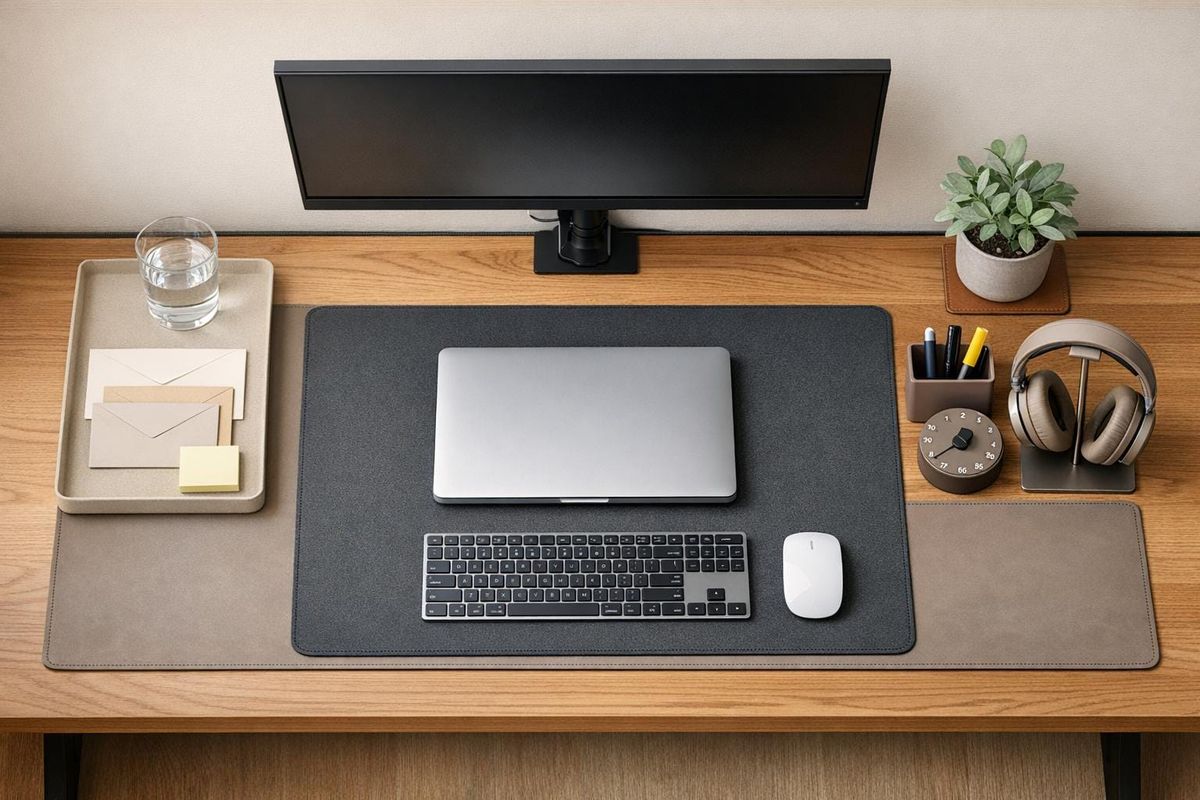
Your workspace matters, especially if you have ADHD. A well-organized desk can help reduce distractions, improve focus, and make starting tasks easier. Here’s what you need to know:
- ADHD Challenges at Work: Visual clutter, time blindness, and "out of sight, out of mind" tendencies can disrupt productivity.
- Key Solutions:
- Use clear, simple setups to reduce distractions.
- Create task-specific zones (e.g., Action Zone for work, Reset Zone for breaks).
- Prioritize comfort with ergonomic furniture and easy-to-reach tools.
- Tools That Help: Visual timers, noise-canceling headphones, and fidget tools can support focus and energy.
- Daily Habits: A quick nightly reset and weekly tidy-up can keep your desk functional and stress-free.
The goal isn’t perfection - it’s creating a workspace that supports how your brain works. Start small, experiment, and adjust as needed.
12 SIMPLE Hacks To Make Your Home Office ADHD Friendly
Basic Principles of ADHD-Friendly Desk Design
ADHD-Friendly Desk Zone Organization Guide
Creating a workspace that supports ADHD involves strategies tailored to improve focus, manage energy, and simplify task initiation.
Keep It Simple and Clear
Visual clutter can drain mental energy and make starting tasks feel overwhelming. To counter this, limit desk items to essentials like 2–3 pens, one notebook, a water bottle, and your primary device. This minimal setup keeps distractions at bay without compromising functionality.
For storage, opt for clear bins or open shelving. This way, tools remain visible, reducing the mental effort of searching for supplies.
"Starting is the hard part. And your desk setup can either lower that barrier… or turn it into a full boss fight." – Hyperfocus Pocus
Another helpful strategy is the One-Task Rule: clear your desk of everything except what’s needed for your current task. This approach minimizes decision fatigue and keeps your focus on the task at hand.
To build on this simplicity, dividing your desk into functional zones can further reduce mental strain.
Create Zones for Different Tasks
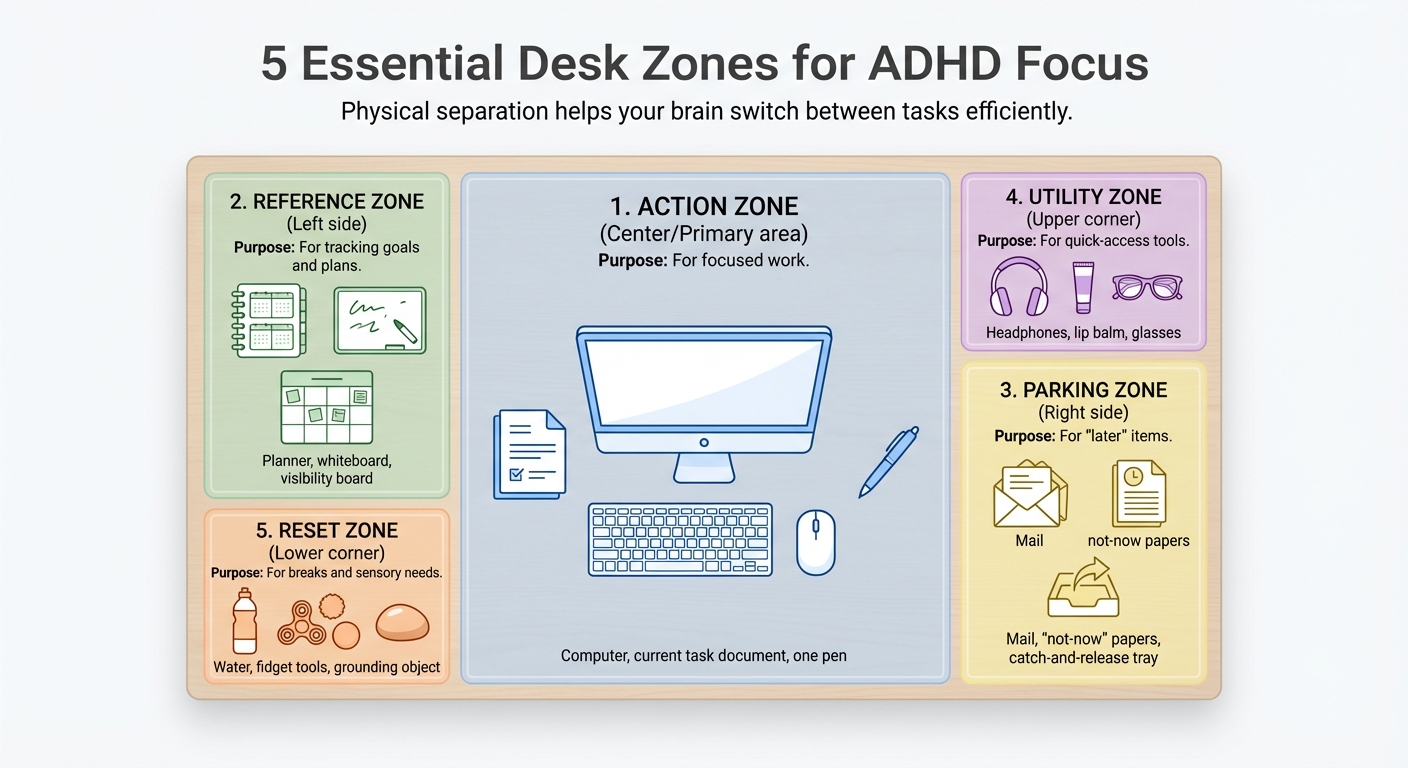
Organizing your desk into distinct zones helps your brain switch between tasks more efficiently. Think of each zone as a dedicated "app" for specific activities. Here’s how you can structure these zones:
| Zone Type | Purpose | Recommended Items |
|---|---|---|
| Action Zone | For focused work | Computer, current task document, one pen |
| Reference Zone | For tracking goals and plans | Planner, whiteboard, visibility board |
| Parking Zone | For "later" items | Mail, "not-now" papers, catch-and-release tray |
| Utility Zone | For quick-access tools | Headphones, lip balm, glasses |
| Reset Zone | For breaks and sensory needs | Water, fidget tools, grounding object |
This physical separation makes it easier to focus on one type of task at a time. For example, when you move to the Reference Zone to check your planner, you’re less likely to get distracted by unrelated items.
Make It Comfortable and Easy to Reach
Comfort and accessibility are just as important as organization. An uncomfortable setup can create unnecessary distractions, so prioritize ergonomics. A desk measuring 24–30 inches deep and 48–60 inches wide strikes a balance between spaciousness and avoiding sensory overload.
Height-adjustable desks are a great addition, as they encourage movement. Short bursts of activity - like switching between sitting and standing - can improve focus and cognitive performance. Pair this with an ergonomic chair on casters to support posture and allow for easy movement.
Keep frequently used items, such as your phone charger, favorite pen, or stress ball, within arm’s reach. Position your desk near a window for natural light, but use side lighting to avoid glare. Warm, neutral LED bulbs can also help reduce sensory overstimulation.
What You Need for an ADHD-Friendly Desk
Creating an ADHD-friendly workspace goes beyond the basics - it’s about equipping your desk with tools and furniture that align with how your brain works. The goal? To turn your desk into a supportive environment that helps manage ADHD challenges like restlessness and distraction while boosting focus and productivity.
Adjustable Desks and Chairs
If you struggle with staying still, a height-adjustable desk can be a game-changer. Being able to alternate between sitting and standing throughout the day not only helps regulate energy but also keeps your mind engaged.
Active chairs are another fantastic option. These chairs allow subtle movements that can improve focus and productivity. A 2022 study even highlighted how active seating promotes calmer behavior and better focus compared to traditional chairs. For example:
- The Autonomous ErgoChair Pro (3,319 reviews) offers an 11-point adjustment system, making it easy to shift positions throughout the day.
- The Hbada E3 Pro (3,411 reviews) adds a flip-out footrest, perfect for moments when you need to relax and refocus.
"Movement has been shown to help individuals with ADHD focus better, as hyperactivity may serve as a way to compensate for shorter attention spans." – Andrew Le, MD
If you prefer alternative seating, options like the Pipersong Meditation Chair (85 reviews) allow for cross-legged sitting, kneeling, or squatting - positions that many ADHD professionals find more comfortable for long periods of focus. For standing desk users, a "perching" stool like the Autonomous ErgoStool (350 reviews) encourages subtle movements while reducing leg fatigue. Since comfort varies from person to person, it’s worth trying chairs with return policies to find what works best for you.
Once you’ve found the right desk and chair, the next step is organizing your space to minimize distractions.
Storage and Organization Solutions
Effective storage is all about balancing accessibility with a sense of calm. ADHD brains often struggle with "out of sight, out of mind", so clear bins and open shelving can help keep important items visible. At the same time, closed storage is great for hiding nonessentials to avoid sensory overload.
Vertical storage is a smart way to keep your desk clear while keeping tools within reach. For instance:
- Wall-mounted pegboards are perfect for storing headphones, chargers, or small tools at eye level.
- Stackable paper trays, like the Mind Reader 4-Tier Paper Tray or the Eliteroo 4-Tier Desktop Organizer, make it easy to manage active projects without creating clutter.
Cable management is another must. Using cord organizers or sleeves can eliminate visual distractions, while labeled drawer solutions keep everything in its place.
Tools for Focus and Efficiency
The right tools can make a huge difference in staying on track. Visual timers, like the Time Timer MOD, make time more tangible, which is especially helpful for those who lose track of it easily. Combining this with methods like the Pomodoro Technique - working for 25 minutes followed by a 5-minute break - can help maintain focus and productivity.
For auditory distractions, noise-canceling headphones or white noise machines like the LectroFan can create a more controlled environment. And for those who need something tactile, keeping fidget tools like spinners, putty, or cubes nearby can be a simple but effective strategy.
"Fidgeting isn't a flaw – it's a coping strategy." – Holly Oberacker, Navigating ADHD
Movement tools can also help channel restlessness in productive ways. Wobble boards for standing desks encourage small, continuous movements that keep your legs active without pulling focus. Under-desk bikes or walking pads let you stay in motion while working. Even small changes, like using felt desk mats or wooden accessories, can help create a calming atmosphere compared to harder, less inviting materials.
Desk Layout Options That Work
Designing your desk to match how your ADHD brain operates can make a world of difference. Whether you need to block distractions, juggle multiple projects, or channel restless energy, the right desk layout can help you stay focused and productive.
Pairing thoughtful desk arrangements with the right tools and furniture can take your workspace to the next level.
Minimal Setup for Deep Focus
A minimalist desk is all about keeping it simple. Position your desk so it faces a wall instead of a window or doorway - this helps cut down on visual distractions. Keep your workspace clear, limiting it to essentials like your laptop, charger, a notebook, and a few pens. Everything else? Store it out of sight. This setup follows the "one-task visuals" idea, meaning only the materials for your current task should be visible.
This layout is perfect for tasks that need your full attention, like writing, coding, or detailed analysis.
Multi-Zone Layout for Varied Tasks
If your day involves switching gears between different types of work, an L-shaped desk could be your best friend. These desks (60×60 inches) fit neatly in a 10×10-foot room, leaving enough space - about 36 inches - behind your chair. That gives you 7,200 square inches of workspace to organize.
Use one side of the L for digital tasks (like working on your computer) and the other for analog activities (like writing or brainstorming). Swiveling your chair between these zones can signal a mental shift from one task to the next. For storage, transparent bins can keep frequently used items visible, while closed storage can hide less critical supplies. You might even try color-coding folders - green for general tasks, coral for urgent ones - to help externalize your memory.
Layouts That Let You Move
If you find it hard to sit still, a movement-friendly layout might be the answer. A standing desk can help you alternate between sitting and standing, while tools like an under-desk pedal bike can keep your body active during routine tasks. In the "Take-a-Stand Project", participants using sit-stand desks reported feeling more energized (87%), focused (71%), and productive (66%).
"Movement isn't a distraction - it's fuel for your ADHD brain's focus engine." – Caren Magill, Certified ADHD Coach
Physical activity can boost dopamine and norepinephrine levels, which are crucial for staying alert. A 2015 study even found that kids with ADHD performed better on memory tasks when they were allowed to move. Plus, standing desks help you burn about 3.6% more calories compared to sitting, without affecting mental performance.
You can also set up a small "active zone" near your desk with fidget tools or a foot rocker for controlled movement. Use desk height to signal task types: stand for quick tasks like emails, and sit for deeper focus work.
| Layout Type | Primary Benefit | Key Components | Best For |
|---|---|---|---|
| Minimalist | Reduces visual distractions and mental load | Clear surface, closed storage, desk facing a wall | Deep focus tasks like writing or coding |
| Multi-Zone | Helps with task-switching and organization | L-shaped desk, distinct zones for work types | Managing varied tasks and projects |
| Movement-Based | Encourages physical activity and focus | Standing desk, pedal bike, balance tools | Tackling restlessness and long work sessions |
How to Keep Your Desk Organized
Setting up an ADHD-friendly desk is one thing, but keeping it organized is a whole other challenge. The good news? You don’t need perfection - just a few simple routines that align with how your brain works.
Building on the optimal desk setups we’ve already covered, staying organized is key to maintaining productivity.
Daily Cleanup Habits
One of the simplest habits to adopt is the Nightly Reset, which takes just 2–10 minutes at the end of each day. Use this time to clear your desktop, put away pens, and file any completed papers. If staying on track feels tricky, set a timer to keep things quick and focused. This small effort keeps clutter from piling up overnight.
Another great tip is the Micro-Surface Rule: keep at least one notebook-sized area of your desk completely clear. This gives you an instant, stress-free spot to dive into work. Pair this with a Catch-and-Release System - use a designated tray for items you’re not ready to deal with yet. This keeps them from spreading across your workspace.
"ADHD-friendly desk setups aren't productivity hacks - they're support systems. They remove friction, reduce background stress, and make the first step obvious instead of overwhelming." – Hyperfocus Pocus
To make decisions easier, label everything with a label maker. This way, you’ll always know where each item belongs, reducing mental fatigue. And don’t forget the One In, One Out rule: for every new item you add to your desk, remove something old or unused.
These small daily habits set the stage for a deeper reset at the end of the week.
Weekly Review and Reset
Once a week, schedule a Weekly Tidy - a 45- to 90-minute session to completely reset your workspace. Many people find Friday to be a good day for this. Start by clearing your desk entirely, returning only the items you use daily to achieve a "calm baseline". Then, sort through loose papers into three piles: File, Action, and Recycle/Shred. Empty your "Catch-and-Release" tray during this time and spend about 15 minutes on digital cleanup - close extra browser tabs, clear notifications, and organize your computer desktop.
This weekly reset makes Monday mornings less chaotic and decision-heavy. Studies even show that people in tidy environments can focus on challenging tasks for an average of 18 minutes, compared to just 11 minutes in cluttered spaces. Plus, completing this reset gives you a small win that can trigger a dopamine boost.
"A weekly reset isn't about being perfect, aesthetic, or living inside a Pinterest board. It's about giving your future self a softer landing - a smoother Monday, less chaos, fewer decisions, and more clarity." – Kasia, ADHD Bright
Conclusion
Designing an ADHD-friendly desk isn’t about creating a flawless, minimalist setup - it’s about crafting a workspace that aligns with how your brain works. Incorporate tools like timers and whiteboards to offload mental tasks, reduce visual distractions, and find ways to include movement to stay engaged.
Focus on small changes, like tweaking your lighting, organizing work zones, or improving your seating. Even minor adjustments can have a noticeable impact. Play around with different setups and observe what helps you stay on track.
Think of your desk as a flexible tool that adapts to your needs over time. What supports you during a burst of creativity might not work when your energy dips. Instead of waiting for frustration to build, make quick, small tweaks to keep your workspace effective.
"Focus isn't about trying harder. It's about making your environment work for your brain." – Calendoo Studios
The goal isn’t to create a perfect setup - it’s to make starting tasks easier. By making small, consistent adjustments, you can build a workspace that genuinely supports your productivity and focus.
FAQs
Which desk layout is best for my ADHD?
The best desk setup for ADHD is all about reducing distractions, staying organized, and allowing for movement. Keep the space simple and free of clutter to help maintain focus. Furniture that adjusts, like standing desks or ergonomic chairs, can be a great addition. Design the area to match your energy levels and personal preferences, making it a space that promotes concentration and productivity.
How do I set up desk zones in a small space?
Creating desk zones in a small space starts with decluttering - fewer distractions mean better focus. Designate specific areas for different activities: a primary work zone, a storage zone, and even a small sensory or relaxation area. Incorporate adjustable furniture to allow for movement and flexibility, and use visual cues or smart storage solutions to clearly define and maintain these zones. This approach keeps your space organized and functional, making it easier to support workflows that work well for ADHD, even when space is tight.
What’s the fastest way to keep my desk from getting messy again?
To maintain a tidy desk, try using an easy sorting method. Divide your items into four categories: Keep, Trash/Recycle, Shred, and Belongs Elsewhere. Work on one small section at a time, and set a timer for 15–25 minutes to stay focused without getting overwhelmed. Incorporate quick tidying sessions into your routine - whether daily or weekly - to keep clutter under control. The secret to lasting organization is sticking to this habit consistently.