Why Buffer Time Helps ADHD Professionals
Use intentional schedule gaps to offset time blindness, ease transitions, manage hyperfocus, and meet deadlines more reliably.
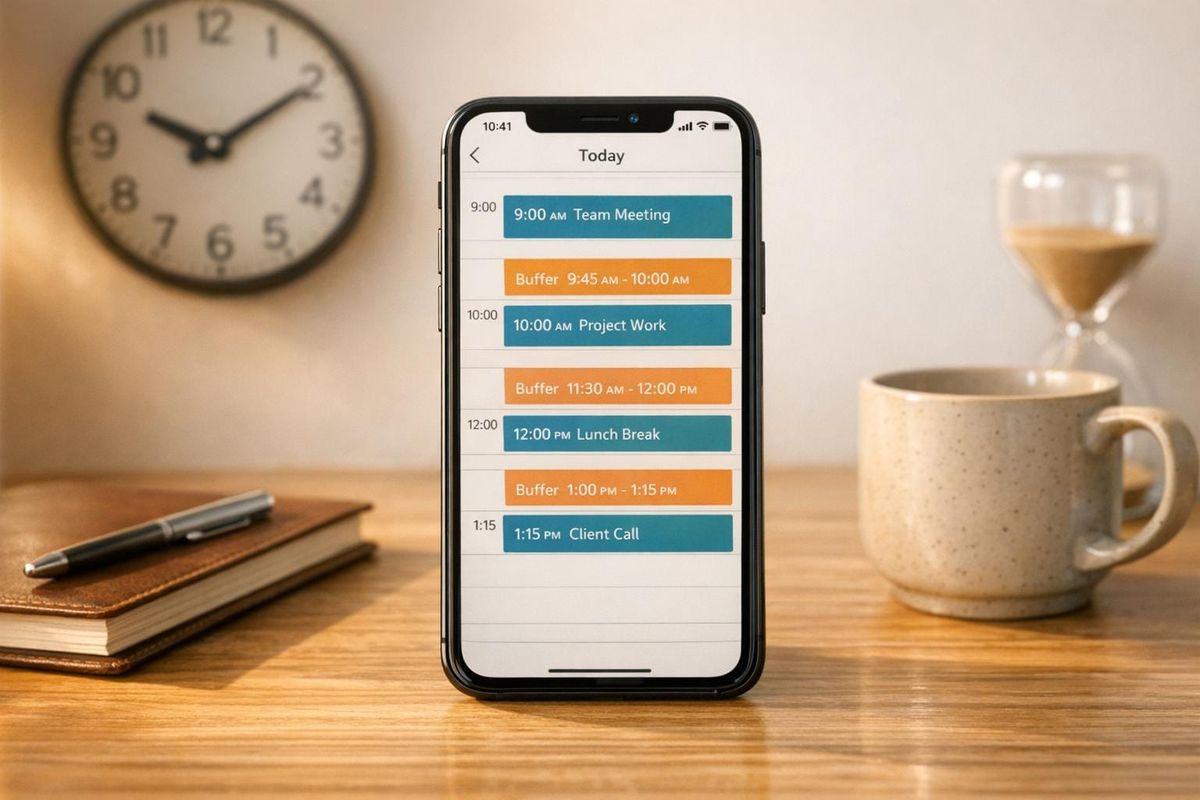
Buffer time is a game-changer for professionals with ADHD. By adding intentional gaps between tasks, it addresses common challenges like underestimating time, difficulty transitioning, and hyperfocus. This simple scheduling tweak reduces stress, improves focus, and helps meet deadlines more consistently.
Key Takeaways:
- Time Misjudgment: ADHD often leads to underestimating task durations by 30–100%. Adding 25–50% extra time helps.
- Smooth Transitions: ADHD brains need 15–20 minutes to shift focus. Buffer time provides space for this adjustment.
- Hyperfocus Management: Scheduled breaks prevent hyperfocus from derailing your day.
- Deadline Success: Built-in flexibility reduces last-minute rushes and missed deadlines.
Buffer time isn’t just about better time management - it’s about creating a structure that aligns with how your brain works. By planning for the unexpected, you can stay on track and reduce daily stress.
What Buffer Time Is and How It Helps ADHD Professionals
What Buffer Time Means
Buffer time is the practice of adding intentional gaps into your schedule - extra moments that act as a cushion for the unexpected twists and turns of daily life. Instead of cramming tasks back-to-back, you allow space to breathe between commitments.
Psychologist Arielle Hall captures it perfectly:
"Think of time buffering as adding a little extra padding to your schedule... giving yourself a realistic timeframe to accomplish things with some leeway." – Arielle Hall
These gaps help smooth transitions and act as a safety net for unforeseen delays. That way, one surprise phone call or an unexpected email doesn’t throw your entire day off track. For people with ADHD, this breathing room is especially important because it tackles common challenges like misjudging time and struggling with transitions.
How Buffer Time Addresses ADHD Traits
Buffer time goes hand-in-hand with flexible scheduling and is particularly effective in managing ADHD-specific hurdles like time blindness and difficulty switching between tasks. Adults with ADHD often underestimate how long things will take, so adding an extra 25% to 50% to your original time estimate can provide a much-needed buffer.
Switching gears between tasks can also be tricky, often taking 15 to 20 minutes for your brain to adjust. Buffer blocks offer a chance to reset during these transitions. Use those 10 to 15 minutes for quick rituals like stretching, tidying your workspace, or jotting down notes about where you left off.
Another helpful technique is including a 60-minute flexible block in your schedule. This can absorb delays caused by hyperfocus or slow starts. It prevents the chaos that happens when one delay snowballs into a day full of missed deadlines. By building in this flexibility, you reduce the mental exhaustion that comes from constantly making on-the-fly decisions - a common struggle for many ADHD professionals.
sbb-itb-f879324
How I Time Block with ADHD + Time Blindness | The Time Blocking Buffet Method | Cloth & Paper
Main Benefits of Using Buffer Time
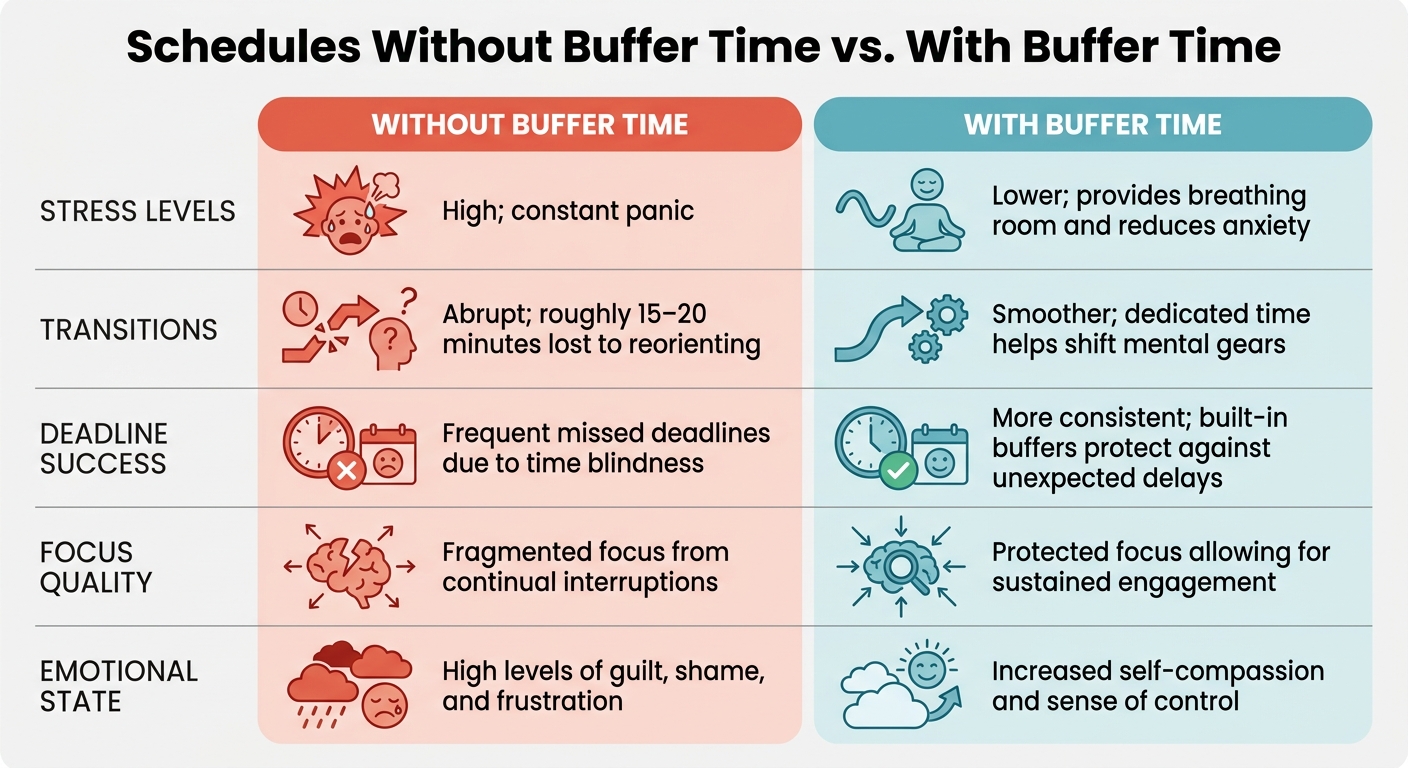
ADHD Schedules: Without vs With Buffer Time Comparison
Building on how buffer time works to address ADHD challenges, here’s a closer look at its key advantages.
Less Stress and Better Focus
Buffer time provides essential breathing room, especially for professionals with ADHD, helping to avoid the stress of last-minute rushes. Without these buffers, tasks can escalate quickly, triggering what some experts call a panic-adrenaline cycle that drains mental energy.
These 10- to 15-minute breaks are more than just pauses - they are critical for mental transitions. ADHD brains often need 15 to 20 minutes to reorient when switching tasks. By incorporating these short breaks, you can avoid the panic-adrenaline cycle, reset your workspace, or jot down notes to ensure a smoother transition to the next task.
Buffer time also helps manage hyperfocus, a common ADHD trait. Around 40% of individuals with ADHD report neglecting other responsibilities due to prolonged periods of hyperfocus. Scheduling breaks and transition periods ensures that engaging activities don’t unintentionally dominate your day.
This approach not only reduces stress but also supports better deadline management.
Meeting Deadlines More Consistently
For many ADHD professionals, underestimating how long tasks take isn’t about carelessness - it’s tied to a different way of experiencing time. To counteract this, experts recommend adding 25–50% more time to task estimates. For example, if a task seems like it will take 60 minutes, schedule 90 minutes instead.
This strategy also addresses what Dr. Russell Barkley refers to as "temporal myopia", where the future feels abstract until it becomes an urgent crisis. By externalizing time with built-in buffers, you make your schedule feel more concrete, leading to better consistency with deadlines.
Comparison: Schedules Without Buffer Time vs. With Buffer Time
The table below highlights the differences between schedules that include buffer time and those that don’t:
| Feature | Without Buffer Time | With Buffer Time |
|---|---|---|
| Stress Levels | High; constant panic. | Lower; provides breathing room and reduces anxiety. |
| Transitions | Abrupt; roughly 15–20 minutes lost to reorienting. | Smoother; dedicated time helps shift mental gears. |
| Deadline Success | Frequent missed deadlines due to time blindness. | More consistent; built-in buffers protect against unexpected delays. |
| Focus Quality | Fragmented focus from continual interruptions. | Protected focus allowing for sustained engagement. |
| Emotional State | High levels of guilt, shame, and frustration. | Increased self-compassion and sense of control. |
How to Add Buffer Time to Your Schedule
Building buffer time into your schedule can make a world of difference. Here’s how you can do it with a few straightforward strategies.
Adding Extra Time to Tasks
One effective strategy is the Multiplier Rule: add 25–50% more time to your original estimate for completing a task. For instance, if you think writing a report will take 60 minutes, plan for 90 minutes instead. For tasks that are especially unpredictable, some professionals even double their estimates - turning a quick 15-minute task into a 30-minute block.
To fine-tune this approach, try keeping a time diary for a week or two. Record how long tasks actually take compared to your initial guess. This practice helps you create more accurate estimates in the future. The key is to aim for realistic planning, not overly cautious predictions.
Using Timers for Short Breaks Between Tasks
Timers can make buffer time feel more tangible. Tools like visual timers clearly show how much time is left. For meetings or appointments, adding at least 15 minutes to your travel estimates can help account for parking or unexpected delays.
You can also set cascading alarms for better transitions. For example, if you have a meeting at 2:00 PM, set alarms at 1:30 PM, 1:45 PM, and 1:55 PM. Label each alarm with specific actions - like “wrap up current task” or “prepare meeting materials” - to ensure smooth transitions. These small adjustments can help you spot bottlenecks and improve your overall flow.
Identifying Tasks That Often Run Over
Take a closer look at tasks that consistently take longer than expected. Pay special attention to transitions between different types of tasks, as switching focus often requires 15–20 minutes to reorient. Breaking large projects into smaller steps can also help you identify where delays tend to occur.
Be mindful of perfectionism, which can lead to endless revisions and wasted time. For these tasks, try setting strict time limits or building in extra buffer time. Before starting, define what “good enough” looks like to avoid getting stuck in a cycle of over-polishing.
How Buffer Time Improves Work for ADHD Professionals
Buffer time can make a world of difference for professionals with ADHD, offering a practical way to keep daily work schedules on track. When a task runs longer than expected, it often causes a ripple effect, throwing off the entire day's plan. Without buffer time, this domino effect can lead to a chaotic, disrupted workday, where every delay compounds the next one. Buffers serve as a safety net, absorbing these overruns and keeping productivity intact.
Another major benefit is how buffer time supports smoother transitions. ADHD brains often struggle with moving seamlessly from one task to another, needing extra time to mentally disengage from one activity and refocus on the next. Without this transition space, you’re left reacting instead of preparing. Buffers provide that much-needed "gear-shifting" moment, helping each task start with a fresh, focused mindset.
Buffers also combat the overwhelming pressure of back-to-back deadlines, which can lead to task paralysis. By easing immediate deadline anxiety, buffer time keeps momentum flowing throughout the day. If a major project is interrupted, these pre-planned buffers allow you to pivot to shorter tasks without losing productivity. This flexibility ensures that your day remains manageable and structured.
In project management, buffers address what’s often called "time optimism" - the tendency to overestimate how much can be done in a given period. Psychologist Sharon Saline, Psy.D., explains:
"'Time blind' is saddled with shame... 'Time optimist,' on the other hand, is a positive reframing that reduces shame and makes feedback easier to accept".
This shift in mindset makes it easier to adopt and stick to buffer-based scheduling systems.
Conclusion: Why Buffer Time Works for ADHD Professionals
Buffer time turns scheduling hurdles into opportunities for better productivity. Adults with ADHD often misjudge how long tasks will take, underestimating durations by 30% to 100% - a challenge rooted in brain function, not personal shortcomings. By incorporating buffer time, you create a system that aligns with the natural rhythms of ADHD.
The beauty of buffer time is how it shifts the focus from sheer willpower to smarter system design. As Dr. Russell Barkley puts it:
"ADHD is not a disorder of knowing what to do. It is a disorder of doing what you know."
Adding buffers to your schedule means working with your brain, not against it. This approach not only simplifies your workflow but also promotes a healthier, more positive mindset.
Buffers also help break the cycle of shame tied to chronic lateness or missed deadlines. Psychologist Sharon Saline, Psy.D., highlights that reframing from being "time blind" to a "time optimist" eases feelings of shame and makes it easier to accept feedback. This shift in perspective can make maintaining a buffer-based system much more sustainable.
The logic is straightforward: a 10–15 minute buffer matches the 15–20 minutes ADHD brains often need to shift focus, while building in up to 50% extra time ensures tasks that run long don’t derail your day. These small adjustments can keep your entire schedule on track.
Ultimately, buffer time is about creating conditions that set you up for success. A schedule designed around your brain’s needs saves energy for what truly matters. By embracing this approach, buffer time becomes more than just a productivity hack - it’s a tool for long-term success.
FAQs
How do I choose the right buffer time for each task?
To find the right buffer time, think about how you typically perceive time and the type of task you're tackling. Begin by estimating how long the task should take, then tack on a reasonable buffer - 30 minutes or more is often a good starting point, depending on your past experiences. For things like appointments or travel, account for potential delays or surprises. Try out different buffer lengths and keep track of what works best. Over time, you’ll fine-tune your schedule so it feels less overwhelming and more manageable.
What should I do during buffer time so it doesn’t get wasted?
Using buffer time effectively can help you stay on top of your tasks and reduce unnecessary stress. Use this time to review your progress, prepare for upcoming commitments, or engage in calming activities to stay centered. It’s also a great opportunity to tackle quick tasks, organize your workspace, or do some micro-planning. These small, intentional actions can help you avoid the chaos of last-minute rushes and missed deadlines while giving you a sense of control over your schedule.
How can I add buffers without falling behind on my workload?
To stay on track without feeling overwhelmed, consider how ADHD influences your sense of time. Break tasks into manageable chunks and set time estimates that feel achievable. Add some extra buffer time to account for unexpected delays. Tools like alarms or timers can help you stay mindful of the clock, while creating simple transition rituals can make it easier to shift focus between tasks. These approaches can make it easier to handle workloads while working with, not against, ADHD-related time challenges.