
How ADHD Affects Information Processing
Explains how ADHD impairs working memory, slows processing, and weakens attention and inhibition—plus practical strategies to reduce cognitive overload.
Explains how ADHD impairs working memory, slows processing, and weakens attention and inhibition—plus practical strategies to reduce cognitive overload.

Practical ADHD accountability strategies—coaching, body doubling, and partner systems with check-ins and tools to build consistent habits without shame.
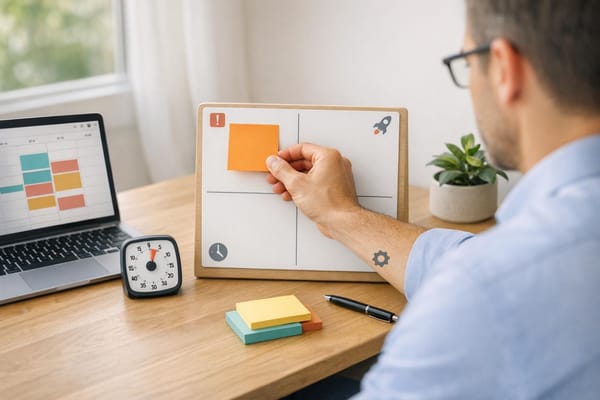
Practical strategies for ADHD professionals to identify and prioritize high-impact tasks using Eisenhower and Impact‑Effort matrices, time blocking, hyperfocus, and visual tools.

How ADHD-related brain differences affect working memory, focus, and impulse control — plus practical strategies and tools to reduce mental overload.
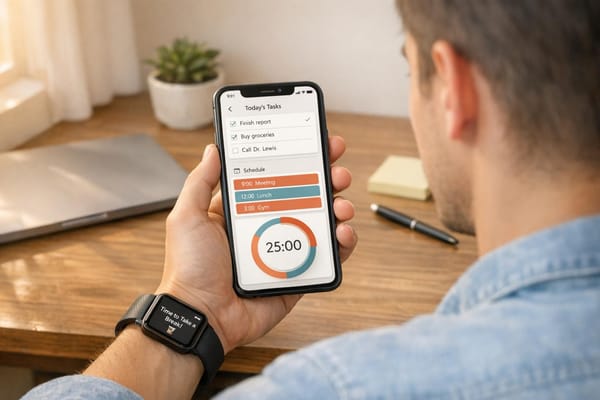
Explore top AI-powered apps for ADHD that offload memory, manage time, and boost focus—features, pricing, and best use cases in 2026.

How perfectionism, forgetfulness, and all-or-nothing thinking in ADHD drive impostor syndrome—and simple strategies to rebuild confidence and reduce burnout.

Accountability groups (peer or coach-led) help ADHD professionals reduce procrastination, manage time blindness, and improve follow-through.

Seven ADHD-friendly progress trackers compared — visual timelines, Pomodoro timers, habit tracking, calendar sync and simple planners to reduce time blindness and improve focus.
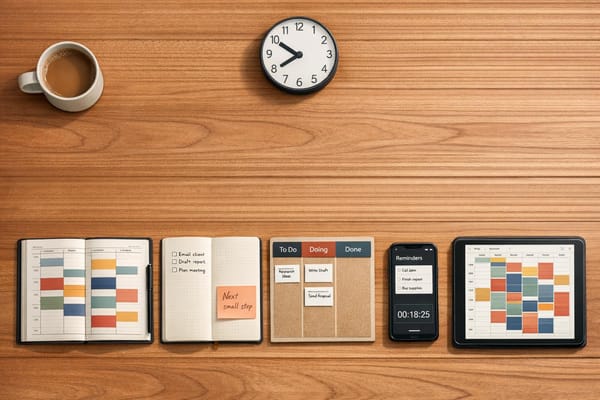
Five planner systems—paper and digital—show how matching tools to ADHD challenges like time blindness and task paralysis improves daily focus.
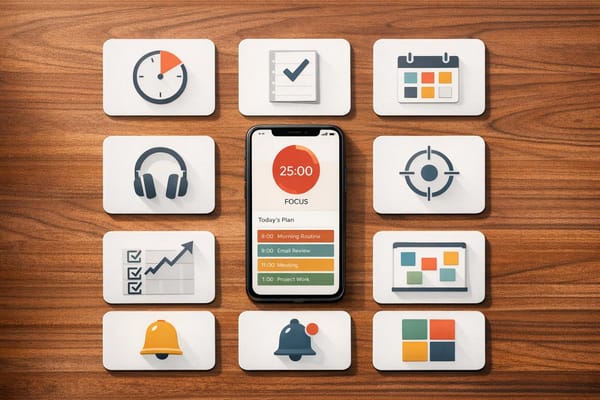
Compare nine apps that help with time blindness, task initiation, focus, and planning for ADHD — from Pomodoro timers to visual planners and audio aids.
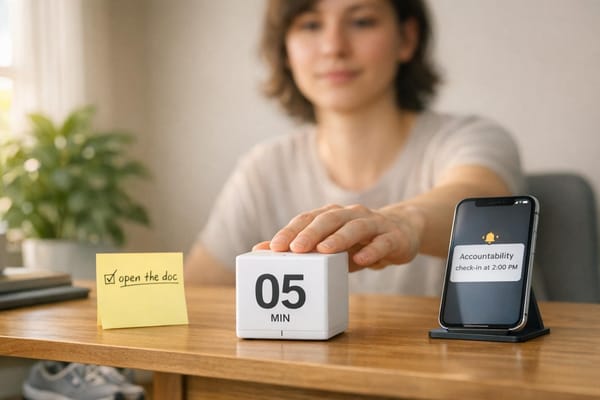
Neuroscience-backed strategies to restart focus when ADHD-related motivation suddenly drops: timers, micro-steps, movement, environment tweaks, and accountability.

Finishing projects is about systems, not willpower — prioritize, break work into tiny steps, time-block, use tools and body doubling to finish.