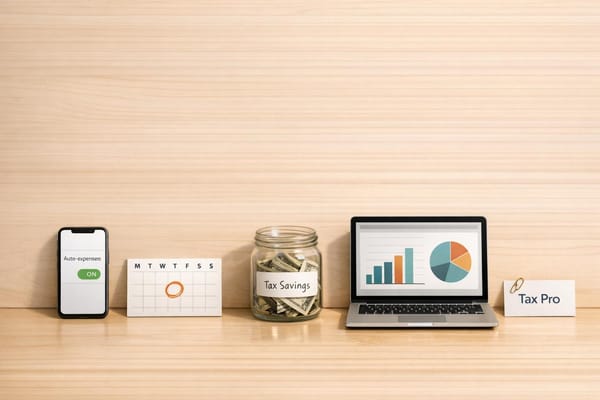
5 Tax Prep Tips for ADHD Entrepreneurs
Simple, ADHD-friendly tax strategies: automate expenses, weekly check-ins, a tax savings account, visual dashboards, and a tax pro.

Simple, ADHD-friendly tax strategies: automate expenses, weekly check-ins, a tax savings account, visual dashboards, and a tax pro.
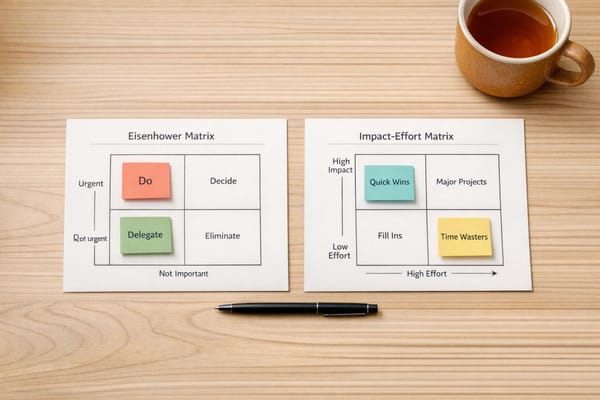
Use the Eisenhower and Impact-Effort matrices to prioritize tasks, match energy levels, and reduce ADHD overwhelm.

ADHD traits—divergent thinking, cognitive flexibility, and deliberate mind-wandering—boost creative problem-solving and workplace innovation.

Clear checklist to vet ADHD workplace coaches—credentials, experience, methods, fit, pricing, red flags, and client results.

Why steady sounds like pink or brown noise can help people with ADHD focus, and how to find the right noise and volume.

Use energy-based ADHD strategies—track rhythms, break goals, take micro-breaks, use visual lists, and reframe 'shoulds'.

How ADHD fuels impostor feelings at work and practical steps to reframe thoughts, set boundaries, and use ADHD strengths.

ADHD brains prioritize novelty and urgency over long-term importance; low dopamine, time blindness, and weak working memory are key.

Routines that match ADHD wiring—map energy, timebox tasks, reduce distractions, and use anchors, breaks, and rewards to sustain focus.

How ADHD disrupts impulse control — prefrontal delays, low dopamine/norepinephrine, and practical medication plus behavioral strategies.

Use habit stacking plus environmental cues to build ADHD-friendly routines that work with your brain.

Targeted ADHD burnout recovery: prioritize sleep, simplify tasks, use Pomodoro, set boundaries, and build dopamine-supporting routines.